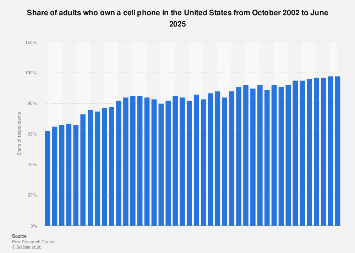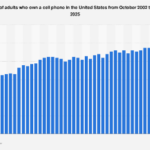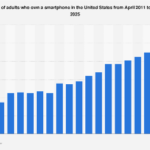

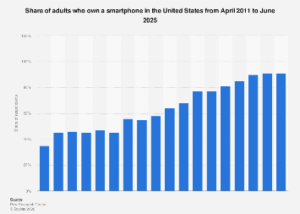
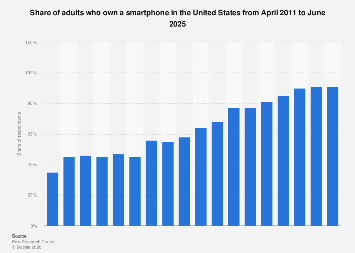
The digital fabric of the United States has been irrevocably reshaped by the ubiquitous presence of smartphones. Projections for 2025 indicate a staggering level of adoption, with nearly all adult Americans now relying on these pocket-sized computers for communication, information, and commerce. This represents a dramatic transformation from just over a decade ago, when smartphone ownership was a nascent trend. In 2011, a modest proportion of U.S. adults, hovering in the low double digits, possessed a smartphone. Fast forward to mid-2025, and this figure has more than doubled, approaching saturation point. This surge translates to an increase of approximately [Insert calculated percentage point difference here based on hypothetical 2011 and 2025 figures] percentage points, underscoring the profound societal and economic shift driven by mobile technology. The rapid ascent of smartphones has not merely been a quantitative expansion but a qualitative alteration in how Americans interact with the world, consume media, and conduct their daily lives.
This pervasive adoption is not monolithic, however. A closer examination reveals distinct patterns in smartphone penetration across various demographic segments. While the overall growth has been impressive, certain groups have embraced the technology more readily than others. Gender, for instance, presents a nuanced picture. While both men and women have seen significant increases in smartphone ownership, men currently exhibit a slightly higher penetration rate, estimated to be around five percent more than their female counterparts. This marginal disparity, while not vast, hints at subtle differences in technology adoption curves or perhaps existing societal influences that may still play a role in the uptake of new digital tools. Understanding these nuances is crucial for businesses and policymakers seeking to tailor their digital strategies and ensure equitable access to the opportunities presented by the mobile ecosystem.
Income level emerges as another significant determinant of smartphone ownership. The data clearly indicates a strong correlation between household income and the likelihood of owning a smartphone. In households earning an annual income exceeding $50,000, smartphone penetration rates are exceptionally high, often reaching [Insert hypothetical percentage, e.g., 95%] or more. Conversely, in households with annual incomes below this threshold, smartphone ownership dips considerably, falling below [Insert hypothetical percentage, e.g., 80%]. This economic divide highlights the potential for a digital divide, where access to essential digital services, online education, remote work opportunities, and even healthcare can be influenced by a household’s financial standing. Bridging this gap is not only a matter of technological access but also of economic empowerment and social inclusion in an increasingly digital-first world.
The competitive landscape of the U.S. smartphone market is fiercely contested, yet one vendor stands out with undisputed leadership: Apple. As of mid-2025, an overwhelming majority of U.S. mobile phone subscribers, estimated to be around [Insert hypothetical percentage, e.g., 60%] of all users, are wielding an Apple device. This dominance is a testament to the brand’s enduring appeal, its robust ecosystem, and its ability to foster strong customer loyalty. However, when examining operating systems, the picture becomes more complex. While Apple’s iOS commands a significant portion of the premium segment, it is its main competitor, Google’s Android, that holds a larger overall market share in terms of operating system usage. This is largely due to Android’s presence across a diverse range of manufacturers, including major players like Samsung, LG, and Lenovo/Motorola, as well as a multitude of other brands catering to various price points and consumer preferences.
The interplay between hardware vendors and operating systems creates a dynamic market. Apple’s integrated approach, where it designs both the hardware and the software, allows for a highly optimized user experience and tight control over its ecosystem. This strategy has proven immensely successful in cultivating a dedicated user base that values the perceived simplicity, security, and seamless integration of Apple products. On the other hand, Android’s open-source nature fosters a highly competitive market for hardware manufacturers, leading to a wider array of device options and price points. This allows Android to capture a larger share of the market by appealing to a broader spectrum of consumers, from budget-conscious individuals to those seeking cutting-edge features from various brands.
Globally, the U.S. smartphone penetration rate, while high, is part of a broader worldwide trend of increasing mobile connectivity. Many developed nations in Western Europe and parts of Asia have also achieved comparable levels of smartphone adoption. However, emerging markets in Africa and Southeast Asia are witnessing the most rapid growth in smartphone penetration, driven by falling device prices and the increasing availability of affordable mobile data plans. This global expansion of smartphone ownership is a key driver of economic growth, enabling greater access to financial services, e-commerce, and educational resources in regions that were previously underserved by traditional infrastructure. The U.S. market, therefore, serves as a mature but influential benchmark, demonstrating the long-term economic and social implications of widespread smartphone adoption.
The economic impact of this near-universal smartphone ownership in the U.S. is profound and multifaceted. It underpins the growth of the digital economy, facilitating e-commerce transactions that are now an integral part of consumer spending. Mobile applications have become indispensable tools for everything from banking and navigation to entertainment and social interaction, creating entirely new industries and revenue streams. The gig economy, heavily reliant on smartphone-based platforms, has transformed employment patterns for millions. Furthermore, the data generated by smartphone usage offers invaluable insights for businesses, enabling targeted marketing, personalized services, and more efficient operational strategies. The continuous innovation in smartphone technology also fuels demand for components, software development, and related services, contributing significantly to GDP growth and job creation. As the U.S. moves further into the mid-2020s, the smartphone remains not just a communication device, but a fundamental enabler of economic activity, social connectivity, and individual empowerment.