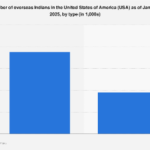
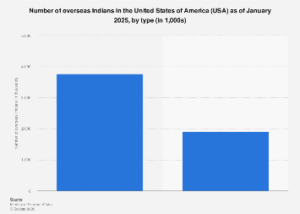

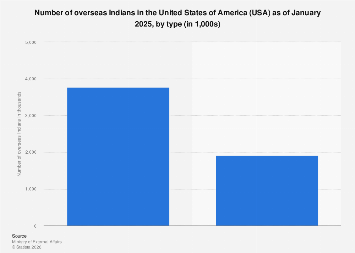
As of January 2025, the United States is home to a significant and growing Indian population, numbering close to [redacted] million individuals. This substantial demographic presence underscores the deep and enduring ties between India and the U.S., reflecting decades of migration, economic opportunity, and cultural exchange. Within this broad figure, a core segment comprises individuals identified as Persons of Indian Origin (PIOs), exceeding [redacted] million. This classification, while seemingly straightforward, encompasses a complex tapestry of individuals, including those who have retained their Indian citizenship, those who have acquired American citizenship, and their descendants, as well as individuals with ancestral links to India. The definition of a Person of Indian Origin, as per supplementary notes, extends beyond those who once held an Indian passport, potentially including spouses of Indian citizens and individuals with Indian grandparents, thereby broadening the scope of this influential community.
The economic and social contributions of the Indian diaspora in the U.S. are multifaceted and profound. This community is renowned for its high levels of educational attainment and its significant representation in high-skilled professions, particularly in sectors such as technology, healthcare, finance, and academia. This concentration in knowledge-based industries translates into substantial economic output, innovation, and job creation within the American economy. The entrepreneurial spirit of many Indian immigrants has also led to the establishment of numerous businesses, from small enterprises to large corporations, further bolstering economic growth and diversification. Furthermore, the diaspora plays a crucial role in facilitating trade and investment between India and the U.S., acting as a vital bridge for bilateral economic relations.
The sheer scale of the Indian population in the U.S. positions it as one of the largest and most influential ethnic groups in the country. This demographic weight translates into considerable purchasing power, influencing consumer markets and contributing to local and national economies. Beyond economic metrics, the Indian diaspora enriches the cultural landscape of the United States, introducing a vibrant array of traditions, cuisines, arts, and perspectives. This cultural infusion fosters a more diverse and cosmopolitan society, enhancing mutual understanding and appreciation between different communities.
Understanding the nuances within the Indian diaspora is crucial for a comprehensive analysis. While the term "Person of Indian Origin" captures a broad category, it’s also important to acknowledge the segment of Non-Resident Indians (NRIs). NRIs, in this context, typically refer to Indian citizens who reside in the U.S. for extended periods, often for work or study, while maintaining their Indian nationality. The distinction between PIOs and NRIs, though sometimes blurred by dual citizenship and evolving immigration statuses, highlights different relationships with both countries and distinct patterns of economic engagement and investment. The presence of both these groups underscores the dynamic nature of transnational communities in the 21st century.
The migration patterns that have shaped the Indian diaspora in the U.S. are a product of various factors, including India’s economic development, educational opportunities, and global geopolitical shifts. Historically, the U.S. has been a favored destination for highly skilled Indian professionals, particularly following the Immigration and Nationality Act of 1965, which abolished national-origin quotas and opened doors for skilled workers. This influx has continued to grow, fueled by the demand for talent in sectors where Indians have excelled. The increasing number of Indian students pursuing higher education in the U.S. also contributes significantly to this demographic, with many choosing to remain and contribute to the American workforce and economy after graduation.
The economic impact of the Indian diaspora extends beyond direct employment and entrepreneurship. Remittances sent back to India by individuals living and working abroad represent a significant source of foreign exchange for India, contributing to its economic development and poverty reduction efforts. This flow of capital not only supports families but also fuels investment and economic activity within India. Moreover, the diaspora’s engagement with philanthropic initiatives and social causes in both countries demonstrates a commitment to broader societal well-being.
When comparing the Indian diaspora in the U.S. with other immigrant communities, several characteristics stand out. The high representation in STEM fields and the strong emphasis on education are often cited as key differentiators. This focus on academic and professional achievement has allowed the Indian diaspora to achieve significant upward mobility and economic success. The community’s strong social networks and emphasis on community support also play a vital role in the integration and success of new immigrants.
Looking ahead, the Indian diaspora in the U.S. is poised to continue its growth and influence. Demographic projections suggest sustained immigration from India, driven by ongoing economic disparities and the allure of American opportunities. The increasing diversity within the diaspora itself, encompassing individuals from various regions, linguistic backgrounds, and socio-economic strata within India, will further enrich its character and impact. The evolving nature of immigration policies in both countries, alongside global economic trends, will undoubtedly shape the future trajectory of this dynamic community. The data on the number of overseas Indians in the U.S. by type, as of January 2025, serves as a critical indicator of this ongoing demographic and economic phenomenon, highlighting a community that is not only a significant part of the American mosaic but also a key player in the global Indian narrative. The continued integration and contributions of this community are expected to foster innovation, economic prosperity, and cultural exchange for years to come, reinforcing the robust relationship between the United States and India.