

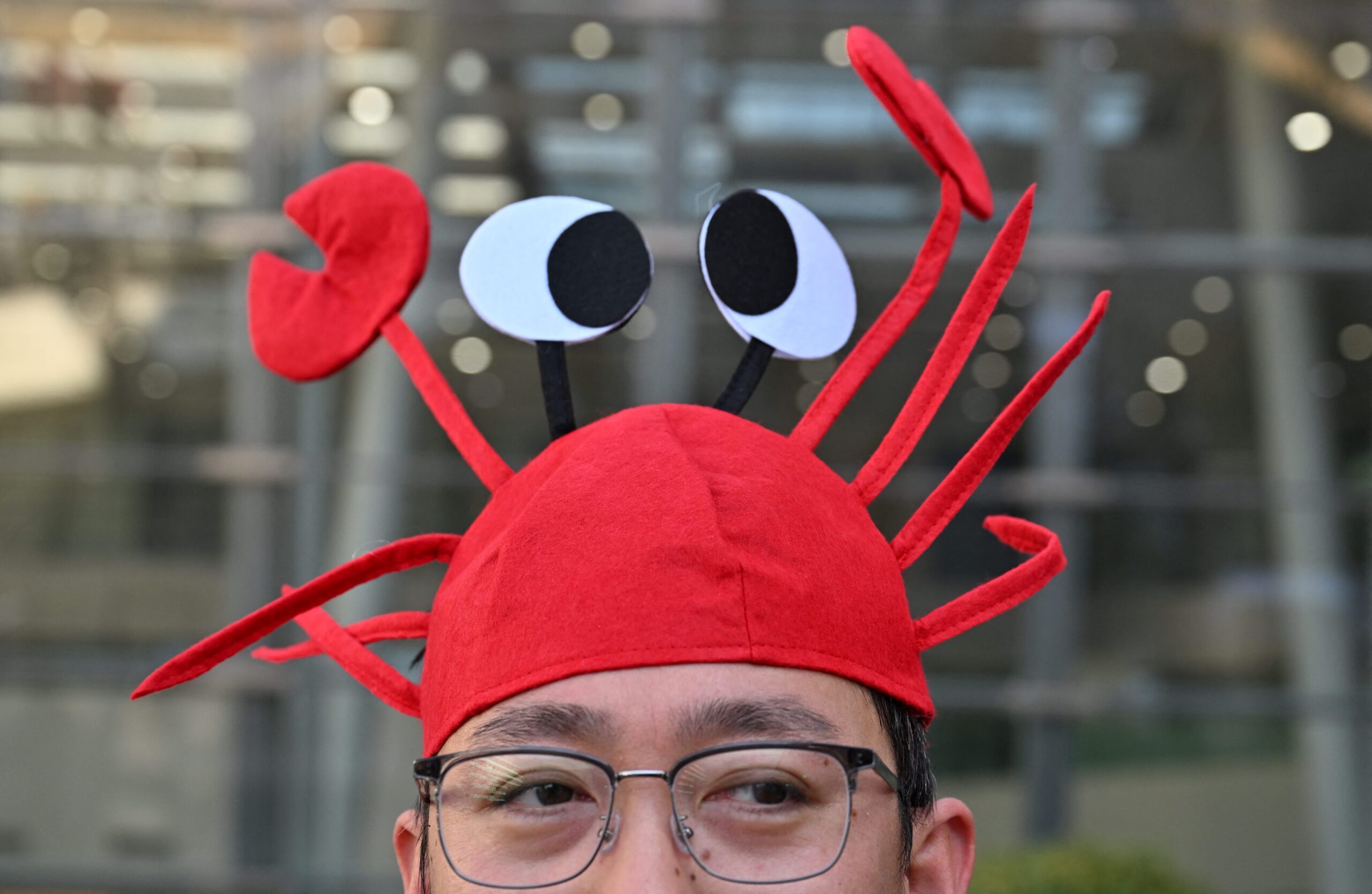
The corridors of Baidu’s Beijing headquarters and the tech hubs of Shenzhen have recently been transformed by an unlikely mascot: a bright red lobster. This crustacean represents OpenClaw, an open-source artificial intelligence agent that has sparked a frenzy across the Chinese technology sector, signaling a pivotal shift from passive chatbots to autonomous digital workers. As of March 2026, the rapid integration of this tool by tech giants, local governments, and individual entrepreneurs suggests that China is not merely adopting a new software trend but is fundamentally retooling its digital economy around the concept of "agentic" AI.
While the previous era of generative AI was defined by large language models (LLMs) that could converse and create content, the current "agent" era is defined by action. AI agents like OpenClaw are designed to operate with minimal human oversight, navigating complex digital environments to execute tasks such as cross-platform scheduling, financial transaction management, and intricate logistics planning. Unlike a standard chatbot that waits for a prompt to provide an answer, an agent possesses a level of proactive agency, accessing APIs and system-level permissions to complete end-to-end workflows. In the competitive Chinese market, where efficiency is the primary currency, this capability has turned OpenClaw into the most sought-after architecture in the industry.
The scale of adoption is unprecedented. Tencent, the conglomerate behind the ubiquitous WeChat super-app, recently unveiled its "lobster special forces" suite. This initiative integrates OpenClaw-based agents directly into the WeChat ecosystem, allowing its 1.3 billion users to deploy digital assistants that can manage everything from social calendars to business invoices within the app’s framework. By lowering the barrier to entry for agentic AI, Tencent is effectively turning every smartphone in China into a command center for autonomous software.
Simultaneously, Zhipu AI, one of China’s most prominent AI "unicorns," has sought to democratize the technology through its own localized version of the tool. By offering a "one-click installation" that comes pre-loaded with over 50 specialized skills, Zhipu is targeting the non-technical consumer market. This move addresses one of the primary hurdles to AI agent adoption: the technical complexity of deployment. Historically, setting up an autonomous agent required significant coding knowledge and server management skills. Now, the process has been reduced to a consumer-friendly interface, a move that has helped China surpass the United States in OpenClaw usage according to data from cybersecurity firm SecurityScorecard.

The economic impetus behind this surge is rooted in China’s broader macroeconomic environment. As the nation grapples with cooling growth and structural shifts in its labor market, the promise of hyper-productivity through AI offers a potential lifeline. For domestic tech firms, the "OpenClaw craze" is a strategic opportunity to convert free users into paying subscribers. This is particularly evident in the pricing strategies of Chinese LLM providers. Throughout early 2026, companies like DeepSeek and Moonshot AI have engaged in a brutal price war, driving the cost of AI tokens down to a fraction of the rates charged by Western rivals like OpenAI or Anthropic.
Because autonomous agents often require hundreds of "calls" to a model to complete a single complex task, the cost of the underlying LLM is the primary factor in an agent’s viability. By offering high-performance models at bargain-basement prices, Chinese developers have made it economically feasible for small businesses and individuals to run sophisticated agents 24/7. This cost advantage has created a symbiotic relationship between OpenClaw and domestic models; OpenRouter data indicates that the three most-used models for OpenClaw deployment globally are now all Chinese-developed, collectively doubling the usage of Google’s Gemini and Anthropic’s Claude within that specific ecosystem.
The social impact of this technology is perhaps most visible in the rise of the "one-person company." This concept, which refers to individual entrepreneurs using AI agents to handle the work of an entire department, has gained significant traction among China’s youth. In response, local governments are moving to institutionalize this trend. In Shenzhen’s Longgang district and Hefei’s high-tech development zone, authorities have introduced equity financing support of up to 10 million yuan ($1.46 million) specifically for startups that leverage OpenClaw to maintain lean, agent-driven operations. Other regions, such as Suzhou, are offering "incubation packages" that include free office space and meals for developers who can demonstrate innovative uses for the lobster-themed tool.
However, the rapid rollout of autonomous agents is not without friction. Because these agents require deep access to a user’s personal data and system permissions to function—such as reading emails or accessing bank interfaces—they present a significant cybersecurity risk. State media outlets have published warnings regarding the potential for data leaks and the "unpredictable behavior" of autonomous systems. Despite these official cautions, the momentum appears unstoppable. The technical community’s enthusiasm is reflected on platforms like GitHub, where the OpenClaw project has remarkably garnered more "stars" than the Linux operating system, the foundational open-source project of the modern internet era.
To bridge the gap between high-tech potential and mainstream utility, traditional hardware and service companies are entering the fray. JD.com, the e-commerce titan, recently launched a dedicated portal where users can purchase remote installation support for 399 yuan ($58). This service, provided by Lenovo’s IT maintenance arm, Baiying, assists less tech-savvy users in deploying OpenClaw on their local machines or cloud servers. Meituan, China’s leading delivery and local services platform, has reportedly followed suit, signaling that the "agent economy" is moving from the experimental phase into a standardized consumer service.

The shift is also influencing the hardware sector. Violoop, a Shenzhen-based startup, is pivoting its entire business model to accommodate the OpenClaw trend. Originally focused on the international market, the company is now prioritizing a domestic launch for its dedicated AI agent device. Priced at approximately $300 with a $30 monthly service fee, the device aims to provide a "sandboxed" environment for OpenClaw, offering the benefits of an autonomous assistant with enhanced security protocols to mitigate the risks warned about by state media. Jaylen He, the CEO of Violoop, describes the current atmosphere as a "2022 ChatGPT moment," noting that the long-suppressed desire for a truly functional personal assistant has finally found its technological catalyst.
The global implications of China’s OpenClaw feast are profound. The tool itself was created by Peter Steinberger, an Austrian developer who recently joined OpenAI, highlighting the cross-border nature of AI innovation. Yet, the way the technology is being utilized in China suggests a diverging path for AI development. While Western firms often focus on the safety and alignment of large-scale proprietary models, the Chinese ecosystem is rapidly decentralizing, favoring open-source flexibility and rapid, state-subsidized deployment.
As Beijing formalizes its next five-year plan for domestic technological self-reliance, the integration of AI agents into the fabric of daily life and commerce appears to be a cornerstone of its strategy. The "lobster buffet" currently being enjoyed by China’s tech firms is more than just a fleeting trend; it is a massive, real-world experiment in the scalability of autonomous intelligence. Whether this leads to a new era of economic dynamism or creates a complex web of security vulnerabilities remains to be seen, but for now, the race to deploy the next generation of digital workers is being led by those wearing the lobster hat. By simplifying installation, slashing model costs, and incentivizing "one-person" enterprises, China is betting that the future of the internet belongs not to those who can talk to machines, but to those who can make machines do the work for them.