
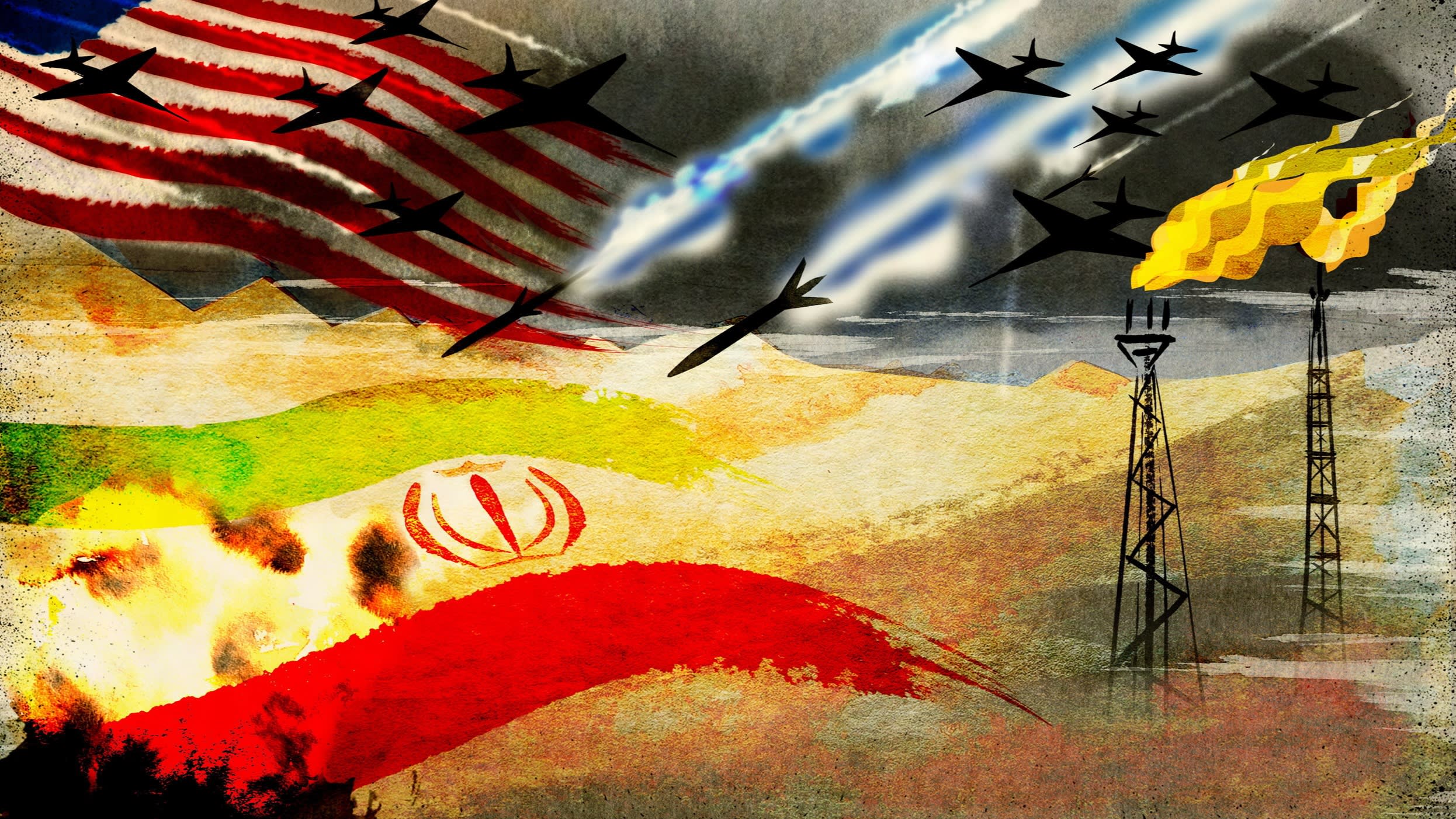
The contemporary landscape of international relations is increasingly defined not by the direct objectives of military campaigns, but by the vast and often unpredictable secondary effects that ripple through the globalized economy. When major powers engage in or sponsor protracted conflicts, the resulting shocks transcend borders, disrupting supply chains, altering energy flows, and forcing a fundamental recalibration of geopolitical alliances. What was once viewed as a localized territorial dispute in Eastern Europe or a regional power struggle in the Middle East has evolved into a catalyst for "geoeconomic fragmentation," a term increasingly used by the International Monetary Fund (IMF) to describe the breaking apart of the global trade order into rival blocs.
The invasion of Ukraine serves as the primary case study for this era of unintended consequences. Before February 2022, the European Union relied on Russia for approximately 40% of its natural gas imports. The weaponization of energy supplies and the subsequent sabotage of the Nord Stream pipelines forced an overnight transformation of the European energy security model. While the intent of Western sanctions was to cripple the Russian war chest, the unintended consequence was a historic inflationary spike across the Eurozone, reaching double digits in late 2022 and forcing the European Central Bank into an aggressive interest rate hiking cycle. This shift did more than just raise heating bills; it permanently altered the competitive landscape for European heavy industry, particularly in Germany, where the "Mittelstand" of medium-sized manufacturers found their business models, predicated on cheap Russian energy, suddenly untenable.
Simultaneously, the energy vacuum created a massive windfall for liquefied natural gas (LNG) producers in the United States and Qatar. The United States emerged as the world’s leading LNG exporter in 2023, effectively replacing Russian pipeline gas with American ship-borne gas. This pivot has deepened the transatlantic economic bond but has also introduced new vulnerabilities, as Europe is now more exposed to the price volatility of the global spot market and the political whims of Washington’s trade policies. Furthermore, the rush to secure fossil fuel alternatives initially slowed the green transition in some sectors as coal-fired plants were reactivated, yet ironically, it has since accelerated the long-term push toward renewables as a matter of national security rather than just environmental policy.
In the realm of food security, the disruption of the "breadbasket of Europe" has highlighted the fragility of global caloric supply chains. Ukraine and Russia together accounted for nearly 30% of global wheat exports and 80% of sunflower oil prior to the conflict. The blockade of Black Sea ports sent global grain prices to record highs, triggering social unrest and deepening humanitarian crises in import-dependent nations like Egypt, Lebanon, and Somalia. While the Black Sea Grain Initiative provided temporary relief, the long-term consequence has been a drive toward "agricultural sovereignty" in the Global South. Countries that once relied on cheap imports are now aggressively subsidizing domestic production, a move that could permanently shift global trade patterns in agricultural commodities.
The financial dimension of modern warfare has proven equally transformative. The decision by Western powers to freeze over $300 billion in Russian central bank assets and sever major Russian banks from the SWIFT messaging system was intended as a "financial nuclear option." However, the unintended consequence has been a growing anxiety among non-aligned nations regarding the safety of dollar-denominated assets. This has catalyzed a renewed interest in "de-dollarization," with countries like Brazil, India, and China exploring alternative payment systems and increasing their gold reserves. While the U.S. dollar remains the dominant global reserve currency, the seeds of a multipolar financial system have been sown, potentially reducing the efficacy of future sanctions regimes.
The defense industry has also undergone a radical metamorphosis. Decades of the "peace dividend" following the Cold War had left Western ammunition stockpiles depleted and manufacturing lines stagnant. The sudden demand for artillery shells, air defense systems, and drones has forced a massive reinvestment in industrial capacity. This "war economy" pivot has boosted GDP figures in manufacturing hubs but has also strained national budgets, pushing debt-to-GDP ratios to levels not seen since the mid-20th century. Moreover, the conflict has served as a laboratory for 21st-century warfare, where low-cost commercial drones and satellite internet have neutralized traditional advantages in heavy armor, forcing military planners globally to rewrite their procurement strategies.
Geopolitically, the conflict has acted as a centrifugal force, pushing Russia closer to China and creating a "no-limits" partnership that challenges Western hegemony. This alignment has accelerated the formation of an alternative geopolitical axis, centered around the expanded BRICS+ grouping. The unintended consequence for the West is the emergence of a more coordinated opposition in international forums like the United Nations, where many nations in the Global South have adopted a stance of "strategic non-alignment," refusing to take sides while leveraging the competition between superpowers to their own advantage.
The impact on global migration and demographics also cannot be overlooked. The displacement of millions of Ukrainians into Western Europe has provided a temporary labor boost to aging societies, but it has also strained social services and fueled the rise of populist political movements. In Russia, the "brain drain" of hundreds of thousands of highly skilled IT and technical workers fleeing mobilization has caused a long-term blow to its domestic innovation capacity, an effect that will likely hamper its economic diversification efforts for a generation.
As trade routes are redrawn, the concept of "friend-shoring"—the practice of sourcing essential components from politically allied nations—has become the new mantra for multinational corporations. This shift away from "just-in-time" efficiency toward "just-in-case" resilience is inherently inflationary. By prioritizing security over cost-optimization, companies are building redundant supply chains that protect against geopolitical shocks but increase the baseline cost of consumer goods. The era of hyper-globalization, characterized by the seamless movement of goods and capital, is being replaced by a more fragmented and expensive "geopolitical globalization."
The technology sector is perhaps the most critical frontier of this fragmentation. The race for semiconductor supremacy and the "chip wars" between the U.S. and China are inextricably linked to the broader climate of conflict. As nations realize that modern weaponry is only as good as the silicon that powers it, the global supply chain for microelectronics has become a battlefield. Export controls and subsidies, such as the U.S. CHIPS Act and similar initiatives in the EU, are creating a bifurcated tech ecosystem. This split threatens to slow the pace of global innovation, as R&D is increasingly siloed within national security frameworks.
In the Middle East, the spillover effects of localized conflicts continue to threaten the stability of the Suez Canal, a chokepoint for 12% of global trade. Disruptions in the Red Sea have forced shipping giants to reroute vessels around the Cape of Good Hope, adding weeks to delivery times and billions to shipping costs. This serves as a stark reminder that in an interconnected world, a conflict in one geographic theater can act as a tax on global trade, affecting the price of a car in Detroit or a smartphone in Tokyo.
Ultimately, the "war of unintended consequences" reveals that the cost of conflict is no longer confined to the battlefield or the national budgets of the belligerents. It is a systemic cost, distributed across the global economy through higher prices, lower growth, and increased uncertainty. As the world moves toward a more fragmented and volatile order, the challenge for policymakers and business leaders alike is to navigate a landscape where the traditional rules of economic efficiency are increasingly subordinated to the requirements of national security and geopolitical resilience. The long-term impact of these shifts will likely be a world that is more resilient to specific shocks but more expensive, less integrated, and more prone to the formation of rival economic spheres. In this new reality, the only certainty is that the second and third-order effects of today’s conflicts will continue to shape the global economy long after the guns have fallen silent.