
As businesses globally increasingly leverage artificial intelligence to streamline operations and justify workforce adjustments, a prevailing narrative centers on AI’s capacity to replace human roles. However, a more nuanced and potentially transformative evolution is underway, one that transcends mere automation and delves into AI’s burgeoning ability to understand the intricate tapestry of human experience. This shift, particularly evident at the intersection of language and artificial intelligence, suggests that the true frontier of AI lies not in replacing human labor, but in fostering a deeper, more profound level of human connection and understanding.
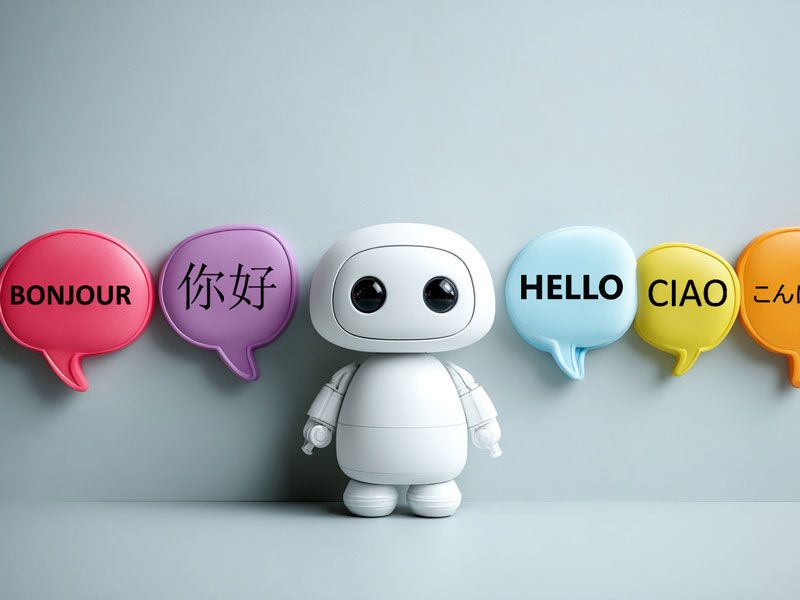
The genesis of this profound transformation can be traced back to the critical role of language in human progress. The founding of companies like Translated in 1999 was predicated on the belief that bridging linguistic divides is paramount to global comprehension and collaboration. Today, AI is the engine driving this mission, enabling unprecedented advancements in translating not just words, but entire cultures. This industry serves as a unique microcosm, offering a privileged perspective on AI’s broader impact on human interaction.
The initial wave of mass AI adoption was largely powered by the synergy between language and technology, manifested in sophisticated large language models (LLMs). These models, capable of generating coherent responses and tailoring output to individual preferences, are the direct descendants of decades of research in machine translation and linguistic analysis. While AI has dramatically accelerated the speed and accuracy of translation, experts concur that it has not supplanted the indispensable element of human sensitivity. Instead, AI excels at automating repetitive and time-consuming tasks, thereby liberating skilled professionals to concentrate on the more complex, emotionally resonant, and inherently "human" aspects of their work. This symbiotic relationship allows for the augmentation of human capabilities rather than their obsolescence.
Cultivating Human-Centric Intelligence
For many enterprises, the discourse surrounding AI remains largely framed by concerns of productivity gains and potential job displacement. Questions like "Which jobs will become redundant?" and "How many roles will persist?" dominate discussions, understandably impacting both current workforces and future generations. Yet, a more forward-looking perspective prompts a re-evaluation: "What are the unique strengths of humans?" and "How can AI empower us to amplify these strengths?" The crucial pivot in the AI paradigm is the transition from asking what tasks AI can perform to understanding how it can elevate human potential.
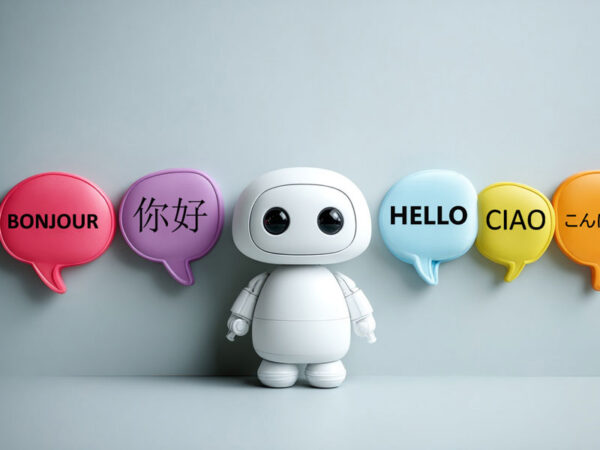
This necessitates a future where AI operates in genuine partnership with human capabilities. The next evolutionary leap for AI will involve a far deeper comprehension of human nuances. Initiatives like DVPS (Diversibus Viis Plurima Solvo), a pioneering project backed by a substantial €29 million European seed investment across 20 partners in nine countries, are actively addressing this challenge. DVPS aims to move beyond models that merely process historical text and image data, venturing into AI that can interpret vision, audio, and sensor input, engage in real-time interaction with the physical world, and possess a more robust contextual awareness. This endeavor represents a significant stride towards AI that can better grasp the multifaceted nature of human communication and interaction.
The responsible development and deployment of such advanced AI necessitate rigorous assessment and broad global dialogue. Recent high-level discussions, such as the World Meeting on Human Fraternity in Rome, brought together leading AI scientists, including Nobel Laureates Geoffrey Hinton and Yoshua Bengio, alongside Professor Stuart Russell. Their insights, shared with Pope Leo XIV, underscored the imperative that AI must serve humanity, uphold its dignity, and be guided by principles of dialogue and care. It is unsurprising that this distinguished group identified "scientific discovery" and "global human understanding" as the two most significant potential positive impacts of AI. This consensus highlights a shared vision for AI as a force for good, capable of fostering unprecedented global connection and progress.
Navigating the Era of Understanding
For leaders and organizations navigating this evolving landscape, a fundamental shift in perspective is paramount. The focus must migrate from the transactional efficiency of AI to its capacity for enhancing human potential. The organizations poised for success in the AI era will be those that invest in cultivating understanding and context, rather than solely pursuing incremental efficiency gains. True leadership in this new epoch demands the integration of empathy and ethical considerations at the very core of technological innovation. The ultimate goal is to ensure that AI amplifies our most human attributes: our capacity for care, our ability to interpret complex situations, and our innate drive to connect with others.
The coming decade of artificial intelligence will not be characterized by a reduction in jobs or an acceleration of machine capabilities in isolation. Instead, it will be defined by the emergence of machines that possess a sophisticated understanding of context, emotion, and human values. Concurrently, humans will increasingly leverage this enhanced understanding to excel in domains uniquely suited to their nature: building enduring relationships, fostering cultural innovation, and leading with authentic purpose.
The true advent of AI as a partner in human progress will occur when machines can discern that a sentence is not merely a string of words, but an expression of human intent. It will be the moment AI can perceive not just the literal meaning of words, but also the underlying tone, the subtle gestures, and the intricate cultural context. This transition marks the departure from mere automation towards profound augmentation. Ultimately, the measure of AI’s real progress will not be the number of jobs it displaces, but the multitude of new forms of human value it helps to create.