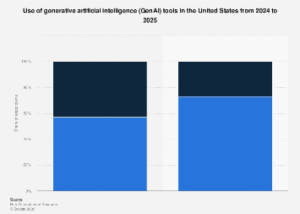


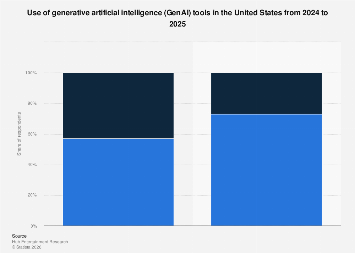
The integration of generative artificial intelligence (GenAI) into the operational fabric of U.S. businesses is poised for a significant expansion throughout 2025, marking a pivotal shift in how companies approach innovation, efficiency, and customer engagement. While nascent adoption has already begun to reshape various sectors, the coming year is anticipated to witness a substantial acceleration in the deployment and utilization of these advanced AI tools across a broader spectrum of industries and company sizes. This trend is not merely about adopting a new technology; it represents a fundamental recalibration of business strategies, driven by the promise of enhanced productivity, novel product development, and the creation of more personalized user experiences.
The current landscape of GenAI adoption in the U.S. is characterized by a mix of early adopters experimenting with pilot programs and a growing segment of organizations actively seeking to embed these capabilities into their core workflows. Projections for 2025 indicate that a considerable portion of U.S. businesses will move beyond exploratory phases and towards widespread implementation. This surge is fueled by several converging factors, including the increasing maturity and accessibility of GenAI platforms, a heightened awareness of their potential competitive advantages, and the growing imperative to stay ahead in an increasingly digital and AI-driven global economy. Market research consistently points towards a robust demand for solutions that can automate complex tasks, generate creative content, and provide sophisticated data analysis, all of which are core strengths of GenAI.
For businesses considering their strategic positioning in this evolving technological paradigm, understanding the nuances of GenAI adoption is paramount. The utility of these tools spans a wide array of applications, from content creation and marketing to software development, scientific research, and customer service. For instance, marketing departments are leveraging GenAI to produce tailored ad copy, social media posts, and even video scripts at unprecedented speed and scale. Software engineering teams are employing it for code generation, debugging, and documentation, thereby accelerating development cycles and improving code quality. In the realm of customer support, GenAI-powered chatbots and virtual assistants are becoming increasingly sophisticated, capable of handling a larger volume of inquiries with greater accuracy and personalization, freeing up human agents for more complex and nuanced interactions.
The economic implications of this widespread GenAI adoption are profound and multifaceted. On one hand, the potential for productivity gains is immense. By automating repetitive and time-consuming tasks, GenAI can allow employees to focus on higher-value activities that require critical thinking, creativity, and strategic decision-making. This can lead to significant cost savings and improved operational efficiency. Furthermore, GenAI’s ability to analyze vast datasets and identify patterns can unlock new insights, leading to more informed business decisions and the identification of untapped market opportunities. The development of new products and services, powered by AI-driven innovation, is also expected to be a major economic driver.
However, the transition also presents challenges. The initial investment in GenAI technology, including software licenses, hardware infrastructure, and specialized talent, can be substantial, particularly for small and medium-sized enterprises (SMEs). There are also significant considerations around data privacy, security, and the ethical implications of AI-generated content, such as potential biases and the risk of misinformation. Workforce retraining and upskilling will be critical to ensure that employees can effectively work alongside AI tools and adapt to evolving job roles. The potential for job displacement in certain sectors also remains a concern that requires careful management and proactive policy responses.
Looking at global comparisons, the U.S. is positioned as a leader in GenAI development and adoption, alongside other major technological hubs such as China and select European nations. While the U.S. benefits from a strong venture capital ecosystem and a robust research and development landscape, other regions are also making significant strides. China, for example, is rapidly advancing its AI capabilities, with a strong focus on government-backed initiatives and a vast domestic market for AI applications. Europe is emphasizing ethical AI development and regulatory frameworks to ensure responsible innovation. The global race for AI dominance underscores the strategic importance of GenAI for national economies and the need for continued investment and policy support.
The pricing models for accessing and utilizing advanced GenAI capabilities are evolving to cater to a diverse range of business needs. For individual users or small teams beginning their exploration, more accessible "Starter" accounts are emerging, often priced around $199 per month when billed annually. These tiers typically provide access to a curated selection of premium statistics and functionalities, allowing for experimentation without an overwhelming initial financial commitment. For larger organizations or teams requiring comprehensive access and advanced analytical tools, "Professional" accounts are available, with pricing that can reach up to $1,399 per month on an annual contract basis. These premium packages often encompass all features and content, providing the robust data and analytical power necessary for in-depth market research, strategic planning, and the development of complex AI-driven solutions. It is important to note that these prices generally exclude sales tax and are often subject to annual renewal at standard list prices, necessitating careful budgeting and contract review.
The statistical data emerging from market analysis firms reinforces the expectation of a significant uptick in GenAI utilization. These reports often segment the market by industry, company size, and specific use case, providing granular insights into where adoption is growing most rapidly. For example, the technology sector, finance, and media and entertainment are frequently cited as early adopters, driven by the inherent digital nature of their operations and the immediate benefits derived from AI-powered automation and content generation. However, the trend is gradually permeating more traditional industries, such as manufacturing, healthcare, and retail, as these sectors increasingly recognize the potential for AI to optimize supply chains, enhance patient care, and personalize customer journeys.
The long-term economic impact of GenAI is expected to be transformative, potentially rivaling the effects of previous technological revolutions like the internet or mobile computing. Companies that successfully integrate GenAI into their strategies are likely to gain a significant competitive edge, characterized by increased agility, enhanced innovation, and a deeper understanding of their customers. Conversely, those that lag in adoption may face challenges in maintaining market share and relevance. The ongoing evolution of AI capabilities suggests that the current applications are merely the tip of the iceberg, with future advancements promising even more sophisticated and impactful uses. Therefore, strategic investment in AI, coupled with a focus on workforce development and ethical considerations, will be crucial for businesses and economies to thrive in the age of generative intelligence. The coming year, 2025, is set to be a defining period in this ongoing transformation, solidifying GenAI’s position as a cornerstone of modern business operations.