

For more than half a century, the annual pilgrimage to Omaha, Nebraska, has served as a rite of passage for the global investment community, a gathering centered on the singular wisdom of Warren Buffett. However, as 2024 marks a pivotal transition in the leadership of one of the world’s most powerful conglomerates, the focus has shifted toward the man now occupying the chief executive suite: Greg Abel. In a series of recent disclosures that have provided a rare glimpse into the internal mechanics of the post-Buffett era, Abel has confirmed that while the title of CEO has officially transferred, the institutional memory and strategic counsel of the "Oracle of Omaha" remain deeply embedded in the company’s daily operations. The transition represents more than a change in personnel; it is a masterclass in corporate continuity, balancing the weight of a legendary legacy with the demands of a rapidly evolving global economy.
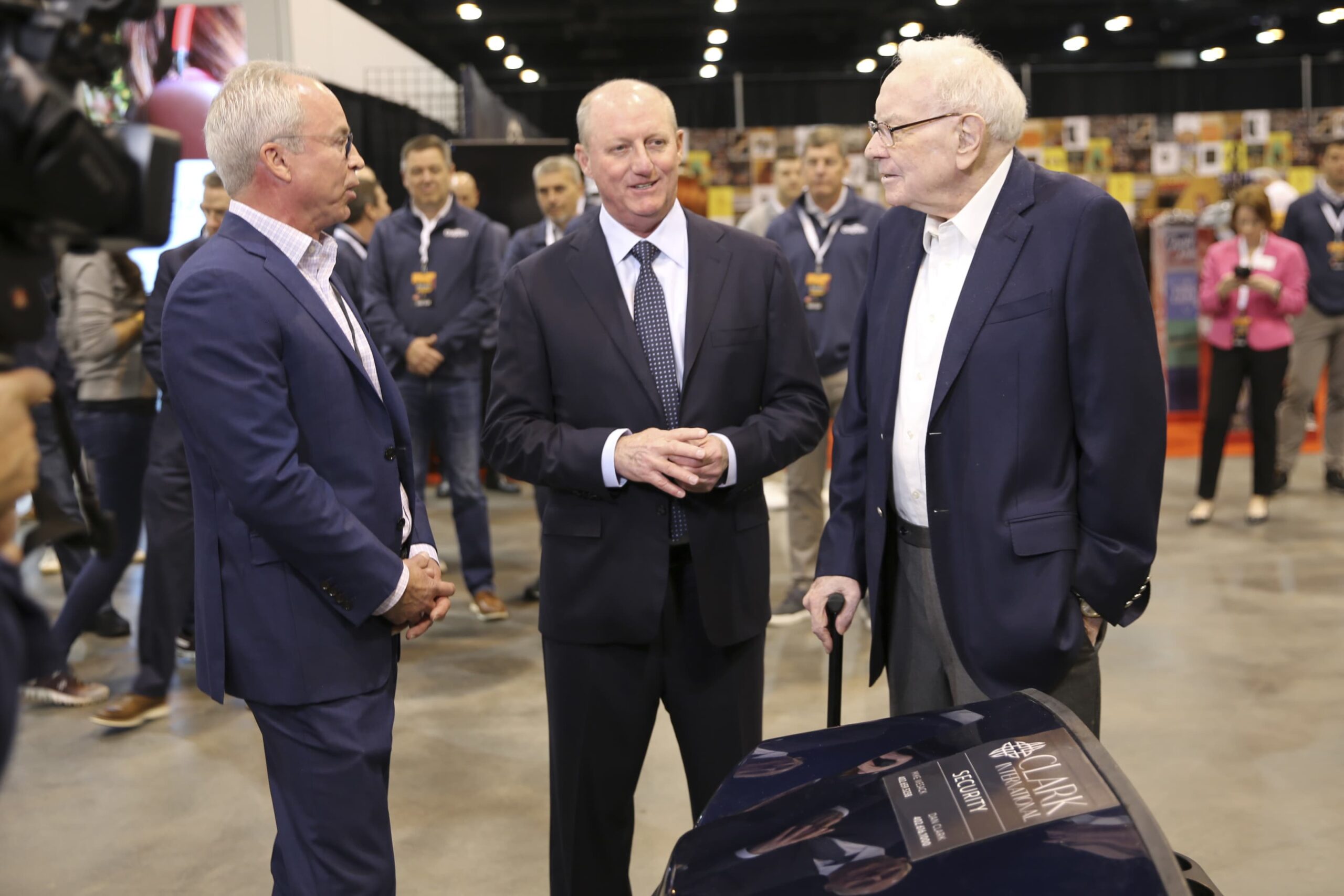
The relationship between Abel and Buffett is characterized by a frequency of communication that underscores the collaborative nature of this leadership handoff. Abel recently revealed that he maintains a near-daily dialogue with Buffett, ensuring that the strategic DNA of Berkshire Hathaway remains intact even as the 94-year-old chairman steps back from the front-line executive duties he held for over six decades. Whether Abel is at the corporate headquarters in Kiewit Plaza or traveling to inspect Berkshire’s vast array of subsidiary operations, the two leaders remain in constant contact. This ongoing consultation serves as a stabilizing force for shareholders who have long viewed Buffett’s personal involvement as the primary safeguard of their capital. It suggests that while Abel is the pilot, the flight plan remains one co-authored by the man who built the aircraft.
Stepping into the shoes of Warren Buffett is a task of historic proportions, particularly regarding the role of "Chief Communicator." For decades, Buffett’s annual letter to shareholders has been regarded as the definitive text on value investing, praised for its clarity, wit, and ability to distill complex economic phenomena into folksy, accessible wisdom. Abel admitted that drafting his inaugural letter as CEO was perhaps the most daunting challenge of his transition. The difficulty lies not just in reporting financial results, but in maintaining the unique cultural contract Berkshire holds with its investors—a contract based on extreme long-termism and radical transparency. While Buffett’s prose often leaned toward the anecdotal, Abel’s communications have begun to establish a framework centered on foundational values, financial fortitude, and a rigid adherence to disciplined investing.
The financial stakes of this transition cannot be overstated. Berkshire Hathaway recently achieved a historic milestone, becoming the first non-technology company in the United States to surpass a $1 trillion market capitalization. This valuation reflects a sprawling empire that touches nearly every facet of the American and global economies. From the insurance giants of GEICO and National Indemnity to the industrial might of BNSF Railway and Berkshire Hathaway Energy, the conglomerate functions as a massive, diversified hedge against economic volatility. Abel’s primary mandate is the stewardship of this "Fortress Berkshire," a task that requires overseeing hundreds of thousands of employees and managing a cash pile that has swelled to over $325 billion. This unprecedented liquidity provides Berkshire with a unique "lender of last resort" status, allowing it to deploy capital during market dislocations when other firms are retreating.
A critical component of the Abel era will be the evolution of the firm’s investment appetite. For years, Buffett and his late partner, Charlie Munger, famously disparaged cryptocurrencies as "rat poison," viewing them as speculative assets with no underlying intrinsic value. Abel has signaled a firm continuation of this skepticism, indicating that Berkshire is unlikely to pivot toward digital assets. This stance differentiates Berkshire from a growing number of institutional investors who have begun to integrate Bitcoin or Ethereum into their portfolios. For Berkshire, the "circle of competence" remains a sacred boundary; if an asset does not produce cash flow or serve a tangible economic purpose, it generally does not find a home in the Omaha portfolio.

However, Abel has left the door open for a more nuanced approach to technology. While the conglomerate was historically slow to embrace tech stocks—a trend famously reversed by its massive, highly successful stake in Apple—Abel recognizes that technological integration is no longer optional for operational excellence. He has noted that technology, both as a tool for subsidiary efficiency and as a potential sector for investment, remains "on the table." This suggests that under Abel’s leadership, Berkshire may become more proactive in identifying tech companies that possess the "moats" and durable competitive advantages that the firm prizes. The challenge will be applying the traditional value-investing lens to a sector characterized by rapid disruption and high valuation multiples.
The transition also occurs in the shadow of the passing of Charlie Munger, whose acerbic wit and "latticework of mental models" provided the intellectual counterbalance to Buffett’s optimism. Without Munger, the burden of internal critique and rigorous debate falls more heavily on Abel and the vice chairs of insurance and non-insurance operations, Ajit Jain and Todd Combs. The "daily check-ins" between Abel and Buffett likely serve as a substitute for the decades-long dialogue Buffett shared with Munger, providing a sounding board for the massive capital allocation decisions that define the company’s success. The continuity of this dialogue is essential for maintaining the "Berkshire Culture"—a decentralized management style that grants immense autonomy to subsidiary CEOs while centralizing all major capital allocation decisions at the top.
From a global perspective, the stability of Berkshire Hathaway is a matter of systemic importance. The company’s insurance operations alone provide a massive float that powers its investment engine, while its utility and rail assets are critical infrastructure for North American commerce. As the global economy faces headwinds from geopolitical tensions, fluctuating interest rates, and the transition to green energy, Abel’s leadership will be tested by his ability to navigate these macro trends. His background in energy—having previously led Berkshire Hathaway Energy into a dominant position—suggests he is well-equipped to handle the capital-intensive industrial segments of the business, which are becoming increasingly vital as the company’s "four giants" continue to grow.
Market analysts and economic historians will likely view the Abel-Buffett partnership as a textbook example of succession planning. Unlike many corporate handovers that result in a sudden shift in strategy or a "clearing of the decks," Berkshire’s transition is designed to be invisible to the underlying business operations. By maintaining a daily connection with Buffett, Abel ensures that the transition is a gradient rather than a cliff. This approach mitigates the "key man risk" that has haunted Berkshire’s valuation for years. Investors are being shown, in real-time, that the systems and philosophies Buffett spent sixty years perfecting are robust enough to survive his eventual full retirement.
Ultimately, the "Abel Era" will be judged by its ability to deploy Berkshire’s mountain of cash effectively in a world where "cheap" deals are increasingly rare. With private equity firms and sovereign wealth funds competing for the same high-quality assets, Abel must maintain the discipline that Buffett made famous: the willingness to do nothing when the price isn’t right. The daily conversations between the new CEO and the legendary founder are not just about catching up; they are about reinforcing the psychological fortitude required to wait for the "fat pitch." As the global financial landscape shifts toward automation and digital assets, the enduring relevance of Berkshire Hathaway will depend on Abel’s ability to keep one foot firmly planted in the proven principles of the past while the other steps cautiously into a technologically driven future. In Omaha, the names on the door may change, but the philosophy of the "long game" remains the firm’s most valuable asset.