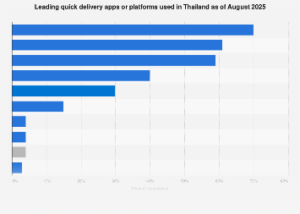


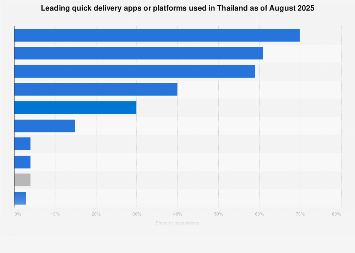
The landscape of consumer convenience in Thailand is being profoundly reshaped by the ascendance of quick delivery applications, a trend poised for significant growth and market consolidation in the coming years. As the nation’s digital economy matures, these platforms are not merely facilitating transactions; they are fundamentally altering consumer behavior, supply chain logistics, and the very fabric of urban commerce. Projections indicate that by 2025, the dominance of these rapid delivery services will be firmly established, driven by increasing smartphone penetration, a burgeoning middle class with a taste for instant gratification, and ongoing technological advancements that enhance operational efficiency. This phenomenon is not isolated to Thailand but mirrors a global shift towards hyper-convenience, where time is increasingly valued as a premium commodity.
The rapid proliferation of quick delivery apps in Thailand has been a story of intense competition and strategic innovation. Platforms are vying for market share by expanding their service offerings beyond food and groceries to encompass a wider array of goods, including pharmaceuticals, electronics, and everyday essentials. This diversification is crucial for capturing a larger segment of the consumer wallet and building sustained customer loyalty. The underlying economic driver is the growing demand for immediate access to goods and services, a desire amplified by the pandemic’s acceleration of e-commerce adoption and the subsequent normalization of at-home consumption patterns. For businesses, these platforms represent a critical new channel for reaching consumers, particularly small and medium-sized enterprises (SMEs) that may lack the resources to establish their own robust online presence and delivery infrastructure.
Market analysis suggests that the Thai quick delivery sector is characterized by a few dominant players, each employing distinct strategies to secure their position. These strategies often involve aggressive marketing campaigns, extensive rider networks, and partnerships with a vast ecosystem of merchants. The competitive intensity necessitates continuous investment in technology, from sophisticated route optimization algorithms to AI-powered customer service chatbots, all aimed at reducing delivery times and enhancing user experience. The economic impact is multifaceted, stimulating job creation within the gig economy for delivery personnel, while also creating new revenue streams for retailers and restaurants. Furthermore, the increased efficiency in logistics can contribute to reduced traffic congestion in urban centers over the long term, as optimized delivery routes lead to fewer, more targeted journeys.
Globally, the quick delivery market is experiencing similar dynamics, albeit with regional variations. In mature markets like Europe and North America, established players are focusing on profitability and expanding into new product categories, while in emerging economies across Asia and Latin America, the focus remains on user acquisition and market penetration. Thailand’s trajectory appears to align with the latter, characterized by rapid growth and a dynamic competitive environment. The nation’s strong digital infrastructure, coupled with a culturally ingrained appreciation for convenience, provides fertile ground for these services. The government’s push for a digital economy further underpins this growth, encouraging innovation and investment in technology-driven sectors.
The economic implications of this delivery revolution extend beyond the immediate transactional sphere. The data generated by these platforms offers invaluable insights into consumer preferences, purchasing habits, and market trends, enabling businesses to make more informed strategic decisions. This granular data can inform inventory management, product development, and targeted marketing efforts, thereby boosting overall economic efficiency. For the government, understanding these trends is crucial for policy-making, particularly in areas such as labor regulations for gig workers, urban planning, and consumer protection. The challenge lies in balancing the benefits of innovation and convenience with the need to ensure fair labor practices and address potential societal impacts.
Looking ahead to 2025, the quick delivery sector in Thailand is expected to mature further, with a greater emphasis on profitability and sustainability. We can anticipate a period of consolidation, where smaller or less efficient players may be acquired by larger entities, leading to a more concentrated market. The focus will likely shift from pure growth to optimizing operational costs, enhancing rider welfare, and building stronger relationships with both merchants and consumers. Technological advancements will continue to play a pivotal role, with explorations into drone delivery, autonomous vehicles, and more sophisticated predictive analytics to anticipate demand and streamline operations. The economic benefits will continue to accrue, fostering a more dynamic and responsive retail ecosystem, driving job creation, and contributing to Thailand’s overall digital transformation. The ongoing evolution of these platforms signifies a fundamental shift in how commerce is conducted, underscoring Thailand’s position as a key player in the rapidly digitizing global economy.