
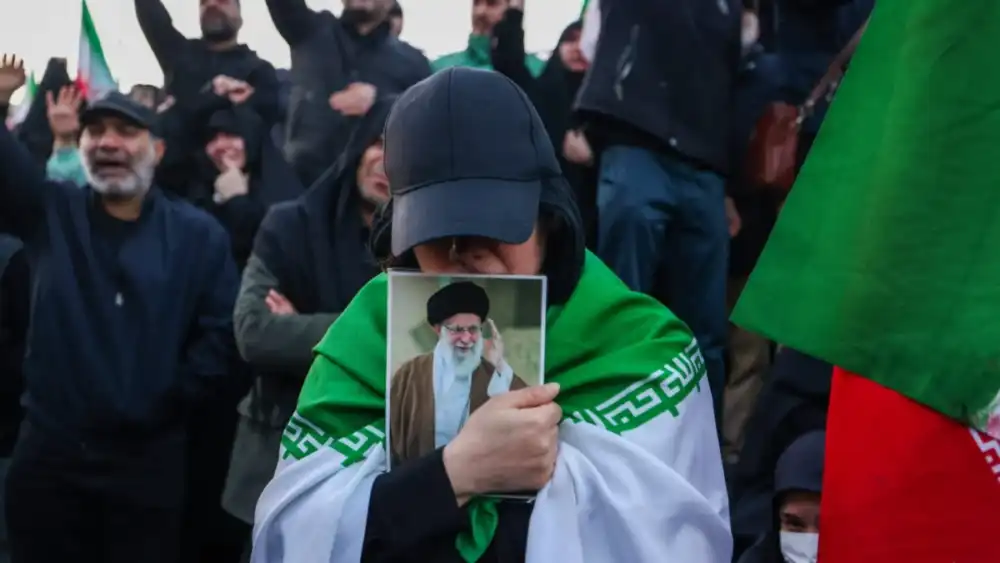
The recent transition of high-ranking Iranian leadership from the political stage to the pantheon of state-sponsored martyrdom marks a pivotal inflection point for the Islamic Republic’s domestic stability and its expansive regional ambitions. In the wake of significant leadership losses, Tehran’s hardline establishment has moved with calculated precision to transform grief into a potent tool of geopolitical mobilization. By casting fallen leaders as eternal symbols of resistance, the Iranian clerical and military elite are not merely engaging in a ritual of mourning; they are reinforcing the "Axis of Resistance," a complex network of proxies and allies that serves as Iran’s primary defense and power projection mechanism across the Middle East. This strategic use of martyrdom functions as a psychological and political glue, binding disparate groups from Lebanon and Syria to Iraq and Yemen under a unified ideological banner, while simultaneously signaling to global markets that the state’s ideological resolve remains unshaken by individual attrition.
The internal mechanics of this mobilization are deeply rooted in the historical and religious fabric of Shia Islam, which places a high premium on the concept of the "noble sacrifice." However, in the contemporary context, this religious sentiment is being synthesized with modern statecraft. For the Iranian hardliners, the death of a senior figure provides a unique window of opportunity to bridge the growing legitimacy gap between the state and its disenchanted youth. By saturating the public square with imagery of the "slain leader," the regime attempts to conflate national identity with the survival of the revolutionary apparatus. This is particularly critical at a time when Iran faces significant economic headwinds, including an inflation rate that has persistently hovered near 40% and a currency, the rial, that has seen dramatic devaluation against the US dollar over the past decade.
Beyond the borders of the Islamic Republic, the narrative of martyrdom serves as a clarion call to the members of the Axis of Resistance. For groups such as Hezbollah in Lebanon, the Houthis in Yemen, and various paramilitary organizations in Iraq, the elevation of an Iranian leader to martyr status reinforces the perception of a shared destiny. This ideological alignment has tangible economic and military consequences. Iran’s financial support for these proxies, estimated by some international analysts to reach several billion dollars annually despite stringent international sanctions, is often justified to the Iranian public through the lens of these "sacred" regional commitments. This funding ensures that Tehran maintains a presence near critical global maritime chokepoints, most notably the Strait of Hormuz and the Bab al-Mandeb.
The economic implications of Iran’s regional posturing are felt most acutely in the global energy markets. The Strait of Hormuz alone accounts for the transit of approximately 20% of the world’s total oil consumption, roughly 21 million barrels per day. Any escalation in rhetoric or military posturing fueled by the "martyrdom" narrative creates immediate volatility in Brent crude prices. Commodity traders closely monitor the rhetoric coming out of Tehran, as the hardline faction often uses commemorative events for fallen leaders to signal potential shifts in their maritime strategy. The threat of regional disruption serves as a form of "asymmetric economic warfare," allowing Iran to exert pressure on Western powers and their regional allies without engaging in a direct conventional conflict that its sanctioned economy might struggle to sustain.
Furthermore, the consolidation of power by hardliners in the aftermath of leadership losses has direct consequences for Iran’s international trade relations, particularly its "Look to the East" policy. As the prospect of reviving the Joint Comprehensive Plan of Action (JCPOA) remains dim, Tehran has increasingly leaned on its strategic partnership with China. In 2021, the two nations signed a 25-year strategic cooperation agreement, which reportedly involves up to $400 billion in Chinese investment in exchange for a steady supply of Iranian oil at discounted rates. The hardline faction, which views Western engagement with skepticism, utilizes the current atmosphere of nationalistic fervor to further entrench these Eastern ties, arguing that the "martyred" leaders died defending the country from Western economic imperialism.
The role of the Islamic Revolutionary Guard Corps (IRGC) is central to this narrative. As the primary custodian of both the "martyrdom" ideology and a significant portion of the Iranian economy, the IRGC benefits from the heightened state of alert that follows the death of a high-ranking official. The IRGC’s economic empire is vast, spanning construction, telecommunications, energy, and logistics. Estimates suggest the organization controls anywhere from 20% to 40% of the Iranian economy through a network of front companies and charitable foundations known as "bonyads." By framing the current geopolitical climate as a perpetual struggle defined by the sacrifices of its leaders, the IRGC justifies its continued dominance over the domestic economy and its exemption from standard civilian oversight.
From a global perspective, the international community views Tehran’s focus on martyrdom with a mixture of concern and strategic calculation. For the United States and its European allies, the concern is that the hardline surge will lead to increased proliferation of drone and missile technology to regional proxies. The recent use of Iranian-designed hardware in conflicts across the Middle East and Eastern Europe has already led to a new wave of targeted sanctions. However, these sanctions often struggle to penetrate the "shadow banking" networks that Iran has developed over decades. These networks, which utilize shell companies in third-party jurisdictions, allow Iran to continue exporting upwards of 1.5 million barrels of oil per day, primarily to independent refineries in China, bypassing the traditional SWIFT financial messaging system.
In comparison to other regional powers, Iran’s reliance on ideological mobilization stands in stark contrast to the economic liberalization efforts seen in the Gulf Cooperation Council (GCC) states. While Saudi Arabia and the United Arab Emirates are aggressively pursuing "Vision 2030" style programs to diversify their economies away from hydrocarbons and attract foreign direct investment, Iran’s hardline leadership remains focused on a "Resistance Economy." This model prioritizes self-sufficiency and ideological purity over global integration. The death of a leader, therefore, is not seen by the Iranian elite as a moment for pivot or reform, but as a mandate to double down on this isolationist yet interventionist path.
Expert analysis suggests that the long-term viability of this strategy depends on the regime’s ability to manage the internal contradictions of its economy. While the "martyrdom" narrative may succeed in rallying the core conservative base and regional proxies, it does little to address the grievances of the broader Iranian population, which is increasingly concerned with purchasing power, unemployment, and environmental degradation. The disconnect between the state’s high-altitude ideological goals and the ground-level economic reality represents a significant structural risk. If the "martyrdom" narrative fails to resonate with the middle class, the regime may find itself increasingly reliant on the security apparatus to maintain order, further bloating the military budget at the expense of social services.
As the region continues to navigate a period of intense instability, the death of Iranian leaders will likely remain a catalyst for both ideological consolidation and market anxiety. The "martyr" status bestowed upon these figures is more than a posthumous honor; it is a strategic asset used to validate a foreign policy that prioritizes regional influence through proxy networks and a domestic policy that favors the military-clerical elite. For global observers, understanding this synthesis of religious symbolism and economic pragmatism is essential to navigating the complexities of the Middle East. Whether this strategy will lead to a sustainable regional hegemony or eventually succumb to the weight of its own economic contradictions remains the defining question for the future of the Islamic Republic. In the interim, the world can expect the cult of martyrdom to continue driving Tehran’s defiance on the global stage, ensuring that the legacy of its fallen leaders remains a living force in international affairs.