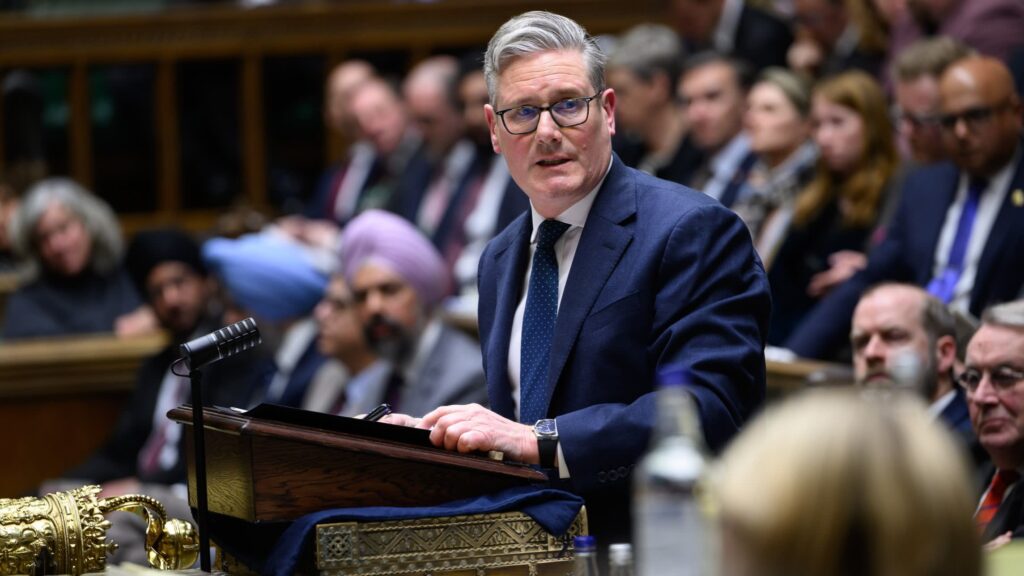

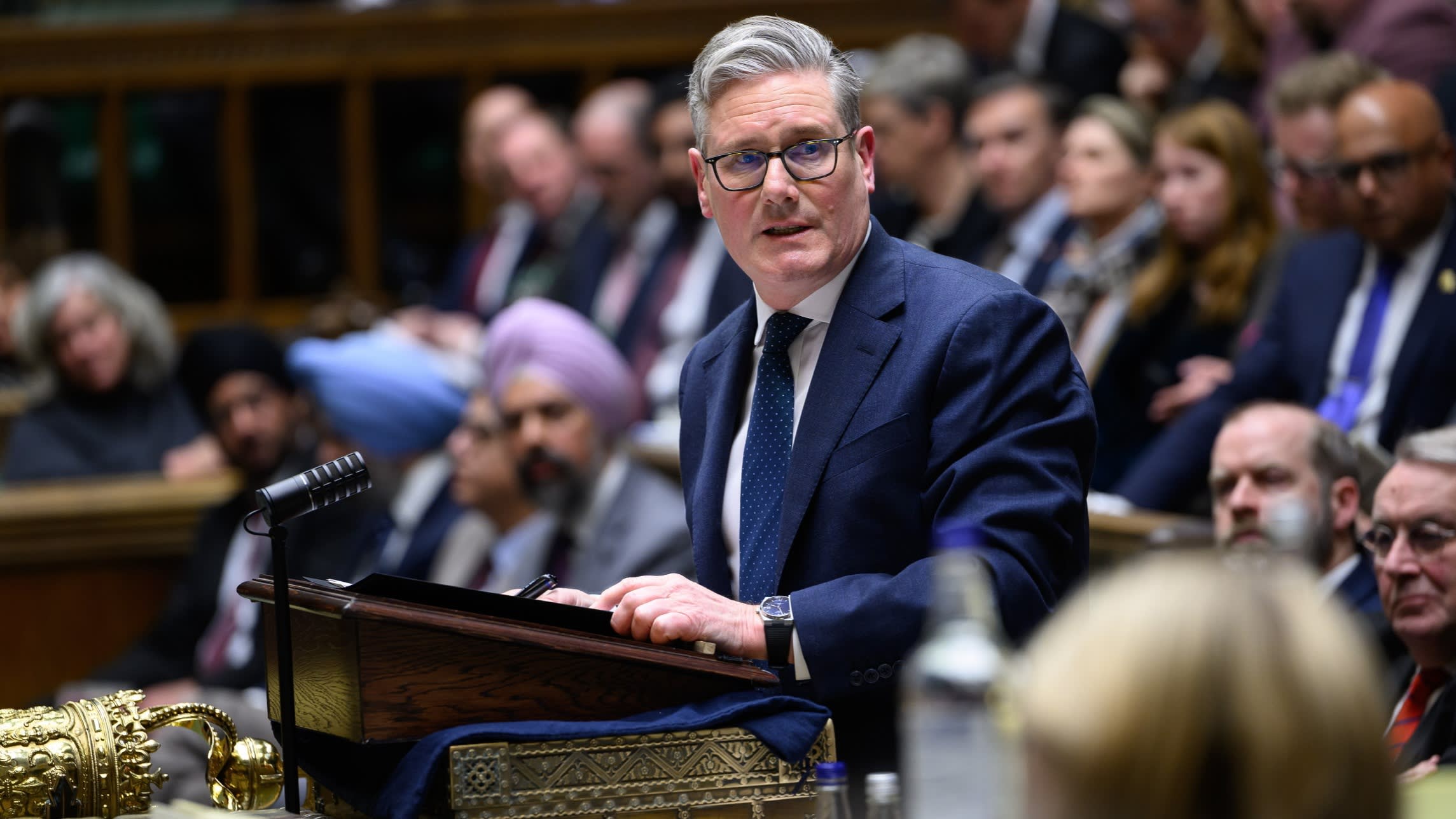
The transition of power in Westminster has historically signaled a recalibration of British foreign policy, yet the arrival of Sir Keir Starmer at 10 Downing Street has brought with it a notable degree of continuity—and a conspicuous level of caution—regarding the Islamic Republic of Iran. While political detractors often equate deliberation with indecision, a deeper analysis of the current global economic and security landscape suggests that the UK’s current "strategic patience" is a calculated response to a multifaceted crisis. For a government that has staked its domestic reputation on achieving the highest sustained growth in the G7, avoiding a sudden, unmanaged escalation in the Middle East is not merely a diplomatic preference; it is an economic necessity.
The geopolitical chessboard facing the British Foreign Office is perhaps more complex today than at any point since the end of the Cold War. Iran sits at the center of a "ring of fire," exerting influence through a network of proxies including Hezbollah in Lebanon, Hamas in Gaza, and the Houthi rebels in Yemen. For the UK, the most immediate economic impact of this influence is felt in the maritime corridors of the Red Sea. Approximately 12% to 15% of global trade passes through the Bab el-Mandeb strait, and the persistent threat of Houthi missile and drone attacks—linked directly to Iranian intelligence and supply chains—has forced major shipping conglomerates like Maersk and Hapag-Lloyd to divert vessels around the Cape of Good Hope. This detour adds roughly 10 to 14 days to transit times and increases fuel costs by upwards of $1 million per round trip, costs that eventually filter down to British consumers in the form of persistent inflationary pressure.
By maintaining a cautious stance, the Starmer administration is attempting to preserve what remains of the diplomatic "backchannels" that prevent these localized skirmishes from erupting into a full-scale regional war. Such a conflict would almost certainly lead to a blockade or severe disruption of the Strait of Hormuz, the world’s most important oil transit chokepoint. With daily flows of roughly 21 million barrels of oil—roughly 21% of global petroleum liquid consumption—any closure would send Brent crude prices spiraling well north of $100 per barrel. For a UK economy still recovering from the energy price shocks triggered by the Russian invasion of Ukraine, a secondary energy spike would be catastrophic, likely forcing the Bank of England to maintain higher interest rates for longer, thereby stifling the very investment the Labour government seeks to attract.
The internal debate within the British government regarding the designation of the Islamic Revolutionary Guard Corps (IRGC) as a terrorist organization serves as a microcosm of this broader strategic caution. While the previous Conservative government and several high-profile members of the current cabinet have previously signaled support for such a move, the Foreign Office remains hesitant. The argument against designation is grounded in hard-nosed realism: once the IRGC is designated, the UK would likely be forced to sever all diplomatic ties with Tehran. This would not only eliminate the ability to advocate for the release of dual-national detainees but would also leave the UK without a "seat at the table" should a new framework for nuclear containment emerge.
Iran’s nuclear program remains the most existential threat to regional stability. According to recent reports from the International Atomic Energy Agency (IAEA), Iran has significantly increased its stockpile of uranium enriched to 60% purity—a short technical step away from the 90% required for weapons-grade material. The Joint Comprehensive Plan of Action (JCPOA), which the UK helped broker in 2015, is effectively a dead letter following the US withdrawal in 2018. However, Starmer’s team appears to be aligning with European allies in Paris and Berlin to keep the "E3" diplomatic format alive. The objective is to maintain a "snapback" mechanism—the ability to re-impose UN sanctions—while searching for a "JCPOA-plus" agreement that addresses both nuclear proliferation and ballistic missile development.
This alignment with Europe marks a subtle but significant shift in British foreign policy under Starmer. After years of post-Brexit friction, the new administration is prioritizing a "reconnection" with the European Union on matters of security and defense. By mirroring the caution of the French and German governments, the UK is positioning itself as a stabilizing force within the Western alliance, rather than an outlier. This coordination is essential for the efficacy of sanctions. Currently, the UK has over 600 Iranian individuals and entities sanctioned, but these measures are only effective when harmonized with the US Treasury and the European Council to prevent capital flight and "sanctions busting" through third-party intermediaries.
Furthermore, the UK’s stance must be viewed through the lens of the "Special Relationship" with the United States, particularly during an American election year. The Biden-Harris administration has shown a clear desire to avoid a new Middle Eastern war that could alienate voters or destabilize global markets. By adopting a measured tone, Starmer avoids creating a policy rift with Washington while simultaneously preparing for the possibility of a change in the White House. A second Trump administration would likely return to a "maximum pressure" campaign, and the UK’s current caution allows it the flexibility to pivot without having already burned its diplomatic bridges.
Domestic pressures also play a role in the Prime Minister’s calculus. The Labour Party’s internal coalition is diverse, with varying views on Middle Eastern intervention. A hawkish turn against Iran could exacerbate tensions regarding the UK’s stance on the conflict in Gaza, potentially alienating a segment of the party’s electoral base. Conversely, being perceived as "soft" on a regime that provides military hardware to Russia—specifically the Shahed drones used against Ukrainian infrastructure—carries its own political risks. Starmer’s solution has been a policy of "clear-eyed engagement": condemning Iranian aggression and providing military support for Israel’s defense (as seen during the April drone attacks), while refusing to engage in the escalatory rhetoric that often precedes military intervention.
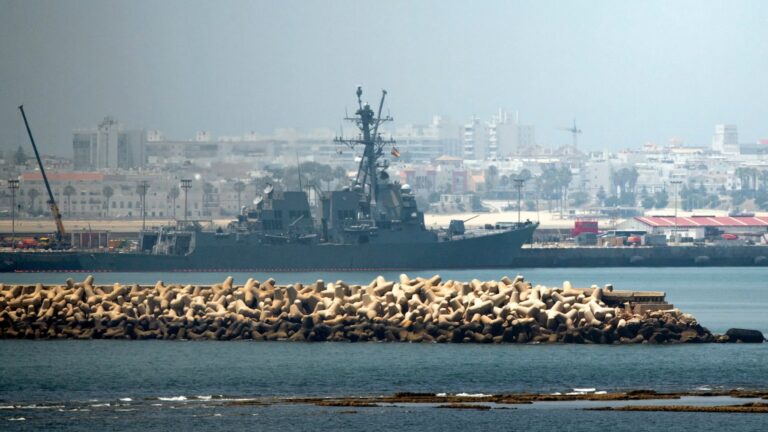
The economic impact of this caution extends to the UK’s defense budget. With the government committed to a "Strategic Defense Review," there is an acute awareness that the British Armed Forces are currently stretched thin. Sustained operations in the Red Sea and maintaining a permanent presence in the Gulf are expensive endeavors. A more aggressive stance toward Iran would necessitate an immediate and massive increase in defense spending, potentially jeopardizing the Treasury’s strict fiscal rules. By managing the Iran file through diplomacy and targeted sanctions rather than military posturing, the government buys time to rebuild its military industrial base and modernize the Royal Navy’s capabilities.
Looking ahead, the success of Starmer’s approach will be measured by the stability of the "middle ground." The world is currently witnessing the emergence of a "multipolar" Middle East, where regional powers like Saudi Arabia and the United Arab Emirates are pursuing their own de-escalation strategies with Tehran. For the UK to be a relevant player in this new landscape, it must prove that it is a sophisticated diplomatic actor capable of nuanced maneuvers. Crude labels and "all-or-nothing" policies are ill-suited for a region where the lines between statecraft, proxy warfare, and economic competition are permanently blurred.
In conclusion, while the call for a more "muscular" foreign policy is often popular in the short term, the long-term interests of the United Kingdom—and the broader global economy—are better served by the current administration’s restraint. By prioritizing diplomatic channels, aligning with European partners, and focusing on the containment of maritime and nuclear threats, Keir Starmer is attempting to insulate the British economy from a volatility it cannot afford. In the high-stakes world of Middle Eastern geopolitics, caution is not a sign of weakness; it is a fundamental tool of economic preservation. The "wait and see" approach may lack the dramatic flair of his predecessors, but in an era of unprecedented global instability, a steady hand is often the most valuable asset a leader can possess.