
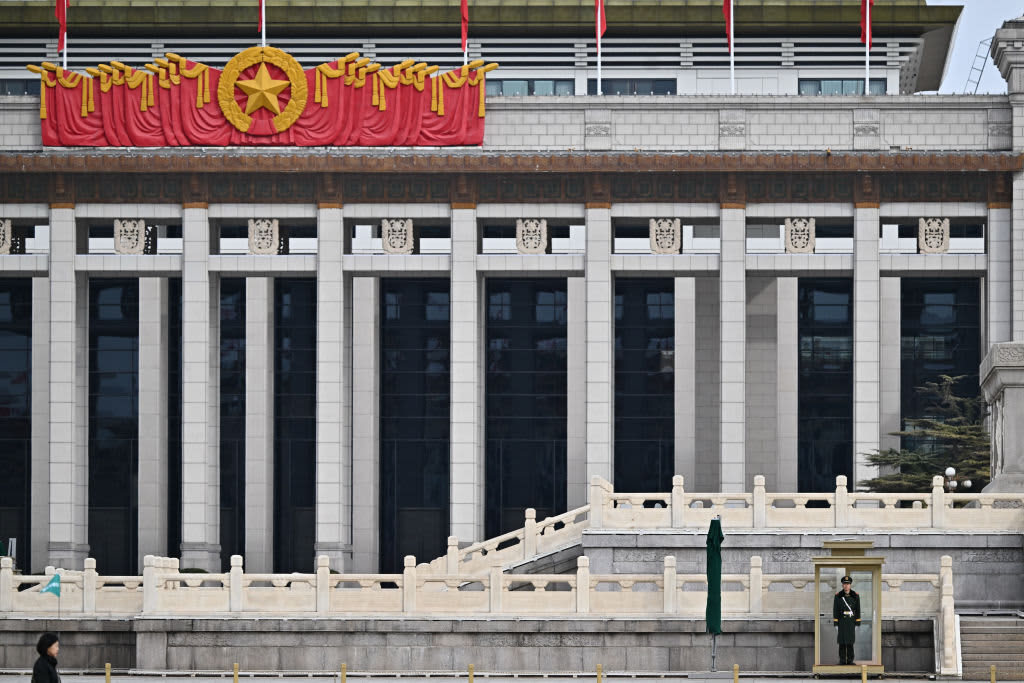
As the spring mist settles over Beijing, the eyes of the global financial community have turned toward the Great Hall of the People for the commencement of the "Two Sessions," China’s most significant annual political gathering. This year’s meetings, comprising the Chinese People’s Political Consultative Conference (CPPCC) and the National People’s Congress (NPC), arrive at a critical juncture for the world’s second-largest economy. With a soldier standing guard in front of the National Museum of China, the imagery of stability contrasts sharply with a complex domestic landscape defined by a protracted property crisis, stubborn deflationary pressures, and a shifting geopolitical environment. Premier Li Qiang is expected to unveil a suite of economic targets and policy directives that will not only dictate China’s trajectory for 2026 but also lay the groundwork for the nation’s 15th Five-Year Plan, a roadmap intended to carry the country toward its ambitious 2035 development goals.
The centerpiece of the upcoming announcements is the annual Gross Domestic Product (GDP) growth target. For decades, this figure served as an ironclad promise of expansion, but in recent years, it has become a barometer of the government’s willingness to tolerate slower, more "high-quality" growth versus its desire to maintain social stability through stimulus. Market consensus suggests a target range of 4.5% to 5%. While a 5% goal would signal a "growth-at-all-costs" mentality to bolster investor confidence, a target dipping below that threshold would represent the lowest official objective on record, excluding the anomalous pandemic year of 2020. Economists at the Economist Intelligence Unit have suggested that a more conservative 4.6% target would grant Beijing the necessary "policy headroom" to prioritize structural reforms over raw output. Conversely, analysts at Morgan Stanley argue that a lower target is unlikely, as 2026 marks the inaugural year of the new five-year cycle, a period when the leadership typically seeks to anchor expectations with robust figures.
The 15th Five-Year Plan (2026–2030) represents more than just a bureaucratic exercise; it is the penultimate chapter in China’s quest for "socialist modernization" by 2035. Central to this vision is the concept of "New Quality Productive Forces," a term popularized by President Xi Jinping to describe a shift away from labor-intensive manufacturing and debt-fueled infrastructure toward high-tech innovation. Investors are scouring the Two Sessions for specific clues regarding Beijing’s self-sufficiency drive. In an era of increasing Western export controls on advanced semiconductors and artificial intelligence hardware, China’s focus has narrowed on achieving a "fortress economy" capable of weathering external shocks. This involves massive state-directed investment into domestic chip design, quantum computing, and the "green trio" of electric vehicles, lithium-ion batteries, and solar products.

However, the transition to a tech-driven economy is being hampered by the lingering shadows of the old economic model. The property sector, once responsible for roughly a quarter of China’s economic activity, remains in a state of managed decline. Despite various "white-list" lending schemes and local government efforts to clear housing inventory, consumer confidence remains tethered to falling real estate values. This has created a "wealth effect" in reverse, where Chinese households, seeing their primary asset depreciate, have pulled back on discretionary spending. To counter this, the NPC is expected to discuss the expansion of "trade-in" subsidies—financial incentives for consumers to swap old appliances and automobiles for new, energy-efficient models. While these measures have provided a temporary floor for retail sales, critics argue they are a far cry from the direct cash transfers or social safety net expansions needed to truly rebalance the economy toward consumption.
Fiscal policy is also expected to take a more aggressive stance this year. Projections suggest a budget deficit target of approximately 4% of GDP, matching the record high set in 2025. This level of deficit spending is a departure from China’s historical fiscal conservatism and reflects the urgent need to support local governments. Many of these regional administrations are currently drowning under the weight of "hidden debt" accumulated through Local Government Financing Vehicles (LGFVs). With land sales—the traditional source of local revenue—evaporating, the central government has been forced to step in with debt-swap programs. Yet, as Logan Wright of the Rhodium Group points out, there is a widening gap between Beijing’s fiscal intentions and the actual efficiency of that spending. Much of the current lending is being funneled into unproductive state-owned enterprises (SOEs) simply to prevent their collapse, leading to a "declining payoff" for every yuan invested.
The human element of this year’s Two Sessions also reflects a changing political climate. Observers have noted a reduction in the number of delegates participating in the meetings, a byproduct of an ongoing and rigorous anti-corruption campaign that has reached deep into the legislative and military ranks. This consolidation of power ensures that the policy directives issued by Premier Li Qiang will be met with absolute compliance, but it also raises questions about the diversity of economic feedback reaching the top echelons of the Communist Party. As the leadership speaks to the press, including top diplomat Wang Yi, the rhetoric is expected to remain defiant in the face of international pressure.
Geopolitics looms large over the Great Hall. The legislative agenda must account for a volatile global landscape, characterized by escalating trade tensions with the United States and Europe, as well as instability in the Middle East that threatens energy security. The NPC will likely emphasize "dual circulation"—a strategy that seeks to maximize China’s internal market while maintaining its dominance in global supply chains. However, as Western nations move to "de-risk" their economies, China finds itself in a race against time to create internal demand that can offset potential losses in export markets. The threat of additional tariffs and tech blockades has turned "technological self-reliance" from a long-term aspiration into an immediate survival strategy.

Inflation, or the lack thereof, remains another critical concern. With a target likely set around 2%, Beijing is signaling a desire to move away from the deflationary trap that haunted the economy throughout the previous year. Falling producer prices have squeezed corporate profit margins, leading to wage freezes and further dampening the consumer outlook. Achieving 2% inflation will require a delicate balance of monetary easing by the People’s Bank of China (PBOC) and effective fiscal stimulus that actually reaches the pockets of the middle class, rather than just the balance sheets of state banks.
As the meetings progress toward their conclusion on March 11, the international community will be looking for more than just numbers. They will be looking for a narrative of renewal. Can China pivot its massive economic engine fast enough to avoid the "middle-income trap"? Can it resolve its internal debt contradictions without triggering a systemic crisis? The targets set this week are the markers by which the world will judge the success of the Chinese model in an era of unprecedented challenge. While the soldier in front of the National Museum represents the state’s enduring presence, the real test of strength will be found in the fine print of the 15th Five-Year Plan and the government’s ability to turn policy papers into tangible prosperity. For now, the "Two Sessions" serve as a reminder that while China’s growth may be slowing, its ambitions to reshape the global economic order remain as vast as ever.