The escalating conflict between Iran and Israel has historically served as a catalyst for a "flight to quality," driving investors toward the perceived safety of the U.S. dollar and Treasury bonds. However, a growing contingent of market strategists and institutional asset managers is challenging this conventional wisdom, suggesting that the current geopolitical friction may actually present a generational "buy the dip" opportunity in emerging markets. While the immediate reaction to regional instability often involves a sharp sell-off in riskier assets, the underlying macroeconomic fundamentals—ranging from shifting currency dynamics to a widening valuation gap between domestic and international equities—point toward a potential period of outperformance for developing economies.
The logic behind this contrarian stance centers on the long-term trajectory of the U.S. dollar and the fiscal implications of sustained military engagement. Traditionally, geopolitical shocks provide a short-term boost to the greenback as global capital seeks refuge. Yet, seasoned portfolio managers argue that the secondary effects of conflict, particularly increased government spending and a widening fiscal deficit in the United States, could eventually exert downward pressure on the dollar. For emerging markets, a softer dollar acts as a powerful tailwind, reducing the cost of servicing dollar-denominated debt and making local-currency assets more attractive to international investors.
Recent market activity underscores this tension. Following the latest flare-up in the Middle East, the iShares MSCI Emerging Markets ETF (EEM) experienced a weekly retreat of more than 5%, a move largely attributed to immediate risk aversion. However, this correction must be viewed through a broader lens: the index remains up nearly 37% over the past twelve months, reflecting a robust recovery that began well before the current regional tensions. This resilience suggests that the "geopolitical noise" that once paralyzed emerging market investment is now being viewed by institutional players as a temporary hurdle rather than a structural deterrent.
The divergence in global growth rates provides further support for an increased exposure to international equities. While the U.S. economy has shown remarkable resilience in the face of high interest rates, many emerging economies are at a different stage of the monetary cycle. Central banks in regions like Latin America were among the first to aggressively hike rates to combat post-pandemic inflation and are now in a position to ease policy, providing a domestic stimulus that contrasts with the "higher for longer" stance of the Federal Reserve. Brazil and Chile, for instance, have already initiated rate-cutting cycles, fostering an environment conducive to equity growth and domestic consumption.
Furthermore, the concentration risk within U.S. indices has reached historic levels. With a handful of technology giants accounting for a disproportionate share of the S&P 500’s gains, many diversified investors are looking for a relief valve. Emerging markets offer a compelling valuation arbitrage; as of late 2023, many EM indices were trading at significant discounts to their ten-year average price-to-earnings ratios, while U.S. large-cap stocks were trading at a premium. This valuation gap offers a margin of safety for those willing to weather the short-term volatility associated with Middle Eastern headlines.
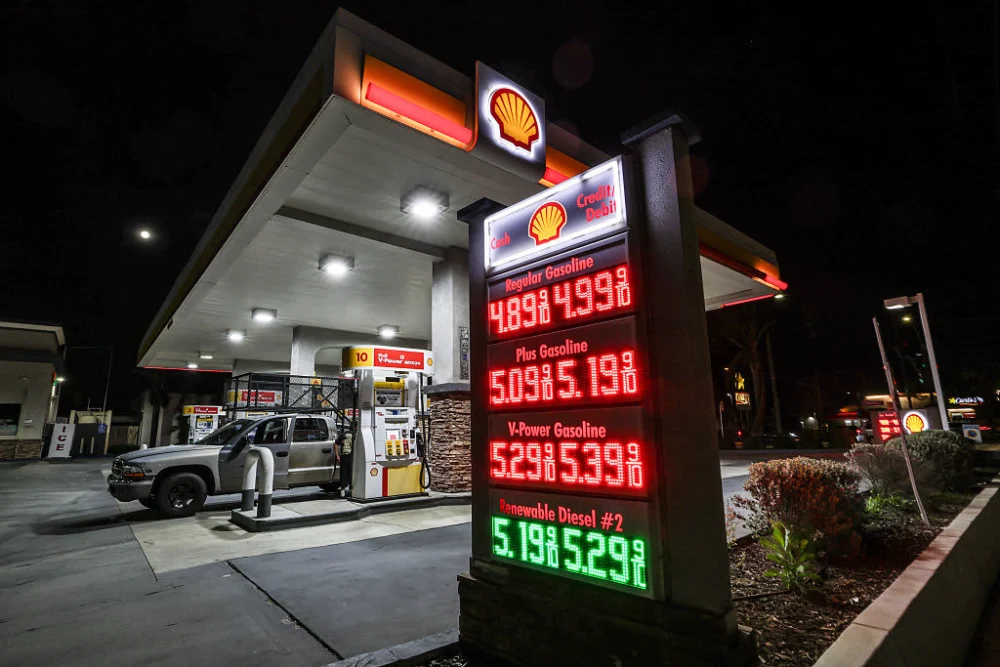
Energy dynamics remain the most critical variable in the current equation. As a major corridor for global oil supply, any prolonged conflict in the Middle East inevitably puts upward pressure on crude prices. The United States Oil Fund (USO) has already reflected this premium, surging double digits in a single week and maintaining a year-to-date gain of over 30%. While high energy prices are generally viewed as a tax on global growth, the impact on emerging markets is bifurcated. Net energy exporters, such as Brazil, Mexico, and the Gulf nations, stand to benefit from a sustained period of elevated oil prices, seeing their trade balances improve and their fiscal coffers swell. Conversely, energy-dependent regions like Southeast Asia and parts of Europe face a more challenging outlook, as higher input costs threaten to reignite inflationary pressures.

The European predicament is particularly acute. Unlike the United States, which has achieved a high degree of energy independence through shale production, Europe remains deeply reliant on energy imports passing through or originating in the Middle East. A prolonged disruption in these supply chains could lead to a significant "shake-up" in European industrial output and consumer spending. This vulnerability highlights the importance of geographic selectivity within a global portfolio; investors are increasingly rotating out of energy-vulnerable European markets and into commodity-rich emerging economies that serve as a natural hedge against rising oil prices.
China also looms large in the emerging market narrative. Despite a sluggish post-pandemic recovery and ongoing concerns regarding the property sector, recent government interventions and stimulus measures have begun to stabilize the world’s second-largest economy. Given China’s massive weighting in the MSCI Emerging Markets Index, any sustained recovery in Chinese equities would provide a powerful lift to the entire asset class. Many analysts believe that the extreme pessimism surrounding Chinese assets has already been priced in, leaving significant room for an upside surprise if Beijing continues its shift toward more aggressive fiscal support.
The psychological shift among modern investors cannot be overlooked. In previous decades, a conflict involving a major oil producer like Iran would have triggered a prolonged "risk-off" environment. Today, however, market participants have become increasingly accustomed to a state of perpetual geopolitical friction. This desensitization has shortened the duration of "panic trades," with institutional buyers often stepping in to provide liquidity during sharp drawdowns. The prevailing sentiment is that unless a conflict escalates into a full-scale global conflagration, the primary drivers of asset prices remain corporate earnings and central bank liquidity.
Expert analysis suggests that the current environment favors a "barbell" strategy. On one end, investors are maintaining positions in high-performing U.S. tech stocks to capture growth, while on the other, they are "doubling down" on emerging markets to capture value and diversify currency risk. This approach acknowledges the reality that the U.S. dollar’s dominance, while still intact, is facing long-term structural challenges from mounting national debt and the weaponization of financial systems, leading many nations to explore "de-dollarization" in their trade settlements.
As the situation in the Middle East evolves, the primary risk remains a "black swan" event—such as a closure of the Strait of Hormuz—which would send oil prices to levels that could trigger a global recession. However, in the absence of such an extreme scenario, the fundamental case for emerging markets remains intact. The combination of depressed valuations, favorable demographic trends in India and Southeast Asia, and the potential for a weakening dollar creates a compelling backdrop for those willing to look past the immediate headlines.
Ultimately, the decision to increase exposure to emerging markets during a period of war is a bet on the resilience of the global economy and the cyclical nature of currency markets. History has shown that the most lucrative entry points often occur when uncertainty is at its peak and the consensus view is one of caution. By focusing on the underlying fiscal trajectories of major powers and the shifting balance of global trade, sophisticated investors are positioning themselves for a future where the center of economic gravity continues its slow but steady migration toward the developing world. The current "dip" in emerging markets may not just be a temporary fluctuation, but rather a strategic opening for those looking to diversify away from an increasingly concentrated and expensive domestic market.