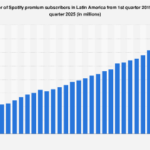


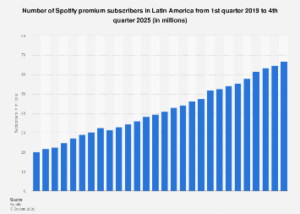
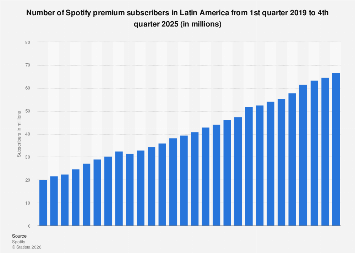
By the fourth quarter of 2025, the Latin American region is projected to host approximately [masked value] million premium subscribers for Spotify, marking a consistent upward trajectory from preceding years. This growth in paid subscriptions mirrors a broader expansion in monthly active users (MAUs) across the continent, underscoring the increasing digital saturation and evolving entertainment consumption patterns within Latin America. The region has emerged as a critical battleground for digital audio services, with millions of users now integrating music streaming into their daily routines.
Within this dynamic market, Brazil and Mexico stand out as epicenters of music streaming engagement. Internet users in both nations dedicate a significant portion of their daily digital lives to audio content, with average streaming times exceeding [masked value] hours. Brazil, in particular, has demonstrated robust year-on-year growth in music streaming duration, registering an impressive [masked value] percent increase. Conversely, Mexico presents a more nuanced picture. While still a high-engagement market, music streaming time in Mexico has experienced a slight year-on-year decline, albeit by a fraction of a percentage point. More notably, since 2020, this metric has seen a reduction of nearly [masked value] percent. The long-term sustainability of this Mexican trend remains to be definitively assessed, but it signals a potential recalibration of digital habits within the country.
Despite these regional variations in usage intensity, Spotify continues to assert its position as the preeminent music streaming platform across Latin America. Its dominance is particularly pronounced in Mexico, where an overwhelming majority of music streamers, representing over [masked value] percent of the market, are subscribed to the service. This indicates a deeply entrenched user base and a strong brand loyalty that has weathered the competitive landscape. However, the Mexican market is not monolithic. Since 2021, there has been a discernible shift, with Spotify experiencing a gradual erosion of its market share as alternative platforms like YouTube Music, Apple Music, and Amazon Prime Music gain traction. This diversification suggests a growing appetite among Mexican consumers for varied offerings and a willingness to explore beyond the incumbent leader.
In Brazil, Spotify also holds the leading position in the streaming market. Yet, the competitive environment in Brazil is considerably more fragmented compared to Mexico. The gap in user engagement between Spotify and its closest rivals, including YouTube Premium, Deezer, and Amazon Music, is less pronounced. This closer contest suggests a Brazilian audience that is more open to a wider array of service providers and less reliant on a single dominant platform. Such market dynamics can foster innovation and lead to more competitive pricing and feature sets as platforms vie for user attention. This scenario is common in emerging digital economies where early market leaders may face intensified competition as the market matures and consumer preferences diversify.
The economic implications of these trends are substantial. The growth in premium subscriptions directly translates into recurring revenue for Spotify and contributes to the broader digital economy. As more users transition from free, ad-supported tiers to paid subscriptions, the revenue potential for music streaming services increases, allowing for greater investment in content acquisition, artist royalties, and technological advancements. For artists and rights holders, this expansion signifies increased opportunities for monetization and wider audience reach. Latin America, with its burgeoning middle class and increasing internet penetration, represents a significant growth frontier for the global music industry.
Furthermore, the increasing time spent streaming music indicates a shift in leisure and entertainment spending. Consumers are allocating more discretionary income and attention to digital audio, potentially impacting traditional media consumption habits. This trend also fuels the growth of the digital advertising market, as platforms seek to monetize their user base through targeted advertisements on free tiers. The data on streaming time also highlights the importance of mobile accessibility and affordable data plans in driving adoption, particularly in markets where smartphones are the primary gateway to the internet.
Global comparisons offer valuable context to Latin America’s digital music evolution. While North America and Europe have long been established markets for music streaming, regions like Asia and Latin America are now driving much of the industry’s expansion. The rapid adoption rates in Latin America, coupled with the increasing per capita spending on digital services, position the region as a key driver of future growth for global streaming giants. The success of platforms like Spotify in Latin America demonstrates the replicability of their business models in diverse cultural and economic contexts, provided they adapt their content offerings and pricing strategies to local market conditions.
The competition among streaming services in Latin America is likely to intensify. As more consumers subscribe to paid services, platforms will need to differentiate themselves through exclusive content, curated playlists, personalized recommendations, and innovative user experiences. The rise of local artists and genres also presents an opportunity for platforms to tailor their offerings and build stronger connections with regional audiences. The ongoing investment in infrastructure, such as faster internet speeds and more affordable mobile data, will further facilitate the growth of the digital music ecosystem. The interplay between user engagement, subscription growth, and competitive dynamics will continue to shape the future of music streaming in this vibrant and increasingly important global market. The data points towards a sustained, albeit evolving, demand for digital audio entertainment, with Spotify maintaining a strong, though not unchallenged, leadership position.