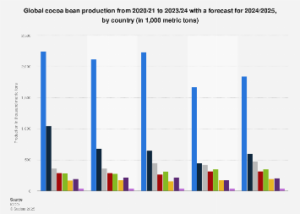



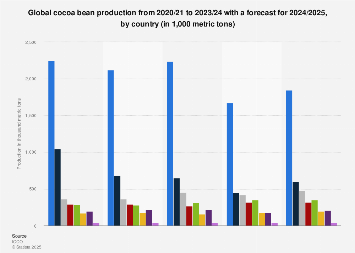
The global cocoa market, a multi-billion dollar industry underpinning the production of beloved chocolate confectionery, is heavily concentrated in a few key regions, with Ivory Coast standing as the undisputed heavyweight champion of cultivation in 2024. This West African nation is projected to have produced approximately one-third of all cocoa beans harvested worldwide this year, solidifying its position as the largest cocoa-producing country on the planet. Its output in 2024 is estimated to be around [redacted] million metric tons, a figure that dwarfs the production of its closest competitors, with the second-ranked nation, Indonesia, producing roughly one-third of Ivory Coast’s volume. The total global cocoa production for the year is anticipated to reach [redacted] million metric tons, highlighting the immense scale of operations managed by these leading agricultural powerhouses.
Cocoa, a crop with deep historical roots originating from the Americas, has been a vital commodity for centuries. Its journey from a sacred plant revered by ancient South American civilizations to a globally traded agricultural product is a testament to its enduring appeal and economic significance. The term "cocoa" itself is believed to derive from the Nahuatl word "cacahuatl," reflecting its ancient lineage. While botanical evidence suggests the plant may have first flourished in the Amazon and upper Orinoco basins, it was the sophisticated agricultural practices of the Maya and Aztec civilizations that truly unlocked its potential for cultivation. For these early cultures, cocoa beans were not merely a foodstuff but a potent symbol of wealth and a functional form of currency, underscoring their profound value. Today, these same beans form the indispensable foundation for the creation of chocolate, a product enjoyed by billions across the globe.
The cultivation of cocoa trees is intrinsically linked to specific geographical and climatic conditions, thriving in tropical zones situated around the Equator. These regions offer the ideal blend of warmth, humidity, and rainfall necessary for the trees to flourish and yield their valuable beans. West Africa has emerged as the epicenter of global cocoa production, with four countries – Ivory Coast, Ghana, Nigeria, and Cameroon – collectively accounting for a significant portion of the world’s supply, estimated at around [redacted] percent of the total. Among these, Ivory Coast and Ghana stand out as the preeminent producers, their combined output representing more than [redacted] percent of the global cocoa harvest. This remarkable concentration of production in a relatively small geographical area makes the West African cocoa belt a critical node in the international supply chain, susceptible to regional economic, political, and climatic factors.
The dominance of Ivory Coast and Ghana in cocoa production is not a recent phenomenon but rather a long-standing trend shaped by a confluence of historical, geographical, and economic factors. These nations possess vast tracts of arable land suitable for cocoa cultivation, coupled with a favorable climate that consistently supports high yields. Furthermore, generations of agricultural expertise have been passed down, refining cultivation techniques and ensuring the quality of the beans produced. This established infrastructure and deep-rooted knowledge base provide them with a significant competitive advantage in the global market.
However, this geographical concentration also presents inherent risks. Fluctuations in weather patterns, such as prolonged droughts or excessive rainfall, can have a disproportionate impact on global supply and prices. Pests and diseases that affect cocoa trees can also spread rapidly within these concentrated growing regions, posing a constant threat to production levels. Moreover, the economic stability and agricultural policies of these leading nations play a crucial role in determining the overall health and trajectory of the global cocoa market. Dependence on a few key suppliers means that any disruption in these countries, whether due to social unrest, trade disputes, or environmental challenges, can send ripples through the entire chocolate industry, affecting everything from the price of raw cocoa beans to the final cost of chocolate bars on supermarket shelves.
Beyond the immediate production figures, the economic implications of cocoa cultivation are profound for the producing nations. For countries like Ivory Coast, cocoa is a cornerstone of their economy, a major source of foreign exchange earnings, and a vital source of employment for millions of smallholder farmers. The livelihoods of entire communities are intrinsically tied to the success of the cocoa harvest. Therefore, ensuring the sustainability of cocoa farming practices, fair pricing for farmers, and investment in agricultural research and development are not merely economic considerations but crucial elements for social stability and poverty reduction in these regions.
The global demand for cocoa continues to grow, driven by an expanding middle class in emerging markets and the enduring popularity of chocolate as a treat and an ingredient worldwide. This increasing demand presents both opportunities and challenges for the cocoa sector. On one hand, it offers the potential for increased income and improved living standards for cocoa farmers. On the other hand, it necessitates careful management to avoid over-exploitation of land, deforestation, and the potential for unsustainable farming practices to become more widespread in the pursuit of higher yields.
International organizations, governments, and private sector actors are increasingly focusing on initiatives aimed at promoting sustainable cocoa farming. These efforts include providing farmers with training on climate-resilient agricultural techniques, improving access to finance and modern farming equipment, and working towards more equitable distribution of value along the supply chain. The goal is to ensure that the economic benefits of cocoa production are shared more broadly and that the environmental impact is minimized, safeguarding the future of this vital crop and the communities that depend on it. As the world continues to consume vast quantities of chocolate, the efforts to secure a stable, sustainable, and equitable supply of cocoa will remain a paramount concern for the global economic and agricultural landscape.