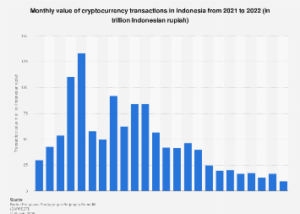


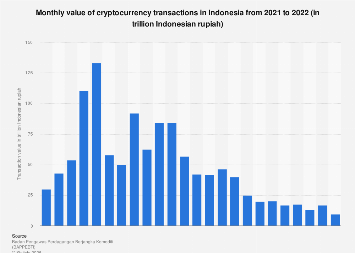
Indonesia’s cryptocurrency market experienced a significant surge in transaction value, particularly in May 2021, when the total value reached a notable peak of trillions of Indonesian rupiah. This landmark figure underscores the burgeoning interest and participation in digital assets within Southeast Asia’s largest economy. As of June 2022, the nation’s regulatory body, the Commodity Futures Trading Regulatory Agency (Bappebti), reported a substantial user base of millions of Indonesian cryptocurrency participants, indicating a broadening adoption of these innovative financial instruments.
The trajectory of cryptocurrency transactions in Indonesia over 2021 and 2022 paints a dynamic picture of a market in flux, influenced by global trends, domestic regulatory developments, and evolving investor sentiment. While specific monthly figures for the entirety of 2021 and 2022 are detailed in proprietary market intelligence reports, the information available points to a period of intense activity. The May 2021 peak suggests a strong correlation with broader global cryptocurrency market rallies witnessed during that period, where Bitcoin and other altcoins reached new all-time highs, attracting a wave of both retail and institutional interest worldwide. This global enthusiasm invariably spilled over into emerging markets like Indonesia, fueling increased trading volumes.
The growth in user numbers, exceeding tens of millions by mid-2022, is a critical indicator of the market’s maturation. This expanding user base not only contributes to higher transaction values but also signifies a growing familiarity and acceptance of cryptocurrencies as a potential store of value, a medium of exchange, or an investment asset. This widespread adoption is likely driven by several factors. Firstly, the increasing accessibility of user-friendly trading platforms and mobile applications has lowered the barrier to entry for new investors. Secondly, a younger demographic, often more digitally native and open to alternative financial technologies, forms a significant portion of this burgeoning user base.
Furthermore, the Indonesian government, through Bappebti, has been actively engaging with the cryptocurrency space. While initially cautious, the regulatory stance has evolved to acknowledge cryptocurrencies as commodities that can be traded, albeit with specific oversight. This regulatory clarity, even if still developing, provides a degree of legitimacy and protection for investors, which can encourage further market participation. The agency’s role in monitoring transactions and user activities is crucial for maintaining market integrity and fostering a secure trading environment.
To contextualize Indonesia’s performance, it’s useful to compare it with regional and global trends. Across the Asia-Pacific region, countries like Singapore and South Korea have also seen substantial growth in their crypto markets, often driven by strong technological infrastructure and supportive regulatory frameworks. However, Indonesia’s sheer population size presents a unique opportunity for exponential growth, potentially making it one of the largest crypto markets in the region in the long term. Globally, the cryptocurrency market has been characterized by periods of extreme volatility. While 2021 was largely a bull run, 2022 saw a significant market correction, often referred to as a "crypto winter," due to macroeconomic headwinds such as rising inflation, interest rate hikes by central banks, and the collapse of major crypto entities. It is within this broader, often challenging, global context that Indonesia’s market dynamics must be understood. The resilience and continued growth in user numbers despite global downturns suggest a strong underlying domestic demand and a belief in the long-term potential of digital assets among Indonesian investors.
The economic impact of this burgeoning crypto market on Indonesia is multifaceted. On one hand, it presents opportunities for financial innovation, job creation in the fintech sector, and potential avenues for capital inflow. The development of blockchain technology, which underpins cryptocurrencies, also has broader implications for various industries, including supply chain management, digital identity, and decentralized finance (DeFi). Increased trading activity can also contribute to economic diversification, offering alternative investment avenues beyond traditional stocks and bonds.
However, the rapid growth also brings inherent risks and challenges. Volatility remains a primary concern, posing potential financial risks to individual investors. Regulatory frameworks, while evolving, need to keep pace with the rapid technological advancements and the complexities of the crypto ecosystem to effectively mitigate risks such as money laundering, fraud, and consumer protection issues. The energy consumption associated with certain blockchain technologies, particularly proof-of-work mechanisms, also presents an environmental consideration that Indonesia, like other nations, will need to address as the market expands.
Looking ahead, the Indonesian cryptocurrency market is poised for continued evolution. The interplay between regulatory developments, technological innovation, and investor behavior will shape its future trajectory. As Bappebti and other governmental bodies continue to refine policies, the market could see further institutionalization and integration with the broader financial system. The development of local blockchain talent and the exploration of use cases beyond speculative trading, such as remittances or digital payments, could also unlock new avenues for growth and economic contribution. The data from 2021 and 2022, particularly the peak transaction values and the expanding user base, serves as a strong indicator of the underlying dynamism and potential that Indonesia’s cryptocurrency landscape holds. The sustained interest, even amidst global market fluctuations, suggests that digital assets are becoming an increasingly integral part of the financial consciousness of a significant segment of the Indonesian population.