


In a landmark advancement poised to redefine reconstructive medicine across South Asia, the All India Institute of Medical Sciences (AIIMS) in New Delhi, in partnership with Harvard Medical School, has launched India’s inaugural face transplant program. This ambitious initiative marks a pivotal moment for patients suffering from devastating facial disfigurement, particularly the thousands impacted by acid attacks and severe burns, offering a path to restoring not just function but also identity and social reintegration. The collaboration brings together world-class expertise and India’s burgeoning medical infrastructure, aiming to transition face transplantation from an experimental frontier to an established clinical practice within the country.
The profound need for such sophisticated interventions in India is underscored by grim statistics. While the National Crime Records Bureau (NCRB) officially reported over 200 acid attacks in 2023, advocacy groups like the Acid Survivors Trust International (ASTI) estimate the actual figure could be five times higher, nearing 1,000 cases annually due to significant under-reporting and societal pressures that often deter victims from coming forward. Beyond these heinous acts, a substantial number of individuals sustain severe facial trauma from high-voltage electrical accidents, industrial incidents, and vehicular collisions, leading to extensive deep-tissue destruction that conventional reconstructive techniques are often ill-equipped to address. These injuries frequently impair critical life functions such as breathing, eating, speaking, and blinking, plunging survivors into a life of isolation and profound psychological distress.
Face transplantation, a highly complex procedure known as composite tissue allotransplantation (CTA), represents a paradigm shift from traditional skin grafting. Unlike grafts, which involve transplanting only the top layers of skin and often result in a "patchwork" appearance lacking natural movement and expression, CTA involves the transfer of an entire functional unit. This unit comprises skin, underlying fat, muscles, nerves, and sometimes bone, harvested from a deceased (brain-dead) donor. The goal is to replace the recipient’s damaged facial structures with a complete, integrated system, thereby restoring both aesthetic form and coordinated movement. Pioneering procedures in France, the United States, China, and Turkey have gradually refined these techniques, with recent successes, such as a groundbreaking transplant in Spain involving a donor who opted for assisted dying, continually pushing the boundaries of what is medically possible.
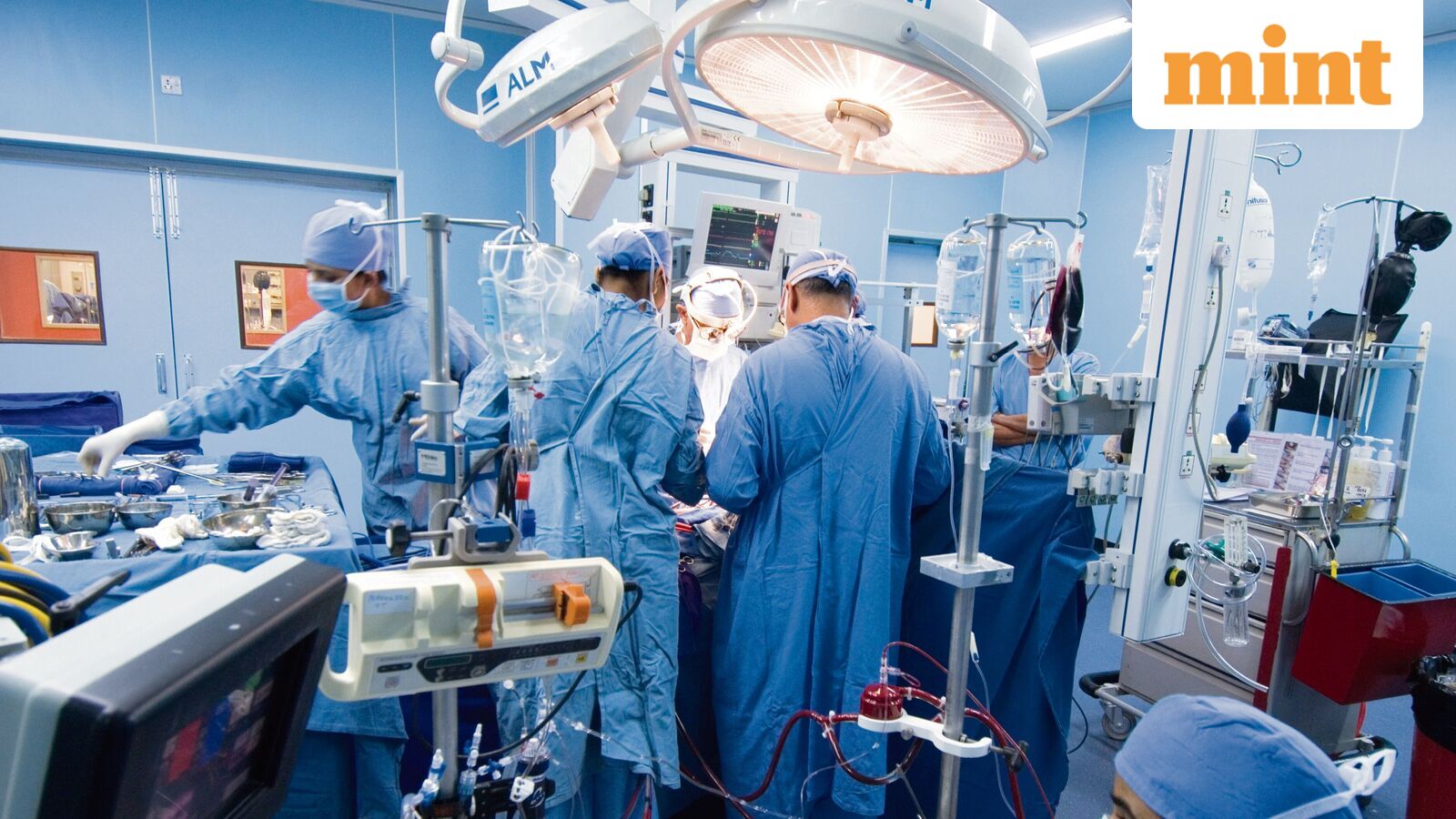
The strategic partnership with Harvard Medical School, renowned globally for its medical innovation and research, is instrumental in bridging the knowledge and technical gaps required for such an intricate program. Indian surgeons will undergo intensive, high-level technical training, including hands-on cadaveric workshops at Harvard facilities, to master the micro-surgical precision demanded by a procedure that typically spans 14 to 16 hours. This collaborative framework extends beyond surgical technique, encompassing the development of robust protocols for patient selection, post-operative care, and the critical management of lifelong immunosuppression, which is essential to prevent organ rejection. Dr. Mahesh Mangal, a leading authority in burns and plastic surgery at Sir Ganga Ram Hospital, emphasizes the procedure’s extreme difficulty, highlighting the necessity of a multidisciplinary team—comprising plastic surgeons, neurosurgeons, anesthesiologists, psychiatrists, and immunologists—working in precise synchronicity. The operation is a race against time, requiring the meticulous reconnection of blood supply and nerves within a critical six-to-eight-hour window to prevent tissue necrosis and ensure the viability of facial muscles crucial for expression.

Beyond the clinical aspects, the collaboration assists AIIMS in navigating the stringent regulatory landscape for advanced transplant procedures. It ensures adherence to ethical guidelines and facilitates licensing requirements through the National Organ and Tissue Transplant Organisation (NOTTO), India’s apex body under the Ministry of Health and Family Welfare responsible for regulating and promoting organ and tissue donation. Ethical considerations are paramount, particularly concerning donor identity. Dr. Maneesh Singhal, head of the burns and plastic surgery department at AIIMS, Delhi, assures that donor de-identification is a core principle. The recipient’s final appearance is primarily determined by their underlying bone structure, preventing them from assuming the donor’s exact likeness and preserving a distinct sense of self.
The economic and social ramifications of this program are substantial. Facial disfigurement imposes a profound economic burden, not only on individuals and their families through lost income and extensive long-term care costs but also on public health systems. Survivors often face significant barriers to education, employment, and social engagement, leading to a cycle of poverty and marginalization. By restoring functionality and appearance, face transplants offer the potential for recipients to reintegrate into society, pursue employment, and contribute economically, thereby transforming lives and reducing the societal cost of chronic disability. The program also positions India as a leader in advanced reconstructive surgery, potentially attracting medical tourism for highly specialized procedures and fostering further investment in cutting-edge medical research and infrastructure.
Despite the promise, significant hurdles remain, particularly in the Indian context. Dr. Mangal underscores that obtaining family consent for face donation is arguably the most formidable challenge. In a society where cultural and religious sensitivities often surround deceased bodies, grieving families frequently find it more difficult to consent to facial donation compared to internal organs or limbs. This cultural barrier necessitates extensive public awareness campaigns and sensitive counseling to demystify the process and highlight the profound impact such a donation can have. Globally, organ donation rates vary widely, with countries like Spain having among the highest rates due to robust opt-out systems and public education, while India’s rates, though improving, still lag significantly. The success of the AIIMS program will hinge on its ability to build public trust and facilitate a greater understanding of the life-altering potential of facial donation.
AIIMS has already established a registry and identified a small cohort of seven to eight adult patients for the initial phase of the program. These individuals represent the most challenging cases, having often undergone numerous conventional surgeries—sometimes 10 to 12 or more—without achieving adequate functional relief. The cautious, measured approach reflects the gravity of the procedure, which is life-altering and necessitates lifelong immunosuppression, carrying inherent risks of infection and organ rejection. As the program moves from planning to active clinical implementation, expected within the next year, it represents not just a medical milestone for India but a beacon of hope for countless individuals whose lives have been irrevocably altered by trauma. The Harvard-AIIMS collaboration is a testament to the power of international cooperation in addressing some of humanity’s most complex medical challenges, promising a future where advanced reconstructive surgery can truly restore dignity and a sense of self.