
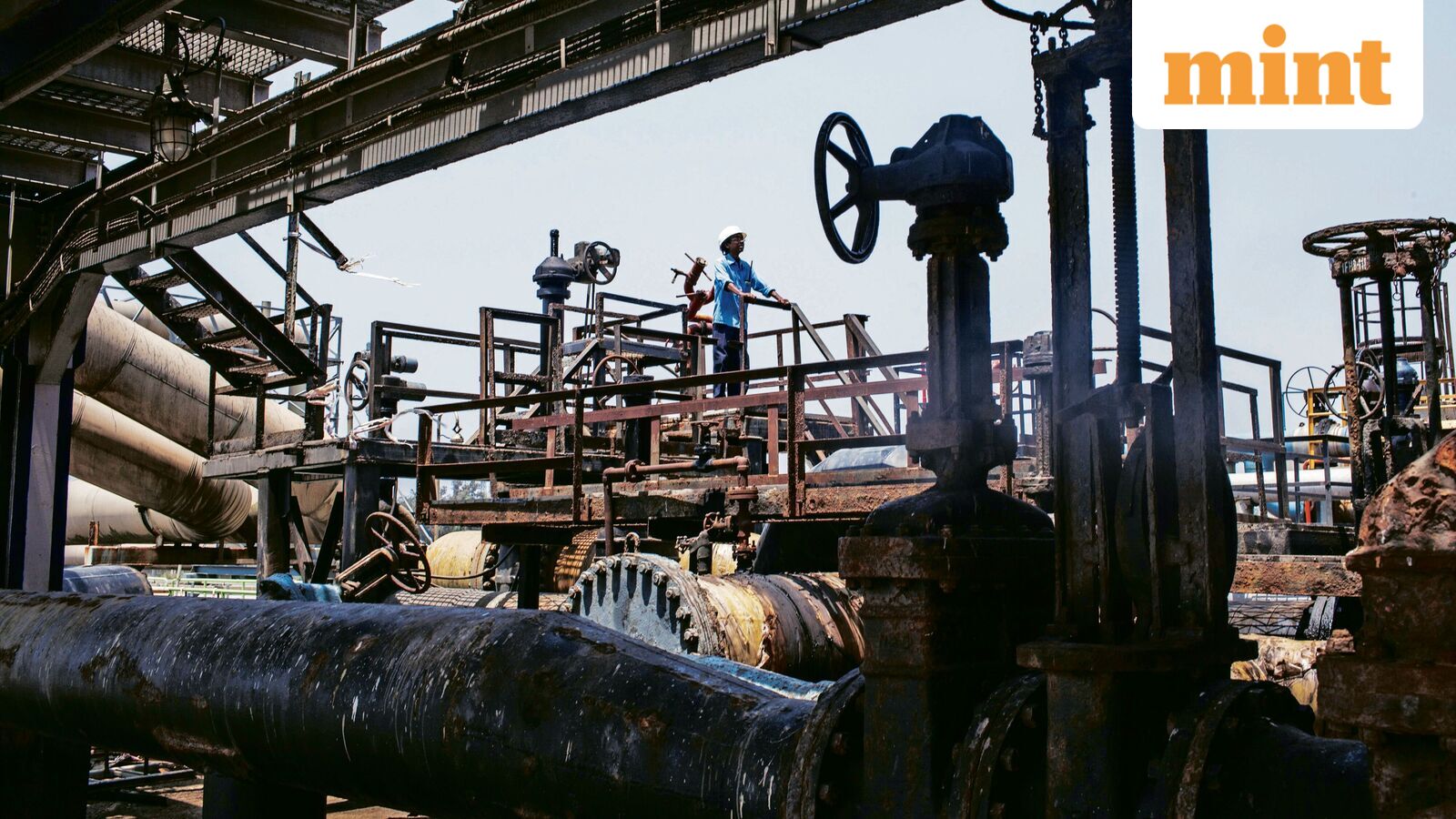
A significant disruption to liquefied natural gas (LNG) shipments from Qatar, triggered by an attack on QatarEnergy’s vital Ras Laffan liquefaction complex, has prompted India to urgently reassess its energy security strategy. Faced with a sudden vulnerability in its primary gas supply chain, New Delhi is actively weighing a plan to reprioritize natural gas allocation, diverting supplies from less critical industrial and power sectors towards essential services like city gas distribution (CGD) networks and fertilizer production. This strategic pivot underscores the delicate balance nations must maintain in a global energy landscape increasingly shaped by geopolitical volatility and supply chain fragility.
India’s reliance on imported natural gas is substantial, with approximately 55% of its total gas requirement met through international markets. Qatar, a cornerstone of this supply, accounts for nearly half of India’s LNG imports, translating to roughly $7.45 billion of the $14.9 billion worth of natural gas imported in the fiscal year 2025, according to data from the Petroleum Planning and Analysis Cell (PPAC). This deep dependence on a single, albeit robust, supplier in a geopolitically sensitive region exposes India to considerable risk whenever stability is threatened. The recent incident at Ras Laffan, a facility responsible for a fifth of global LNG supply, has sent ripples across international energy markets, highlighting the interconnectedness of global energy security.
Government officials, engaging in high-level discussions across the ministries of Petroleum and Natural Gas, Power, and Chemicals & Fertilizers, are exploring a range of options to mitigate the impact. While a definitive decision on re-prioritization is pending, the consensus leans towards safeguarding essential services. City gas distribution (CGD) networks, which supply piped natural gas (PNG) for domestic cooking and compressed natural gas (CNG) for urban transport, are explicitly earmarked for heightened protection. These networks serve millions of households and support a rapidly expanding green mobility initiative, making their uninterrupted operation a socio-economic imperative. Similarly, the fertilizer sector, which consumes a staggering 85% natural gas as feedstock, is deemed critical for agricultural productivity and national food security. Diverting gas from industrial consumers and power generation units, while challenging, is seen as a necessary measure to insulate these priority sectors from the immediate shock.
The current regulatory framework already accords a degree of priority to CGD, but the proposed measures would significantly enhance this allocation, potentially at the expense of other economic drivers. This could mean industries facing reduced operating hours, higher input costs if forced to switch to alternative, often more expensive or polluting, fuels like fuel oil or naphtha, or even temporary shutdowns. Power plants, particularly gas-fired ones, might experience curtailed generation, necessitating a greater reliance on coal-fired power or purchased electricity from the spot market, with implications for grid stability and environmental targets. The economic ramifications of such diversions are multifaceted, potentially impacting manufacturing output, export competitiveness, and overall industrial growth.

The immediate crisis has been exacerbated by broader geopolitical tensions in the Middle East. Concurrently with the Qatar facility attack, the Iran Revolutionary Guard Corps (IRGC) declared the Strait of Hormuz effectively closed to shipping, threatening any vessel attempting passage. This critical waterway, through which 54% of India’s LNG imports and 20% of global LNG and crude shipments transit, presents an additional layer of complexity to India’s energy supply challenge. The combined effect of a major production facility disruption and a threat to a key shipping lane has naturally triggered a sharp escalation in global LNG prices. Henry Hub natural gas futures, a key benchmark, saw an immediate increase of over 1%, while European gas prices surged by more than 40% following the news of QatarEnergy’s operational shutdown. Brent crude also responded, climbing over 2% to $83.05 per barrel, reflecting broader anxieties in the energy complex.
Indian energy giants have quickly moved to assess the fallout. State-run GAIL (India) Ltd, a major player in India’s natural gas infrastructure, is evaluating the extent of supply curtailments it may need to impose on its downstream customers. This follows a force majeure declaration by QatarEnergy to Petronet LNG Ltd, a joint venture entity of GAIL, ONGC, Indian Oil Corp Ltd, and Bharat Petroleum Corp Ltd. Petronet, a crucial conduit for Qatari LNG, had in turn issued its own force majeure notice to its clients, including GAIL. Under a long-term sales contract, QatarEnergy supplies Petronet with 7.5 million tonnes per annum (mtpa) of LNG, of which 60% is regasified at Petronet’s Dahej facility and delivered to GAIL, with the remaining 40% split between Indian Oil Corp. Ltd (30%) and Bharat Petroleum Corp. Ltd (10%). The cascading effect of these force majeure declarations underscores the contractual and logistical challenges faced by Indian energy companies.
In response to the escalating global energy crisis, international efforts are underway to stabilize markets and secure supply routes. The United States, under the direction of President Donald Trump, has announced plans for the United States Development Finance Corporation (DFC) to offer low-cost political risk insurance and financial guarantees for maritime trade, particularly energy shipments through the Gulf. This initiative aims to reduce the financial burden and risk for shipping lines, thereby encouraging the continued flow of vital energy resources. Furthermore, President Trump indicated the potential deployment of the US Navy to escort tankers through the Strait of Hormuz if necessary, reinforcing Washington’s commitment to ensuring the "FREE FLOW of ENERGY to the WORLD." These measures, while primarily aimed at broad market stability, indirectly benefit countries like India by potentially easing insurance costs and enhancing shipping security.
Beyond immediate crisis management, India is actively exploring long-term diversification strategies to bolster its energy resilience. Officials have indicated a concerted effort to increase LNG imports from alternative sources, with Australia and Papua New Guinea emerging as key potential partners. While these markets offer geographical diversification and potentially stable supplies, they also present logistical and cost considerations, including longer shipping routes and differing contractual frameworks. The push towards securing new supply corridors reflects a broader national imperative to reduce over-reliance on any single region or supplier, a lesson learned from the current predicament.
The ongoing situation serves as a stark reminder of the intrinsic link between geopolitics and global energy markets. For India, a rapidly growing economy with soaring energy demands, navigating these volatile waters requires a multi-pronged approach: immediate crisis response through allocation reprioritization, active engagement with international partners for market stability and supply route security, and a sustained drive towards diversifying its energy basket. As Prashant Vasisht, Senior Vice President and Co-Group Head, Corporate Ratings, Icra Ltd, aptly noted, the government’s challenge lies in discerning which sectors are absolutely reliant on gas and which possess a degree of flexibility to withstand temporary disruptions. The decisions made in the coming weeks will not only address the immediate energy crunch but will also shape India’s energy security posture for years to come.