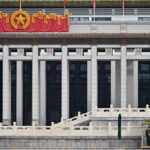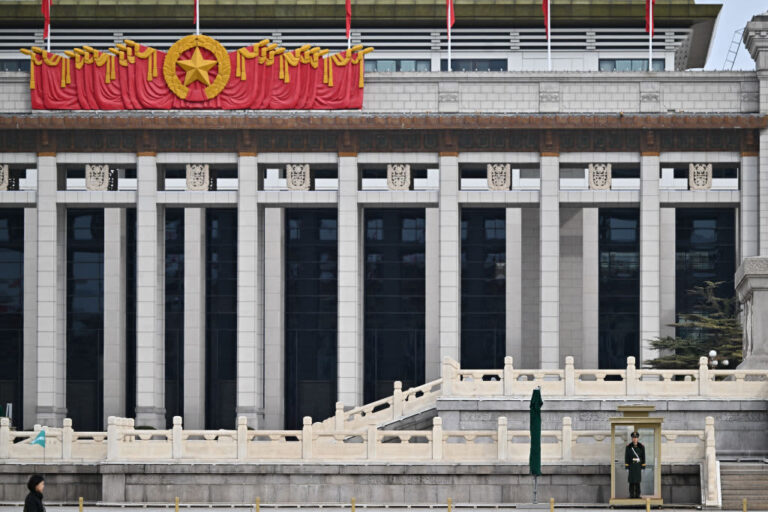
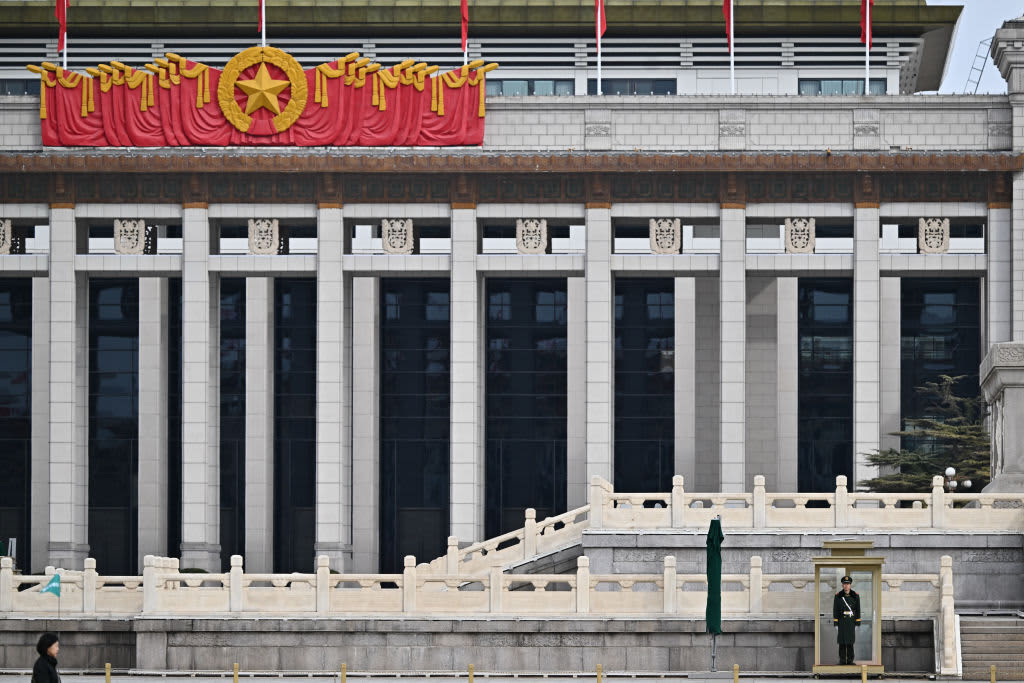
As the gates of the Great Hall of the People swing open this week in Beijing, the global financial community is bracing for a definitive signal regarding the trajectory of the world’s second-largest economy. The "Two Sessions"—the annual concurrent meetings of the National People’s Congress (NPC) and the Chinese People’s Political Consultative Conference (CPPCC)—represent the most significant event on China’s political calendar. This year, however, the stakes are notably higher. Against a backdrop of persistent property sector volatility, cooling domestic consumption, and intensifying trade frictions with the West, the Chinese leadership is expected to unveil a roadmap that prioritizes long-term resilience over the breakneck expansion of decades past.
The proceedings, which officially commence Wednesday with the consultative session followed by the NPC opening on Thursday, will feature the much-anticipated Government Work Report delivered by Premier Li Qiang. This address is expected to formalize economic targets that were tentatively established during the Central Economic Work Conference in December. Beyond the immediate fiscal year, the 2026 gathering serves as the launchpad for the 15th Five-Year Plan (2026–2030), a cornerstone policy document that will dictate China’s industrial and social evolution for the remainder of the decade. This plan is viewed by analysts as the penultimate chapter in Beijing’s "2035 Vision," a grand strategy aimed at transforming China into a mid-level developed nation with a primary focus on technological "fortress" building and self-sufficiency.
Market participants are particularly attuned to the Gross Domestic Product (GDP) growth target, which serves as a barometer for the government’s confidence. Current consensus among institutional economists suggests a target range of 4.5% to 5.0%. While such figures would be the envy of most developed nations, for China, a target leaning toward the lower end of that scale would represent the most conservative official ambition on record, barring the anomalous pandemic year of 2020. Several provincial governments have already preemptively lowered their local growth forecasts, suggesting a coordinated effort to manage expectations.

The debate over the GDP target reflects a deeper tension within the Chinese leadership. Analysts at the Economist Intelligence Unit (EIU) argue that a more modest target—perhaps around 4.6%—would afford Beijing the "policy breathing room" necessary to execute painful but essential structural reforms. These include deleveraging the bloated property sector and addressing the systemic risks associated with local government debt. Conversely, firms like Morgan Stanley suggest that setting a target below 5% could risk a further erosion of private-sector confidence. They posit that as the inaugural year of the 15th Five-Year Plan, 2026 requires a robust growth anchor to signal stability to both domestic entrepreneurs and international investors.
Parallel to the growth targets, the fiscal deficit goal will be a critical indicator of Beijing’s willingness to deploy "bazooka" style stimulus. In 2025, the government set a deficit target of 4% of GDP, the highest since at least 2010 and surpassing even the 3.6% seen during the height of the 2020 crisis. Maintaining or expanding this 4% threshold would signal a continued commitment to fiscal expansion, likely funded through the issuance of special sovereign bonds intended to invigorate infrastructure and high-tech manufacturing. However, the efficacy of this spending remains a point of contention. Research from the Rhodium Group suggests that the "multiplier effect" of Chinese government spending is diminishing, as capital is increasingly diverted to keep unproductive state-owned enterprises (SOEs) and insolvent local government financing vehicles (LGFVs) afloat.
A primary concern for the NPC delegates will be the specter of deflation. While much of the Western world has spent the last two years battling rampant inflation, China has faced the opposite challenge: tepid consumer demand and a "liquidity trap" where households prefer saving over spending. The official inflation target is expected to remain around 2%, but achieving this will require a significant shift in consumer psychology. To date, government efforts to spur spending—such as trade-in subsidies for appliances and electric vehicles—have yielded only marginal improvements. The 2026 policy suite is expected to explore deeper consumer-centric measures, though many economists argue that without a robust social safety net or a recovery in the housing market, which accounts for roughly 70% of household wealth, the "wealth effect" necessary to drive consumption will remain elusive.
The property sector continues to be the proverbial elephant in the room. Despite a series of rescue packages and easing measures introduced over the past eighteen months, the real estate market remains in a protracted slump. S&P Global Ratings recently indicated that the downturn has been deeper and more persistent than initially anticipated, weighing heavily on local government revenues that were historically dependent on land sales. The Two Sessions are expected to provide clarity on whether Beijing will move toward a more centralized "government-buyback" model to clear the massive inventory of unsold homes, or if it will continue its current path of incremental support for "whitelist" projects.

Beyond domestic economics, the geopolitical climate looms large over the Great Hall. The 2026 meetings take place amidst a volatile international landscape, characterized by a "new normal" of trade restrictions. The United States and the European Union have increasingly moved toward de-risking strategies, targeting China’s dominance in "new three" industries: electric vehicles, lithium-ion batteries, and solar products. In response, the 15th Five-Year Plan is expected to double down on "New Quality Productive Forces." This phrase, championed by President Xi Jinping, emphasizes high-tech manufacturing, artificial intelligence, and quantum computing as the new engines of growth, replacing the old model of debt-fueled construction.
Technological self-sufficiency is no longer just a developmental goal; it is a national security imperative. Investors will be scouring the announcements for specific funding allocations for domestic semiconductor development and software ecosystems that can bypass Western sanctions. The presence of top diplomat Wang Yi and various financial ministers at press conferences during the week will likely reinforce the message that China intends to build a "circular economy" that can withstand external shocks, including potential supply chain disruptions arising from conflicts in the Middle East or further escalations in the South China Sea.
Internal political dynamics also play a role in the optics of this year’s sessions. Observers have noted a decrease in the number of delegates attending, a byproduct of a sustained and rigorous anti-corruption campaign that has reached deep into the legislative and military ranks. This consolidation of power suggests that the policies announced this week will be executed with a high degree of central alignment, leaving little room for the regional policy experimentation that characterized China’s earlier reform era.
As the meetings conclude on March 11, the global market will be looking for more than just numbers. The real test for Premier Li Qiang and the broader leadership will be whether they can convince a skeptical private sector that the "China story" remains viable. While the 15th Five-Year Plan offers a vision of a high-tech superpower, the immediate reality involves navigating a precarious transition. The 2026 Two Sessions may well be remembered as the moment China formally traded the quantity of its growth for a more resilient, albeit slower, quality of economic development. Whether this pivot can satisfy the aspirations of its 1.4 billion citizens while maintaining its standing as the world’s manufacturing hub remains the defining question of the decade.