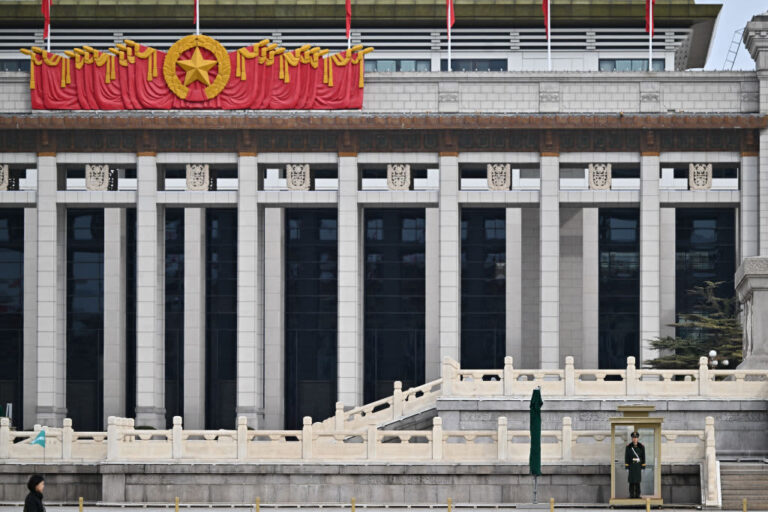

As the Great Hall of the People in Beijing opened its doors for the annual National People’s Congress this week, the international community’s gaze fixed firmly on the fiscal ledgers of the world’s second-largest economy. In a move that signals a calculated balance between domestic economic pressures and assertive geopolitical ambitions, the Chinese Ministry of Finance announced a planned 7% increase in national defense spending for the current fiscal year. While this represents a marginal deceleration from the 7.2% growth rates seen in the previous three years, the figure underscores a persistent commitment to military modernization at a time when global security architectures are under significant strain.
The 7% uptick is the slowest pace of growth in China’s military expenditure since 2021, a year defined by the lingering economic shadows of the global pandemic. However, in the context of China’s broader economic landscape—where the government is grappling with a cooling property sector, local government debt, and a transition toward "high-quality" growth—the defense budget remains a protected and prioritized pillar of national policy. This year’s budgetary roadmap suggests that even as Beijing moderates its headline spending figures, the focus has shifted from sheer quantitative expansion to the sophisticated qualitative enhancement of the People’s Liberation Army (PLA).
The geopolitical backdrop for this announcement could hardly be more complex. From the escalating volatility in the Middle East to the perennial friction points in the South China Sea and the Taiwan Strait, Beijing is navigating a world it perceives as increasingly hostile. The government work report accompanying the budget release was explicit in its stance on regional sovereignty, noting that Beijing would "resolutely fight" against separatist activities aimed at "Taiwan independence" while simultaneously opposing "external interference"—a clear rhetorical jab at Washington’s security role in the Indo-Pacific.
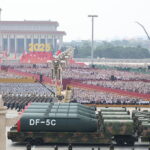
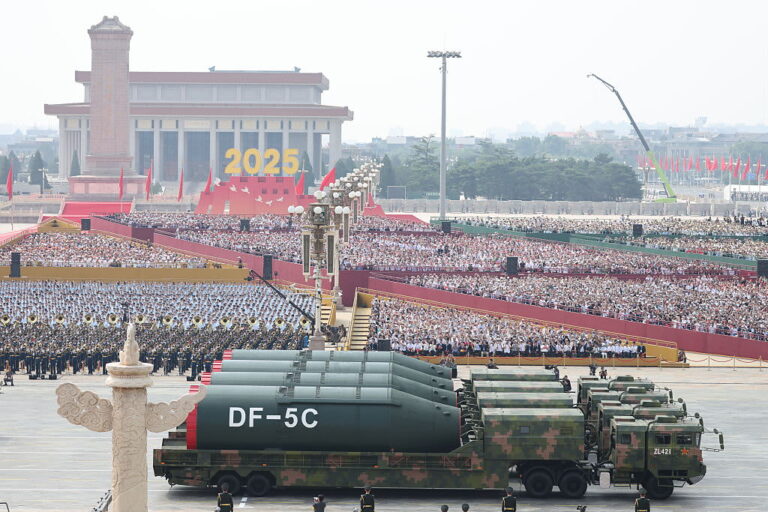
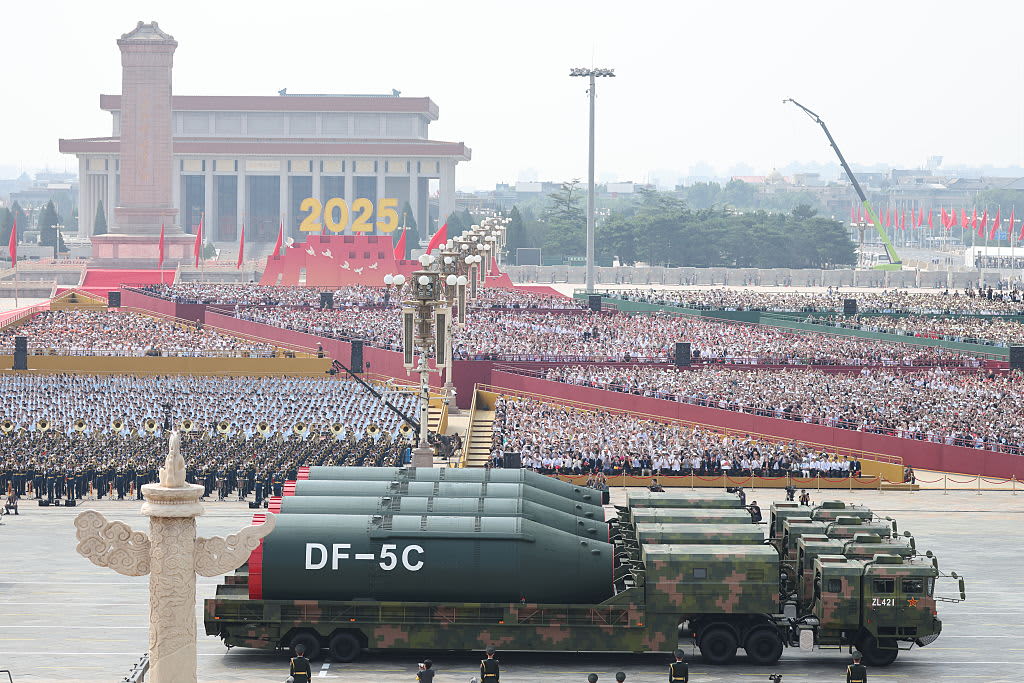
Central to this year’s military strategy is the pursuit of "high-quality" modernization. This is not merely a buzzword but a strategic pivot toward integrating cutting-edge technology into the PLA’s operational fabric. A primary example of this trajectory is the Fujian, China’s first domestically designed and built aircraft carrier, which was officially commissioned in late 2025. Equipped with electromagnetic catapults—a technology previously exclusive to the United States Navy’s most advanced carriers—the Fujian represents a generational leap in China’s blue-water naval capabilities. Furthermore, the recent public display of the DongFeng-5C, a liquid-fueled intercontinental strategic nuclear missile with global strike range, serves as a potent reminder of China’s hardening nuclear deterrent.
The official defense budget for the last fiscal year was pegged at 1.78 trillion yuan (approximately $245 billion). However, the transparency of these figures remains a point of contention among international economists and defense analysts. There is a long-standing consensus in Western intelligence circles that Beijing’s official numbers represent only a portion of its actual military-related outlays. Significant "off-budget" items—including military research and development, the People’s Armed Police (a paramilitary force), and certain space-based assets—are often accounted for under civilian or general administrative categories.
Estimates from the United States Department of Defense suggest a much wider gap. In its 2025 report to Congress, the Pentagon estimated that China’s actual defense-related spending in 2024 ranged between $304 billion and $377 billion. This estimate is roughly 32% to 63% higher than the figures officially disclosed by Beijing. When adjusted for purchasing power parity (PPP), which accounts for the lower cost of labor and materiel within China, the "real" value of China’s defense spending draws even closer to that of the United States, despite the nominal dollar gap.
The regional implications of China’s military spending are profound. According to data from the International Institute for Strategic Studies (IISS), China accounted for nearly 44% of total defense spending in Asia in 2025, a significant rise from the 39% share it held in 2017. This lopsided spending dynamic has triggered a reactive "security dilemma" across the Indo-Pacific. Japan, traditionally a pacifist nation, has embarked on its own historic military buildup, while countries like Australia and India are significantly boosting their naval and missile capabilities. The emergence of the AUKUS security pact and the revitalization of the "Quad" (the U.S., Japan, Australia, and India) are direct geopolitical responses to the shifting military balance dictated by Beijing’s fiscal priorities.
Comparing the world’s two military superpowers provides a stark look at the current global arms race. The United States remains the world’s top military spender, with a budgeted $849.77 billion for the 2025 fiscal year. However, actual U.S. outlays often exceed these targets due to supplemental funding for overseas operations and emergency aid. Estimates from USAFacts indicate that the U.S. ended up spending approximately $919.2 billion during the last cycle, representing about 13% of its total federal budget. While the U.S. maintains a significant lead in total dollar expenditure, China’s ability to concentrate its spending within its immediate "near abroad" gives it a localized advantage that concerns Pentagon planners.
Economically, the 7% increase raises questions about the long-term sustainability of China’s military-civil fusion strategy. The Chinese leadership is increasingly leaning on the defense sector to drive domestic innovation in dual-use technologies, such as artificial intelligence, semiconductors, and aerospace engineering. By funneling capital into high-tech military contracts, Beijing hopes to stimulate "new productive forces" that can eventually spill over into the commercial economy. However, this strategy carries risks. As the broader Chinese economy slows, the "guns vs. butter" debate—the trade-off between military spending and social welfare—becomes more acute. For now, the 7% figure suggests that the leadership views national security as a prerequisite for, rather than a competitor to, economic stability.
The timing of the National People’s Congress is also significant. The eight-day parliamentary meeting is the premier event on China’s political calendar, used to signal policy direction to both domestic audiences and global markets. By setting a 7% target, Beijing is signaling a "steady hand." It is a figure high enough to satisfy the PLA’s top brass and continue the modernization goals set for 2027 (the PLA’s centenary) and 2049, yet low enough to avoid appearing as a panicked escalation that might further spook foreign investors already wary of China’s regulatory environment.
Furthermore, the focus on "advanced combat capabilities" mentioned in the government work report suggests that the PLA is moving away from the mass-conscription models of the past toward a professionalized, tech-centric force. This involves heavy investment in cyber warfare, electronic countermeasures, and autonomous systems. The military parade held in September, which featured a wide array of long-range precision-guided munitions, served as a proof-of-concept for this new doctrine. These systems are designed to deny access to external forces in the event of a regional conflict, a strategy known as Anti-Access/Area Denial (A2/AD).
As the global order becomes increasingly multipolar, the trajectory of China’s military spending will remain a primary barometer for its strategic intentions. While a 7% increase is a slight cooling in growth percentage, the absolute increase in terms of yuan is substantial, adding tens of billions of dollars to the PLA’s coffers annually. For global markets and diplomatic corps, the message from the National People’s Congress is clear: China is not retreating from its goal of becoming a "world-class military."
In conclusion, the moderation of China’s defense spending to 7% reflects a sophisticated recalibration. It is a budget designed for a "new era" of protracted competition, where economic resilience is just as vital as kinetic force. As Beijing navigates a slowing domestic economy and a hardening international environment, its military ledger serves as both a shield and a statement of intent. The world may see a slower pace of growth, but the direction of travel remains unchanged: toward a more powerful, technologically advanced, and assertive China on the global stage. The gap between official figures and international estimates will likely continue to fuel debate, but the tangible reality of new aircraft carriers, advanced missiles, and a modernized force structure provides a clear picture of China’s unwavering commitment to its national defense objectives.