
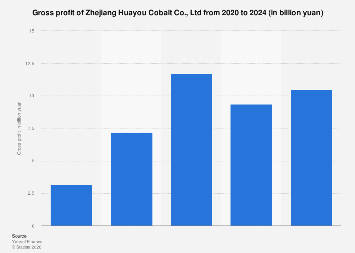
The performance of Zhejiang Huayou Cobalt Co., Ltd. in 2024 is poised to be a significant indicator of the broader trends shaping the global battery materials market. As a leading player in the extraction, refining, and processing of critical minerals like cobalt and nickel, Huayou Cobalt’s financial health is intrinsically linked to the burgeoning demand for electric vehicles (EVs) and renewable energy storage solutions. While precise, real-time gross profit figures for publicly traded companies are often subject to rigorous reporting schedules and market analysis, understanding the factors influencing such metrics provides crucial insight into the company’s strategic positioning and the sector’s outlook.
The global demand for cobalt, a vital component in lithium-ion batteries that power EVs, has seen a dramatic surge in recent years. This escalating demand, coupled with supply chain vulnerabilities, particularly concerning its primary source, the Democratic Republic of Congo (DRC), has led to significant price volatility. For companies like Huayou Cobalt, which operates extensive refining facilities and has secured upstream mining assets, managing these price fluctuations is paramount to maintaining robust profitability. The company’s gross profit in 2024 will therefore be a reflection of its ability to navigate these complex market dynamics, optimize its sourcing strategies, and leverage its technological advancements in mineral processing.
Analysts often look at gross profit as a key metric of operational efficiency. It represents the revenue generated from sales minus the direct costs of producing those goods or services. In the context of Huayou Cobalt, this would include the cost of raw materials (cobalt, nickel, lithium salts), energy consumption for smelting and refining, labor directly involved in production, and the depreciation of manufacturing assets. A higher gross profit margin indicates that the company is effectively controlling its production costs relative to its selling prices, suggesting strong pricing power or superior operational efficiency.
The EV market’s exponential growth is the primary engine driving demand for battery metals. Projections from various industry bodies indicate a continued upward trajectory for EV sales globally, with major automotive manufacturers committing to aggressive electrification targets. This sustained demand underpins the long-term value proposition for companies like Huayou Cobalt. However, the pace of this demand growth can be influenced by macroeconomic factors such as global economic performance, interest rates, and government incentives for EV adoption. A robust global economy in 2024 would likely translate to higher consumer spending on vehicles, directly benefiting battery material suppliers.
Beyond the immediate demand from the automotive sector, the expanding market for grid-scale energy storage solutions also presents a significant opportunity. As nations transition towards renewable energy sources like solar and wind, the need for reliable energy storage systems to balance intermittent supply is becoming increasingly critical. Lithium-ion batteries, and by extension their constituent metals, are central to these systems. Huayou Cobalt, with its integrated business model, is well-positioned to capitalize on this diversification of demand.
However, the supply side of the equation presents its own set of challenges and opportunities. The geopolitical landscape surrounding cobalt mining, with its concentration in the DRC, raises concerns about ethical sourcing, labor practices, and supply chain stability. Huayou Cobalt, like its international peers, is under increasing pressure from regulators, investors, and consumers to ensure its supply chains are transparent, responsible, and free from human rights abuses. Investments in diversifying sourcing, such as developing projects in Australia or Canada, or exploring alternative battery chemistries that reduce reliance on cobalt, are strategic imperatives. The company’s success in these diversification efforts will have a tangible impact on its cost structure and, consequently, its gross profit.
Furthermore, the ongoing technological evolution in battery chemistry is a critical factor to monitor. While cobalt remains a key element in many high-performance batteries, research and development are actively pursuing alternatives that could reduce or eliminate its use. Nickel-rich chemistries, for instance, are gaining traction, and solid-state battery technology, still in its nascent stages, could redefine material requirements. Huayou Cobalt’s strategic investments in research and development, including its exploration of nickel processing capabilities and potential ventures into next-generation battery technologies, will be crucial in adapting to these shifts and maintaining its market relevance and profitability.
The global competitive landscape for battery materials is intensifying. Established players are expanding their capacities, while new entrants, particularly from emerging economies, are seeking to carve out market share. Huayou Cobalt’s ability to maintain its competitive edge will depend on its operational efficiency, its capacity for innovation, and its strategic partnerships. Collaborations with automotive manufacturers, battery producers, and technology developers can provide valuable insights into future demand, facilitate the adoption of new technologies, and secure long-term supply agreements, all of which can positively influence gross profit margins.
Statistical analysis of past financial performance, when available, often reveals patterns in gross profit margins. For instance, periods of high commodity prices typically coincide with higher gross profit margins for mining and refining companies, assuming they can pass on these costs to their customers. Conversely, periods of price downturns or increased competition can squeeze margins. Understanding these historical trends, alongside current market indicators such as the spot prices of cobalt and nickel, futures contracts, and the inventory levels held by major producers and consumers, provides a more comprehensive picture of the financial environment Huayou Cobalt is operating within.
The company’s expansion into the production of precursor materials and cathode materials for batteries also adds another layer to its profitability analysis. By moving further down the value chain, Huayou Cobalt can capture additional margin compared to simply selling raw or semi-processed metals. The success of these downstream operations, their integration with upstream supply, and their ability to meet the stringent quality requirements of battery manufacturers are all critical determinants of their contribution to overall gross profit.
In conclusion, while specific 2024 gross profit figures for Zhejiang Huayou Cobalt Co., Ltd. require access to detailed financial reports, the underlying economic forces at play paint a complex but generally optimistic picture. The insatiable demand from the EV sector, coupled with the growing need for energy storage, provides a strong foundation. However, success in this dynamic market will be contingent on the company’s adeptness at managing supply chain risks, navigating price volatility, fostering innovation in battery technology, and maintaining a competitive edge in a globalized industry. Its performance in 2024 will serve as a vital barometer for the health and evolution of the entire critical minerals sector, a sector indispensable to the global transition towards a sustainable energy future.