

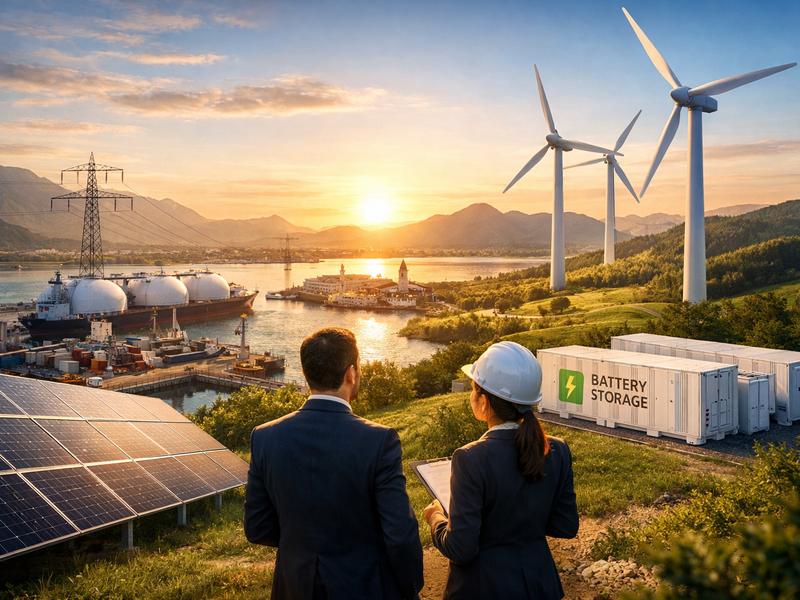
The pursuit of high-quality, stable returns from large-scale private asset investments, particularly within the infrastructure sector, presents a persistent challenge for institutional investors such as pension fund managers. As global demand for modern, resilient infrastructure escalates, particularly in the energy domain, the strategic identification of often-overlooked market segments – or "niches" – is emerging as a crucial differentiator for successful capital deployment. MPC Capital, a firm specializing in guiding institutional clients towards structural growth opportunities in maritime and energy infrastructure, highlights how a focused approach on these specialized areas can unlock significant long-term value, especially within Europe’s evolving, decentralized energy system.
Christian Schwenkenbecher, Chief Client Officer at MPC Capital, emphasizes that the energy sector, in particular, offers a fertile ground for such specialized investment strategies. "Our approach to energy infrastructure investments focuses on generation assets such as onshore wind, solar PV as well as storage," Schwenkenbecher explains. "We focus on structuring and securing long-term cash flows primarily through corporate offtake structures, allowing us to take an active role as a vertically integrated investor, ensuring we remain close to the underlying asset." This hands-on, integrated model allows investors to maintain a direct line of sight into the operational and financial performance of their investments, mitigating risks and fostering a deeper understanding of the underlying value drivers.
The rationale behind focusing on majority ownership in assets is to fully leverage MPC Capital’s active management expertise. However, the firm also recognizes the strategic advantage of partnerships where complementary skill sets and aligned return expectations exist. This collaborative approach has been instrumental in building a strong track record of successful engagements with both institutional investment partners and industrial collaborators, a synergy Schwenkenbecher identifies as a key ingredient for superior performance. This dual strategy of direct control and strategic alliances allows for flexibility and adaptability in a dynamic market.
Europe, as a target market, is chosen for its robust combination of high-quality assets, stable political and regulatory environments, and a substantial investment backlog driven by the imperative to construct a new, more agile, and decentralized energy infrastructure. Schwenkenbecher points to the industrial sector as a prime example of an area increasingly reliant on private capital to achieve economically viable decarbonization targets. This presents a compelling investment thesis for institutional investors, including prominent private equity firms like KKR, Apollo, and EQT, which have notably increased their investment activities, particularly within Germany, Europe’s largest economy. The sheer scale of the energy transition underway necessitates significant capital infusion, creating numerous opportunities across the value chain.
While MPC Capital’s core target markets are expected to remain consistent, Schwenkenbecher observes a growing interest from international investors, notably from the United States and the Middle East, looking to deploy capital into Europe. This trend, while understandable given recent geopolitical shifts, is met with an optimistic outlook on the continent’s investment prospects. Ample opportunities are anticipated in the short, medium, and long term, spanning the entire energy infrastructure spectrum – from generation and transmission to distribution and ancillary energy services.
The increasing demand for energy, driven by emerging technologies such as artificial intelligence (AI) and its role in facilitating overall GDP growth and enhancing domestic competitiveness, underscores the strategic importance of energy infrastructure. "Ahead of these mega-trends and structural growth drivers, it seems sensible to be invested along those structural trends," Schwenkenbecher asserts, highlighting the foresight required in infrastructure investment. Energy availability and affordability are becoming increasingly critical factors for technological advancement and economic prosperity.
While many governments are considering the expansion of nuclear power as a long-term solution for energy security and capacity, MPC Capital’s strategy does not prominently feature this asset class. "We are agnostic to overall energy sources, but our focus on renewable production capacity is mostly due to its cost competitiveness and shorter time to market compared to nuclear power," Schwenkenbecher clarifies. This pragmatic approach prioritizes the economic viability and speed of deployment offered by renewables, aligning with the immediate need for scalable energy solutions. The global renewable energy market is projected to reach trillions of dollars in the coming decade, driven by policy support and falling technology costs.
The current global geopolitical landscape, marked by widespread unrest, creates a synergistic intersection with MPC Capital’s core expertise in maritime and energy assets. With many European governments, particularly within NATO, committing to increasing defense spending to five percent of GDP over the next decade, a significant portion of this funding is expected to flow into major port expansions and upgrades. These critical infrastructure developments inherently require robust energy supply chains and modern energy infrastructure. Schwenkenbecher notes, "Increased spending on port infrastructure and other maritime assets validates the importance of both sectors, and the focus on attractive niches is rather geared towards the intersection of maritime and energy infrastructure." This convergence highlights the dual-purpose nature of investments in port-related energy infrastructure, serving both commercial and strategic defense needs.
Beyond specific asset classes, broader macroeconomic, geopolitical, and regulatory factors are constantly monitored. Schwenkenbecher emphasizes the need to remain sensitive to the impact of interest rate developments on both transaction and fundraising activities. In a high-interest-rate environment, a selective approach to transactions is crucial. As central banks begin to ease monetary policy, this trend is expected to provide a tailwind for transaction activities, potentially unlocking more investment opportunities. The current global interest rate environment, while posing challenges, also necessitates a disciplined and patient investment approach, focusing on long-term value creation.
MPC Capital’s business model is built on resilience, underscored by the careful balance between transactional and management revenues. Recurring service revenues, in particular, have been a significant contributor to the company’s stability, enabling it to maintain discipline and focus on its investment strategies while ensuring a high degree of earnings visibility. This recurring revenue stream provides a predictable income base, insulating the company from some of the volatility inherent in project-based finance.
Regulatory frameworks and government policies play a pivotal role in directing capital towards infrastructure projects. The profound disruption to global energy markets following the Russian invasion of Ukraine has firmly placed national energy security at the forefront of government agendas. While the response in terms of impactful regulatory change has been varied across jurisdictions, the importance of supportive regulations is undeniable. Schwenkenbecher highlights the UK and US regulatory approaches as particularly encouraging for driving investment and accelerating the build-out of energy infrastructure. He expresses a desire for similar forward-thinking regulations in Germany to attract greater private capital to the sector. Ultimately, he concludes, "Private capital will play a key role, with governments likely to provide frameworks to attract capital," underscoring the symbiotic relationship between public policy and private investment in addressing the world’s growing infrastructure needs.