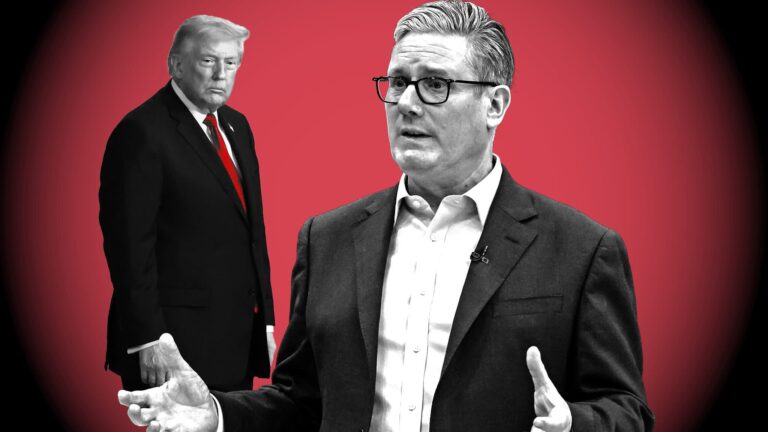
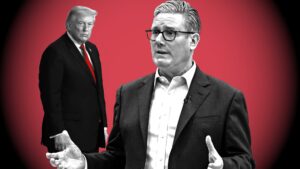

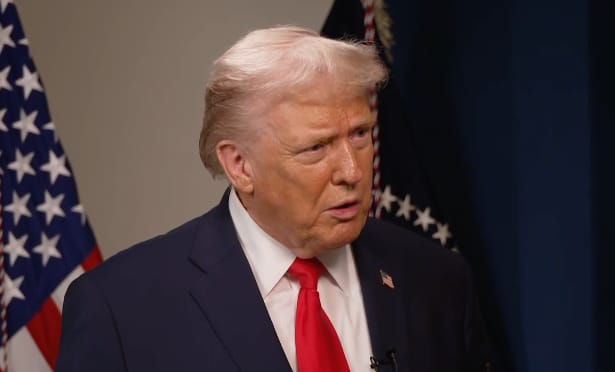
Speaking from the global stage of the World Economic Forum in Davos, Switzerland, President Donald Trump signaled that his search for the next leader of the Federal Reserve has reached a critical inflection point. In a move that has sent ripples through global financial markets, the President indicated that a selection process which once evaluated nearly a dozen high-profile candidates has been whittled down to a singular favorite. While stopping short of naming his preferred successor to Jerome Powell, the President’s remarks suggest that a definitive shift in American monetary leadership is imminent, marking the culmination of a months-long campaign to reshape the world’s most powerful financial institution.
The search, which commenced in September and at its peak involved 11 potential nominees, has been a central pillar of the administration’s economic strategy. The President’s assertion that he has narrowed the field from three to two, and "maybe one" in his mind, underscores the urgency of the transition. This deliberate narrowing of the shortlist comes at a time when the relationship between the White House and the Federal Reserve has reached its most litigious and strained point in modern history. The finalists for the role are believed to include a diverse mix of institutional insiders, academic heavyweights, and private-sector titans, each representing a different potential direction for U.S. monetary policy.
Among the names widely considered to be in the final running are former Fed Governor Kevin Warsh, current Governor Christopher Waller, and Rick Rieder, the head of global fixed income at BlackRock. Each candidate brings a distinct philosophy to the table. Warsh, who served on the Board of Governors during the 2008 financial crisis, is often viewed as a hawk who favors a more rules-based approach to interest rates. Waller, a current governor, has gained a reputation for his rigorous data-driven analysis and has occasionally broken with the consensus on the pace of rate adjustments. Meanwhile, the inclusion of Rieder signals the President’s interest in bringing a Wall Street perspective to the central bank. The President specifically described Rieder as "impressive," noting that the investment executive was the last to undergo the formal interview process.
The selection process has also been characterized by high-level maneuvering within the administration. Treasury Secretary Scott Bessent has spearheaded the vetting process, and while the President previously expressed interest in Bessent himself taking the helm at the Fed, he clarified in Davos that Bessent remains committed to his current role at the Treasury. Similarly, Kevin Hassett, the head of the National Economic Council and a long-time economic advisor to the President, appears to have been removed from the shortlist of Fed contenders. The President indicated a preference for Hassett to remain in his current capacity at the NEC, where he oversees the administration’s broader fiscal and regulatory agenda.
This leadership transition is occurring against a backdrop of unprecedented institutional conflict. For much of the past year, the Federal Reserve has been the target of intense executive pressure. The President’s critiques of Jerome Powell have moved beyond mere rhetoric, manifesting in a series of legal and administrative challenges. Central to this friction is a fundamental disagreement over the boundaries of executive authority. On the same day the President spoke in Davos, the Supreme Court heard arguments regarding the administration’s attempt to remove Governor Lisa Cook. The outcome of this case will likely define the legal limits of a president’s power to dismiss Fed officials for reasons beyond "cause," a precedent that has protected central bank independence for nearly a century.
The President’s dissatisfaction with the current Fed leadership extends beyond interest rate policy to the very management of the institution. A primary point of contention has been the $2.5 billion renovation of the Federal Reserve’s headquarters in Washington, D.C. The project has become a symbol of what the administration characterizes as institutional excess. The Department of Justice has recently issued subpoenas to Powell regarding the project’s costs and management, an escalation that has been described by some financial experts as a "chilling" development for the bank’s independence. In his Davos remarks, the President contrasted the Fed’s spending with his own background in real estate, suggesting he could have completed a superior project for a mere fraction of the cost.

For global investors, the primary concern remains how a new Fed Chair will handle the delicate balance of the "dual mandate"—achieving maximum employment while maintaining price stability. Market data suggests that the "Trump Trade," characterized by expectations of deregulation and tax cuts, is deeply sensitive to interest rate projections. If the President appoints a Chair perceived as being more subservient to the White House’s desire for low rates, there are fears that long-term inflation expectations could become unanchored. Conversely, a candidate like Kevin Warsh might provide the market with a sense of continuity regarding the Fed’s inflation-fighting credentials, even if he pursues a more aggressive reduction in the Fed’s balance sheet.
The historical context of this struggle is significant. Not since the Nixon administration’s pressure on Arthur Burns in the 1970s has a U.S. president so publicly and forcefully attempted to influence the Federal Reserve. Economists often point to that era as a cautionary tale; the erosion of Fed independence during the Nixon years is widely blamed for the "Great Inflation" that plagued the American economy for a decade. Modern economic theory posits that central bank independence is essential because it allows policymakers to make difficult, unpopular decisions—such as raising rates to combat inflation—without the immediate fear of political reprisal.
The fate of Jerome Powell remains the largest variable in this transition. While his removal as Chair seems certain given the President’s comments, Powell holds a dual role. He is both the Chair of the Board of Governors and a Governor in his own right, with a term that does not expire for another two years. If Powell chooses to remain as a Governor after being stripped of the chairmanship, it would create a unique and potentially volatile dynamic within the Federal Open Market Committee (FOMC). Such a move could serve as a "bulwark" against radical shifts in policy, as Powell would retain his vote on interest rate decisions. The President, however, appeared unfazed by this possibility, suggesting that if Powell stayed, his experience would not be a "happy" one, further signaling that the administration intends to marginalize the outgoing Chair.
The global implications of this leadership change cannot be overstated. The U.S. dollar serves as the world’s primary reserve currency, and the Fed’s decisions dictate the flow of capital across every continent. Emerging markets, in particular, are sensitive to U.S. interest rate hikes, which can trigger capital flight and currency devaluations. A Fed Chair perceived as being politically motivated could undermine the dollar’s status as a stable store of value, potentially accelerating the move toward alternative reserve currencies or digital assets. International peers, such as the European Central Bank and the Bank of England, operate under strict mandates of independence; a significant departure from this norm in the United States would represent a seismic shift in the global financial order.
As the administration prepares to announce its formal nominee, the focus shifts to the Senate confirmation process. Any nominee will face intense scrutiny regarding their commitment to the Fed’s non-partisan mission. The confirmation hearings will likely serve as a proxy battle over the future of the American economy, pitting those who favor a more "activist" Fed aligned with executive goals against those who believe the central bank must remain a technocratic island of stability.
The President’s "one person" comment suggests that the wait for clarity is nearly over. Whether the nominee is a seasoned central banker like Waller or a market strategist like Rieder, the appointment will be one of the most consequential of this presidency. It will not only determine the trajectory of interest rates and inflation for the next four years but will also test the durability of the institutional safeguards that have governed the American economy since the Federal Reserve Act of 1913. In the high-stakes environment of Davos, the message was clear: the era of the Powell Fed is ending, and a new, more politically integrated chapter of American monetary history is about to begin.