

In the modern theater of global finance, few events carry the gravitational weight of an Nvidia earnings announcement. As the primary architect of the hardware powering the artificial intelligence revolution, the Silicon Valley titan has evolved from a specialized semiconductor designer into a systemic pillar of the global economy. Yet, despite delivering a set of financial results that would, in any other era, be considered a generational triumph, the market responded with a collective shrug that bordered on a shudder. This disconnect between blockbuster fundamentals and lukewarm investor sentiment highlights a precarious new reality for the technology sector: when a company is priced for perfection, even the most spectacular reality can feel like a disappointment.
The numbers themselves were nothing short of staggering. Nvidia reported a surge in revenue that surpassed even the most optimistic consensus estimates, driven primarily by its data center division. This unit, which houses the high-performance H100 and H200 GPUs that serve as the "brains" of generative AI, has seen demand that continues to outstrip supply. Revenue growth, measured in triple-digit percentages year-over-year, underscored the relentless appetite for compute power among hyperscalers like Microsoft, Alphabet, Meta, and Amazon. Gross margins remained at levels that are virtually unheard of in hardware manufacturing, reflecting Nvidia’s immense pricing power and the lack of a viable immediate alternative for high-end AI training.
However, the immediate aftermath of the report saw Nvidia’s share price fluctuate in a manner that suggested a "sell on the news" mentality. To understand this reaction, one must look beyond the top-line figures and into the psychology of the "whisper number"—the unofficial, heightened expectations held by institutional traders that often sit well above published analyst forecasts. For months, Nvidia has not just beaten expectations; it has shattered them. When the margin of the "beat" narrows, or when guidance for the upcoming quarter appears merely "excellent" rather than "unprecedented," the momentum-driven engine of the stock market begins to sputter.
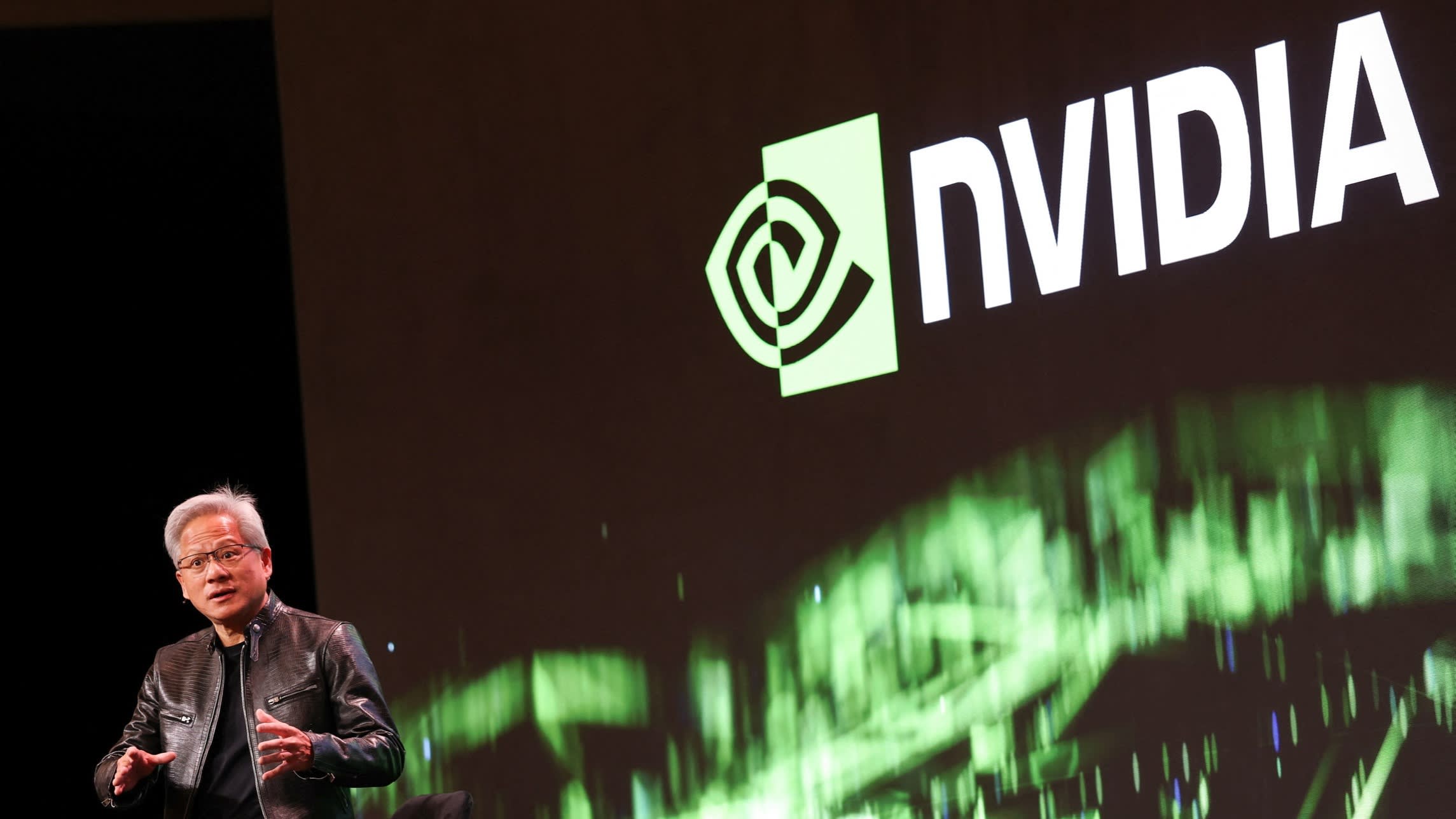
A significant portion of investor anxiety centers on the transition to Blackwell, Nvidia’s next-generation chip architecture. While CEO Jensen Huang has characterized Blackwell as the engine of a new industrial revolution, the road to high-volume production has been paved with logistical hurdles. Reports of engineering tweaks and supply chain bottlenecks have surfaced, leading to concerns that the explosive growth trajectory of the past eighteen months might face a temporary plateau. In a market where valuations are predicated on flawless execution and accelerating returns, any hint of a "lull" between product cycles creates a vacuum that volatility is quick to fill.
Furthermore, the broader economic context is shifting. The initial "gold rush" phase of artificial intelligence, characterized by frantic capital expenditure (CapEx) from big tech firms, is entering a more scrutinized chapter. Analysts and shareholders are increasingly asking the "Return on Investment" (ROI) question. While companies are spending tens of billions of dollars on Nvidia chips, the software-side monetization of AI—the applications and services that are supposed to justify this spending—is still in its nascent stages. If the "Big Four" hyperscalers signal a tightening of their belts or a shift toward more specialized, in-house silicon, Nvidia’s dominant market share could be contested.
The competitive landscape is also becoming more crowded, albeit slowly. While Nvidia currently holds an estimated 80% to 90% of the AI chip market, rivals like Advanced Micro Devices (AMD) are making inroads with their MI300 series. Simultaneously, the rise of custom ASICs (Application-Specific Integrated Circuits) designed by the very companies that are currently Nvidia’s largest customers represents a long-term structural risk. Google’s TPUs and Amazon’s Trainium and Inferentia chips are designed to optimize specific workloads at a lower cost than general-purpose GPUs. While Nvidia’s software ecosystem, CUDA, remains a formidable moat that locks developers into their hardware, the economic pressure to find cheaper alternatives is mounting.
Geopolitics adds another layer of complexity to the Nvidia narrative. The ongoing "chip war" between the United States and China has resulted in increasingly stringent export controls. China has historically accounted for a significant portion of Nvidia’s revenue, and while the company has developed "lite" versions of its chips to comply with U.S. regulations, the performance gap between these and the flagship models makes them less attractive to Chinese tech giants. There is a growing concern that Chinese firms will eventually be forced to achieve self-sufficiency, permanently carving out a massive segment of the global market from Nvidia’s reach.
From a macroeconomic perspective, Nvidia has become a victim of its own success as a market bellwether. Because the company carries such a massive weighting in the S&P 500 and the Nasdaq-100, its performance dictates the movement of entire index funds and ETFs. This means that Nvidia is no longer traded solely on its own merits; it is traded as a proxy for global risk appetite. When investors are looking to hedge against broader economic uncertainty—such as fluctuating interest rates or cooling labor markets—they often trim their most successful positions to lock in gains. Nvidia, having seen its valuation skyrocket by trillions of dollars in a remarkably short period, is the primary target for such profit-taking.
The "law of large numbers" is also starting to apply. It is mathematically much harder to double revenue when your baseline is $30 billion per quarter than when it was $5 billion. As the growth rates inevitably begin to normalize, the high price-to-earnings (P/E) multiples that the stock carries become harder to justify for value-oriented investors. The transition from a "growth at any cost" darling to a "mature tech leader" is often a painful one for a stock’s valuation, characterized by high volatility as the investor base rotates from speculative traders to long-term institutional holders.
Despite the tepid market response, it would be a mistake to interpret the share price stagnation as a sign of fundamental weakness. Nvidia’s role in the global economy is deepening. Beyond just selling chips, the company is aggressively expanding into software-as-a-service (SaaS) and sovereign AI. The latter is a burgeoning trend where nations—such as Saudi Arabia, the United Arab Emirates, and various European states—are investing in their own domestic AI infrastructure to ensure data sovereignty and economic competitiveness. This opens a new frontier of demand that is decoupled from the CapEx cycles of Silicon Valley’s giants.
Moreover, the technical moat provided by CUDA cannot be overstated. Millions of developers are trained on Nvidia’s proprietary software platform, making the "switching cost" to a competitor’s hardware prohibitively expensive and time-consuming. Nvidia isn’t just selling a piece of silicon; it is selling an entire ecosystem that has become the industry standard for AI development. As long as this remains the case, the company will maintain a level of "stickiness" that few other hardware manufacturers can claim.
The current investor fatigue may simply be a necessary digestive period for a market that has been fed a diet of relentless optimism. The "AI fatigue" seen on Wall Street reflects a desire for tangible evidence of AI-driven productivity gains across the wider economy—in healthcare, manufacturing, and finance—rather than just in the balance sheets of the companies building the infrastructure. Until the broader corporate world can demonstrate that they are turning Nvidia’s chips into bottom-line profits, the semiconductor giant may find itself in a holding pattern, delivering world-class results that a jaded market views as merely meeting the status quo.
In conclusion, Nvidia’s recent earnings report serves as a case study in the dynamics of modern hyper-growth companies. It illustrates the narrowing path between success and expectation. While the company continues to fire on all cylinders, the market is no longer satisfied with excellence; it demands the impossible. As the world moves from the era of AI experimentation to the era of AI implementation, Nvidia remains the indispensable player, but it must now navigate a landscape where its greatest competitor is no longer another chipmaker, but its own unprecedented track record. The paradox of perfection remains: the better Nvidia performs, the higher the mountain it must climb to prove it can still reach the summit.