


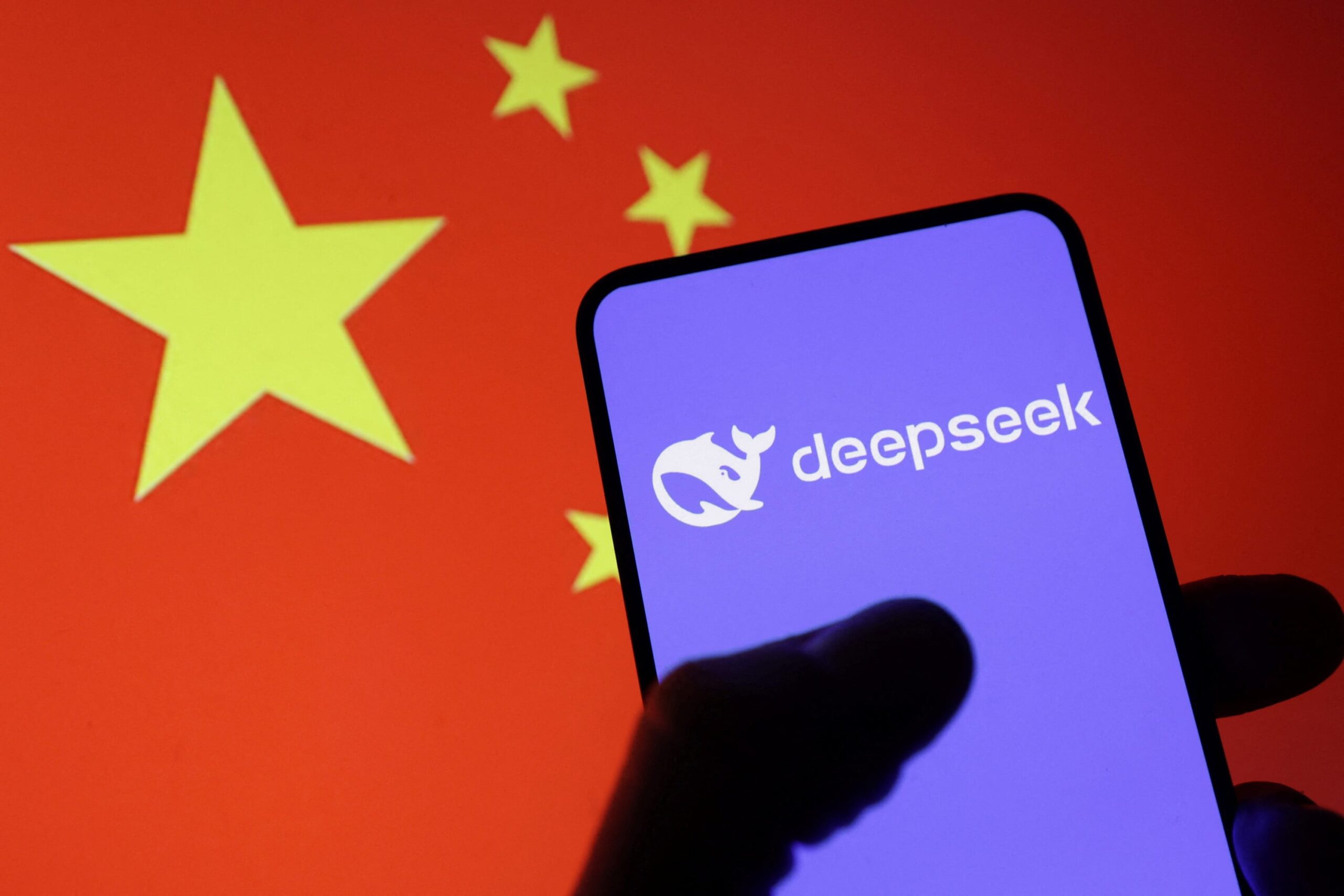
Just over twelve months ago, the global artificial intelligence landscape was fundamentally disrupted by DeepSeek, a Chinese-made large language model that challenged the prevailing narrative of American dominance. By delivering high-performance capabilities at a fraction of the operational costs associated with U.S. giants like OpenAI, DeepSeek forced a global reckoning regarding the efficacy of export controls and the sheer speed of Chinese engineering. Today, that momentum has evolved into an all-out sprint. From established tech conglomerates like Alibaba and Baidu to agile unicorns like Moonshot AI and Z.ai, the Chinese technology sector is unleashing a torrent of new models designed not just to match, but to leapfrog their Western counterparts in reasoning, video generation, and autonomous agency.
The latest salvo in this escalating technological rivalry came this Tuesday from Beijing-based startup Moonshot AI. The company unveiled its Kimi K2.5 model, a sophisticated multimodal system that claims to outperform the flagship models of OpenAI, Anthropic, and Google in several key metrics. Most notably, Moonshot is pivoting toward "agentic AI"—systems that do not merely respond to prompts but possess the autonomy to execute complex tasks on behalf of the user with minimal intervention. This shift marks the transition from "AI as a tool" to "AI as an employee," a frontier that Silicon Valley is also racing to conquer. The speed of Moonshot’s iteration is particularly striking, coming only three months after the release of its predecessor, the K2 model, signaling a compressed development cycle that is becoming the new standard in Beijing’s tech hubs.
Parallel to the rise of startups, China’s "Big Tech" incumbents are leveraging their massive datasets and existing ecosystems to claim territory. Alibaba, the e-commerce and cloud computing titan, recently announced Qwen3-Max-Thinking. According to internal benchmarks and third-party evaluations, this new model excelled in "Humanity’s Last Exam," a rigorous benchmark designed to test the limits of AI reasoning and problem-solving. Alibaba’s strategy emphasizes utility and efficiency; the Qwen3 model is designed to autonomously select the most appropriate AI tool for a specific task and use historical context to refine its responses. By doing so, Alibaba aims to lower the barrier for enterprise adoption, offering high-level intelligence at a price point that undercuts the high-margin models favored by U.S. developers.

The market response to these advancements has been palpable. Baidu, often referred to as the "Google of China," recently saw its Hong Kong-listed shares surge to a three-year high following the debut of Ernie 5.0. While Baidu claims its latest iteration surpasses Google’s Gemini-2.5-Pro, the company remains in a fierce optimization race with Google DeepMind’s newest Gemini 3 Pro. This back-and-forth illustrates a narrowing gap. Demis Hassabis, CEO of Google DeepMind, recently conceded that Chinese AI capabilities might now be trailing the United States by only a matter of "months," a significant revision from previous estimates that placed China years behind.
However, the Chinese AI surge is not without its internal frictions. Z.ai, another prominent player in the space, recently released a free version of its GLM 4.7 model to massive acclaim. Yet, within forty-eight hours, the company was forced to halt new subscriptions for its AI coding tool. The reason was a classic bottleneck of the modern era: demand had completely outstripped the company’s available computing power. This highlights the double-edged sword of China’s AI ambitions. While algorithmic innovation is flourishing, the industry remains highly sensitive to the supply of high-end semiconductors, a sector currently constricted by international trade restrictions. The ability of these firms to optimize their models to run on less powerful or domestically produced hardware has become a critical competitive advantage.
Beyond the technical benchmarks, the true battleground for AI supremacy is shifting toward commercial integration and market penetration, particularly in the "Global South." Unlike the proprietary, closed-loop models often favored by U.S. firms, many of China’s leading AI architectures are being released as open-source projects. This strategy is a calculated move to foster a global dependency on Chinese technology. By allowing developers in emerging economies to access and customize the underlying code for free or at a low cost, Chinese firms are building a massive user base that bypasses the premium pricing models of Silicon Valley.
Data suggests this strategy is already yielding results. Recent industry reports indicate that usage of models like DeepSeek in Africa is currently two to four times higher than in other international regions. By positioning themselves as the "democratizers" of AI, Chinese firms are securing a foothold in markets that will define the next decade of global economic growth. This is not just a technological play but a geopolitical one, as it ensures that the next generation of global applications—from fintech in Nairobi to logistics in Jakarta—will be built on Chinese foundations.

Domestically, the competition has shifted toward "Super-App" integration. In China, AI is not a standalone product; it is a feature designed to enhance existing digital lifestyles. Tencent, the operator of the ubiquitous WeChat platform, has integrated its Yuanbao AI chatbot into its massive ecosystem of gaming, messaging, and payments. To drive adoption, Tencent announced a 1-billion-yuan ($140 million) cash incentive program tied to the upcoming Lunar New Year. This "red envelope" strategy mimics the tactic Tencent used a decade ago to break Alibaba’s monopoly on mobile payments. By gamifying AI interaction and linking it to traditional cultural practices, Tencent is ensuring that AI becomes an invisible but essential part of the daily routine for its billion-plus users.
Alibaba is pursuing a similar path by integrating its Qwen AI directly into its Taobao e-commerce platform. The goal is to create a seamless "agentic commerce" experience where a user can ask a chatbot to find a product, compare prices, and complete a purchase without ever leaving the chat interface. With Qwen already boasting over 100 million monthly active users, this integration creates a powerful feedback loop: more users drive more data, which improves the AI, which in turn drives more commerce revenue to offset the astronomical costs of model training.
This economic model differs fundamentally from the U.S. approach, which often treats the AI model itself as the primary revenue generator through subscription fees. In China, the model is frequently seen as a "loss leader" or a foundational utility meant to drive traffic to more profitable sectors like e-commerce, advertising, and cloud services. This focus on "user traffic over pure advancement" reflects the pragmatic reality of the Chinese tech market, where monetization must follow quickly on the heels of innovation to satisfy investors and navigate a complex regulatory environment.
As we look toward the future, the "months" of difference between U.S. and Chinese AI are becoming increasingly academic. The real-world impact of AI is being decided in the trenches of application, cost-efficiency, and ecosystem integration. While the United States may still hold the lead in raw compute power and foundational research, the Chinese "race to release" has proven that the ability to iterate rapidly and deploy at scale is a formidable form of power in its own right. As these models become more autonomous and more deeply embedded in the global economy, the distinction between a "leader" and a "follower" may soon vanish, replaced by a bipolar AI world where competition drives innovation at a pace the world has never seen before.