


The contemporary Chief Financial Officer (CFO) has transcended the traditional custodianship of fiscal health to emerge as a pivotal architect of corporate strategy and a catalyst for profound organizational transformation. A burgeoning cohort of "super CFOs" is actively confronting multifaceted challenges, shifting their focus from merely reporting past performance to proactively designing future outcomes. This evolution is so significant that the concept of a Chief Value Officer (CVO) is gaining traction, underscoring finance’s expanding purview in holistic value creation, which is now assessed not solely by profitability but through the lens of the Integrated Reporting Framework’s six capitals: financial, manufactured, intellectual, human, social and relationships, and natural.
Over the past two decades, the CFO role has undergone a metamorphosis, moving decisively beyond its historical roots in accounting and control. Previously, the primary responsibilities revolved around financial stewardship, encompassing meticulous financial reporting and the precise recording of transactions. This inherently reactive function has blossomed into a strategic partnership with the Chief Executive Officer (CEO), often described as a "co-pilot" role. In this capacity, the CFO is instrumental in identifying nascent opportunities and navigating the inherent unpredictability of the modern economic landscape. While the CEO typically spearheads the identification of market opportunities, the CFO assumes the critical responsibility of steering the organization through rigorous financial stress-testing and sophisticated scenario planning.
This strategic leadership imperative is now central to delivering sustained long-term value to an increasingly diverse array of stakeholders, including boards of directors, investors, and regulatory bodies. Dan Benson, managing director at executive search firm Morgan Philips Group, observes, "Over the past 10 years, the role of CFO has changed from one of financial management and compliance to a strategic leadership tasked with driving change." This expanded mandate necessitates greater internal collaboration across departments and a more pronounced external focus.
Deana Murfitt, COO and Executive Coach at Breakfast People, echoes this sentiment, stating, "The modern CFO is market-facing, having moved away from the confines of the traditional finance function. CFOs are now true business leaders: analysing market trends, pitching to Venture Capital (VC) and representing the corporate voice." This transformation is largely driven by an unforgiving global business environment characterized by persistent supply chain disruptions, volatile inflation spikes, and heightened investor scrutiny. Consequently, CFOs have traded the relative predictability of back-office spreadsheets for the dynamic complexities of boardroom strategy. While the seeds of this change were sown before the COVID-19 pandemic, the global health crisis acted as a significant accelerant, positioning CFOs as pivotal catalysts for change within their organizations, increasingly influenced by advancements in artificial intelligence (AI), data analytics, technological innovation, and the growing importance of non-financial metrics.
As Dan Benson points out, CFOs are now at the epicenter of growth initiatives. "Amid a changing and challenging business landscape, CFOs are increasingly focused on driving growth, leading on M&A and raising capital or by driving organisational change to ensure businesses evolve at the pace required to compete," he elaborates. RafaÅ‚ Zborowski, founder and managing partner of advisory firm Braincapital.pl, a seasoned professional who has personally witnessed this evolution, shares his perspective. "My career started with a strong focus on financial control and performance management in large organisations like Polkomtel (a mobile operator in Poland), where the priority was cost optimisation and operational efficiency," he recalls. However, his trajectory demonstrates the dramatic shift: "Over time, the CFO role has shifted dramatically, and so has mine. At Empik’s Learning Systems Group, I was not only responsible for finance but also for all other supportive functions like IT, HR and legal, which allowed me to lead major transformation programmes, including ERP implementation and process automation."
The expanded remit of the CFO now critically encompasses risk management and resilience, alongside a growing emphasis on Environmental, Social, and Governance (ESG) factors. A comprehensive global CFO survey conducted by Egon Zehnder reveals that a substantial 82 percent of finance leaders report a significant broadening of their responsibilities, now often including direct ownership of ESG initiatives, mergers and acquisitions (M&A), and overarching corporate strategy. These figures starkly illustrate the migration from a focus on operational control to one centered on value creation. Where earlier generations of CFOs primarily managed performance, today’s counterparts are actively engineering it.
As CFOs extend their influence, their risk oversight has correspondingly broadened to encompass operational, financial, reputational, and environmental risks. "CFOs today are value protectors and value creators, shaping the future by aligning capital, risk management, and strategic ambition," articulates Zborowski. This intensified responsibility became acutely apparent in the post-pandemic era, with CFOs spearheading organizational responses to unprecedented volatility. Zborowski recounted in an article for FM Magazine the swift re-engineering of a global education group’s business model within days of lockdown mandates. The lessons learned during this period have now become embedded in standard operating procedures, with CFOs increasingly adept at anticipating disruption through meticulous liquidity stress-testing and robust scenario planning for geopolitical shocks, rather than merely reacting to them. The integration of ESG principles has further broadened this scope, with over half of surveyed finance leaders now incorporating environmental and social risks directly into their financial decision-making processes.
The digital imperative is profoundly reshaping the finance function, as automation and advanced analytics become integral to decision-making. AI is revolutionizing financial reporting, enhancing forecasting accuracy, and improving risk analytics capabilities. "Today, the CFO is no longer reporting the numbers but using digital tools and insights to guide innovation and long-term value creation using all available tools, including AI," explains Zborowski. Protiviti’s "Global Finance Trends 2025" study indicates a significant surge in AI adoption within finance teams, with 72 percent now utilizing AI, more than doubling the rate from the previous year.

Historically the domain of Chief Technology Officers (CTOs), CFOs are increasingly taking ownership of digital transformation initiatives. The finance function, with its inherent discipline, governance structures, and data rigor, is ideally positioned to ensure that investments in digital technologies yield measurable, tangible results. Benson notes that this paradigm shift is also altering the very perception of corporate value. "The digital revolution of the past 10 years is a significant driver in this change, with investment in tech-related businesses dramatically up. For a CFO, this means the value of a company is linked with their tech stack and capability, meaning many strategic CFOs are the drivers of digital transformation within an organisation."
Zborowski further emphasizes this point: "The CFO’s role is not only to secure financing and monitor performance, but to challenge existing business processes and create the atmosphere for transformation." The impact of AI extends far beyond simple automation. Modern CFOs leverage sophisticated models for hyper-accurate forecasting, implement autonomous compliance systems utilizing Natural Language Processing (NLP) to monitor global regulations, and conduct real-time risk analytics, including auditing transactions for anomalies. Digital literacy, once considered an optional skill for finance leaders, has now become a fundamental component of financial acumen. The CFOs poised for success in the coming years will be those capable of harnessing AI and digital transformation to unlock profound insights.
The trajectory from CFO to CEO is becoming increasingly common. According to the Egon Zehnder report, a notable 60 percent of CFOs aspire to CEO positions, and 35 percent are already functioning as de facto co-leaders alongside the CEO. Today’s CFO effectively serves as a deputy CEO, tasked with balancing strategic capital allocation with broad leadership responsibilities. Benson observes, "While in the past the CFO may have been an ‘ultimate destination’ role, it is increasingly viewed as a stepping stone to CEO and, latterly, NED opportunities."
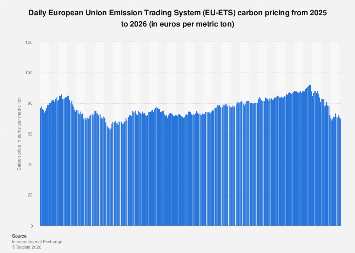
A significant challenge facing CFOs is the integration of systemic risks into robust financial models. These risks include cyber threats, which are no longer confined to IT departments but represent a tangible financial liability requiring balance sheet stress-testing against potential breach costs, regulatory fines, legal liabilities, and brand damage. Geopolitical instability and supply chain vulnerabilities necessitate the mapping of financial assets and supply costs against political risks. Furthermore, the integration of ESG principles and the implementation of carbon pricing models require CFOs to guide investment towards green technologies, often by imposing an internal carbon price on capital expenditures, with the measurement of these new costs heavily reliant on technological solutions.
The comprehensive view of the business afforded by the CFO position, encompassing financial control, IT systems, HR, and legal expertise, as demonstrated by Zborowski’s career, has enabled pivotal career transitions. "Later, as CEO of a private equity-backed company, I applied these skills to redesign the business model and drive growth," he notes, highlighting his transition from CFO to CEO.
However, not all CFOs aspire to the CEO role. The demanding nature of their current positions leads a significant portion to consider early retirement. Egon Zehnder data indicates that 64 percent of European CFOs and 50 percent of North American CFOs are contemplating early retirement, with the likelihood increasing in larger organizations. The pathway to the CEO role requires more than just technical financial expertise. While 60 percent of CFOs express a desire to reach the top executive position, 46 percent identify networking and visibility as primary obstacles, followed by knowledge gaps. Consequently, current and aspiring CFOs must actively cultivate these essential skills through continuous learning and organizational exposure.
BDO/ACCA recommends that future finance leaders gain experience beyond the core finance function, including active involvement in strategic change programs such as IT delivery or M&A integration. This broader experience prepares them for effective C-suite partnerships. Ultimately, organizations bear the responsibility of fostering this development, as boards increasingly seek diversity of thought. Benson emphasizes that boards now prioritize agility, resilience, and effective communication. "Beyond strategy definition and driving change, CFOs must demonstrate workplace agility and lead through challenging times with resilience, flexibility and clarity," he states. The requisite skillset has expanded beyond mere financial analysis to encompass robust executive leadership. This includes change management expertise, particularly for leading large-scale digital transformation projects and managing stakeholder impact; strong communication skills to function as a "financial storyteller," translating complex data into clear narratives for diverse stakeholders, including investors, regulators, and the media; and digital fluency, which involves not just using technology but understanding its underlying principles, such as AI and cloud computing.
The role of the CFO is poised for continued evolution, facing both immense pressure and unprecedented opportunity in an era of rapid technological advancement, heightened regulatory scrutiny, and persistent global economic volatility. "The CFO role will continue to broaden as we face a world of greater uncertainty and faster change," predicts Zborowski. "Challenges such as ESG integration, cybersecurity and geopolitical volatility will increasingly define their agendas. Advances in AI and digital transformation present an enormous opportunity to enhance decision-making and reinvent business models." The delicate balance between prudent financial stewardship and proactive innovation will ultimately distinguish successful finance leaders. As AI and automation increasingly handle transactional tasks, the CFO’s enduring comparative advantage will lie in human judgment—the ability to connect data with strategic vision and performance with a clear sense of purpose.
Zborowski concludes with an optimistic outlook on the opportunities ahead: "Having worked as both CFO and CEO, the opportunity lies in stepping fully into the role of transformation leader. Those CFOs who can combine strategic vision and execute complex change will be the ones who drive sustainable long-term growth and position their companies to thrive." The finance function has journeyed far from its rudimentary beginnings of simply counting numbers. The CFO of the future will not merely measure value; they will fundamentally define it.