

The narrative surrounding artificial intelligence is increasingly dominated by discussions of automation and potential job displacement. As companies across various sectors highlight AI-driven efficiencies as justification for workforce restructuring, a prevailing sentiment suggests that the next logical evolution of AI lies in its capacity to replace human roles. However, a more profound and potentially transformative frontier for AI is not in its ability to substitute human labor, but in its burgeoning capacity to comprehend the human element—the nuances of intent, emotion, and cultural context—that underpins every human action and endeavor. This shift from mere task execution to genuine understanding represents the true next stage of AI development, promising to augment human connection rather than diminish it.
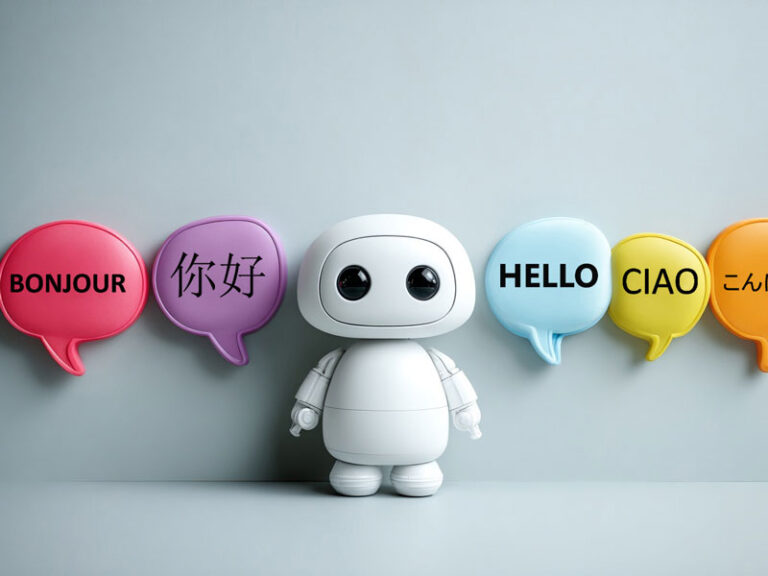
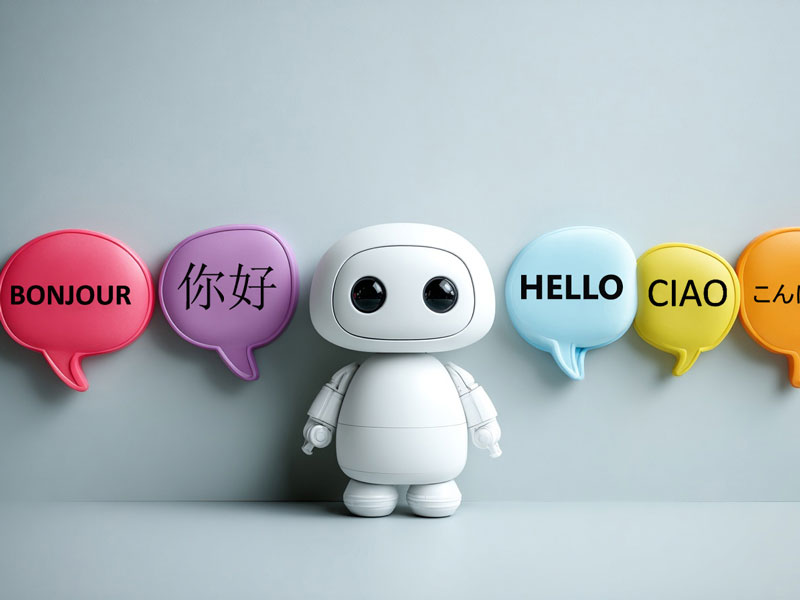
At the confluence of translation and AI, the evolving capabilities of artificial intelligence offer a unique vantage point from which to observe this paradigm shift. Language, as the fundamental vehicle of human thought, culture, and connection, has been the initial arena for AI’s mass adoption. Large language models (LLMs), capable of generating coherent responses and tailoring information to individual preferences, are a direct product of decades of research in machine translation and linguistic AI. While these advancements have dramatically increased the speed and accuracy of communication across linguistic barriers, they underscore a critical limitation: AI, in its current form, does not replicate human sensitivity or empathy. Instead, its strength lies in automating repetitive and labor-intensive tasks. This automation liberates skilled professionals, allowing them to dedicate their expertise to the more intricate aspects of their work, particularly those elements deeply infused with emotion and distinctively "human-ness."
The prevailing corporate discourse on AI frequently centers on productivity gains and the specter of labor market disruption, posing questions about which jobs will become obsolete and how many will persist. These are undeniably crucial inquiries for individuals contemplating their career trajectories and for policymakers shaping future economic landscapes. Yet, perhaps more pertinent are the questions that probe human strengths: "What are humans uniquely equipped to do?" and "How can AI empower us to excel in these areas?" The future of work, in this framing, is not about AI replacing humans, but about AI enabling humans to operate at a higher level of cognitive and emotional engagement.
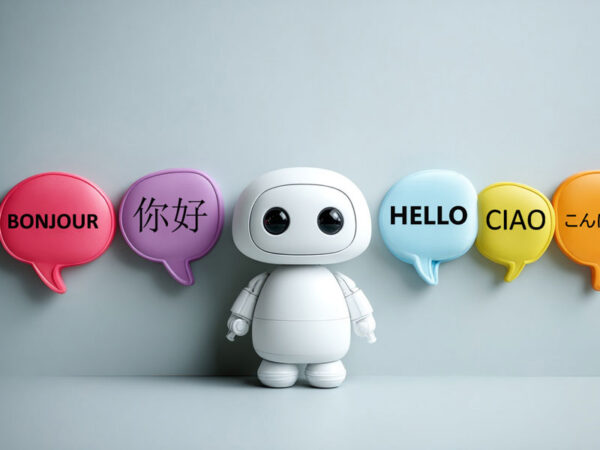
The trajectory for AI’s symbiotic relationship with the human workforce points towards a deeper level of comprehension. Companies like Translated are spearheading initiatives, such as the Diversibus Viis Plurima Solvo (DVPS) project, which is backed by a significant European seed investment and involves a consortium of 20 partners across nine countries. This ambitious project is designed to move beyond AI models that merely process historical text and image data. DVPS aims to develop models capable of sensing and interpreting vision, audio, and sensor inputs, enabling real-time engagement with the physical world and fostering a more profound contextual awareness. This development signifies a move towards AI that not only processes information but also perceives and understands the environment in which humans operate.
The implications of this AI evolution necessitate careful consideration and global dialogue. Recent high-profile discussions, such as the World Meeting on Human Fraternity in Rome, brought together leading AI scientists—including Nobel Laureate Geoffrey Hinton, widely cited AI scientist Yoshua Bengio, and Professor Stuart Russell—to engage with Pope Leo XIV on the societal, cultural, and ethical dimensions of artificial intelligence. A consensus emerged from these discussions: AI must be developed to serve humanity, uphold human dignity, and be guided by principles of dialogue and care. The participants identified two paramount areas where AI could yield significant positive impact: accelerating scientific discovery and fostering global human understanding. This underscores a shared vision for AI that enhances human capabilities and bridges cultural divides, rather than exacerbating them.
For leaders and organizations navigating this evolving landscape, a fundamental shift in perspective is imperative. The strategic question is no longer about identifying tasks that AI can perform, but rather about determining how AI can elevate human potential. Enterprises that prioritize investments in understanding and contextual awareness, moving beyond a singular focus on efficiency, are poised for greater success. True leadership in the age of AI involves embedding empathy and ethical considerations at the heart of innovation. This ensures that technological advancements serve to amplify our most human attributes—our capacity for care, interpretation, and connection.
The coming decade will likely see AI’s progress defined not by a reduction in jobs or an increase in machine speed, but by the development of machines capable of understanding context, emotions, and human values. This, in turn, will empower humans to leverage that understanding to excel in uniquely human domains: building relationships, cultivating culture, and leading with purpose. When machines evolve to grasp that a sentence is more than a collection of words—that it represents human intent—and can discern not only linguistic meaning but also tone, gesture, and cultural context, the transition from automation to augmentation will be complete. This represents the moment when AI truly becomes a collaborative partner in human progress. The ultimate measure of AI’s advancement will not be the number of jobs it displaces, but the new forms of human value it helps to create. The economic impact of this shift will be profound, potentially unlocking new markets, fostering cross-cultural collaboration on an unprecedented scale, and driving innovation in fields previously constrained by communication barriers. The global economy stands to benefit from a more interconnected and understanding world, facilitated by AI that bridges divides rather than erects them.