

The contemporary business landscape is defined by an unwavering focus on the customer, making robust measurement of the customer experience (CX) an indispensable element of corporate strategy. Paradoxically, the very tools and capabilities designed to illuminate customer interactions have led to an overwhelming proliferation of data points, often obscuring rather than clarifying the path to improved customer satisfaction and loyalty. Many organizations, from nascent startups to multinational conglomerates, find themselves awash in hundreds of CX metrics, a volume that frequently impedes effective management, meaningful insight generation, and clear communication to executive leadership.
What began decades ago with simple satisfaction surveys and direct customer interviews has evolved into a sprawling, complex ecosystem of data collection. Today, a customer might receive multiple CX prompts within minutes of interacting with a brand – after checking out of a hotel, completing an online purchase, or concluding a service call. This expansion has been fueled by digital transformation, the rise of omnichannel commerce, and the increasing sophistication of data analytics platforms. Companies now track a vast array of indicators, encompassing customer perceptions (measures of sentiment and feeling), operational efficiency (how well internal processes support CX), and tangible financial outcomes (sales, profitability, market share). Often, metrics are adopted because they are well-known industry benchmarks or easy to collect, rather than a deliberate assessment of their relevance to a company’s unique customer journey and strategic objectives. This indiscriminate data accumulation creates a significant challenge for managers striving to derive actionable intelligence.
Research indicates that the average large enterprise utilizes over 50 distinct CX metrics, with some tracking upwards of 200. These metrics are frequently managed in silos by different departments—marketing, sales, customer service, product development—leading to fragmented insights, redundant efforts, and an inability to construct a holistic view of the customer journey. For instance, in a study of 14 subscription services companies, a collective total exceeding 100 CX metrics were in use across various channels, including call centers, web interfaces, chat, email, and physical retail locations. The sheer scale of collecting, compiling, and analyzing daily, weekly, monthly, quarterly, and annual data from such a multitude of measures demands extensive human and financial resources, often without a commensurate return in strategic clarity. This data overload, coupled with fragmented ownership, presents a critical bottleneck in translating raw information into tangible improvements that impact the bottom line.
The imperative, therefore, is not to collect more data, but to collect the right data and to leverage it effectively. A strategic rationalization of CX metrics is essential for creating more efficient and impactful CX management programs. This involves a rigorous process of eliminating low-value metrics and, critically, mapping a refined set of key performance indicators (KPIs) directly across the customer journey. This structured approach allows organizations to move beyond a reactive, data-dump mentality to a proactive, insight-driven strategy that aligns CX efforts with business goals.
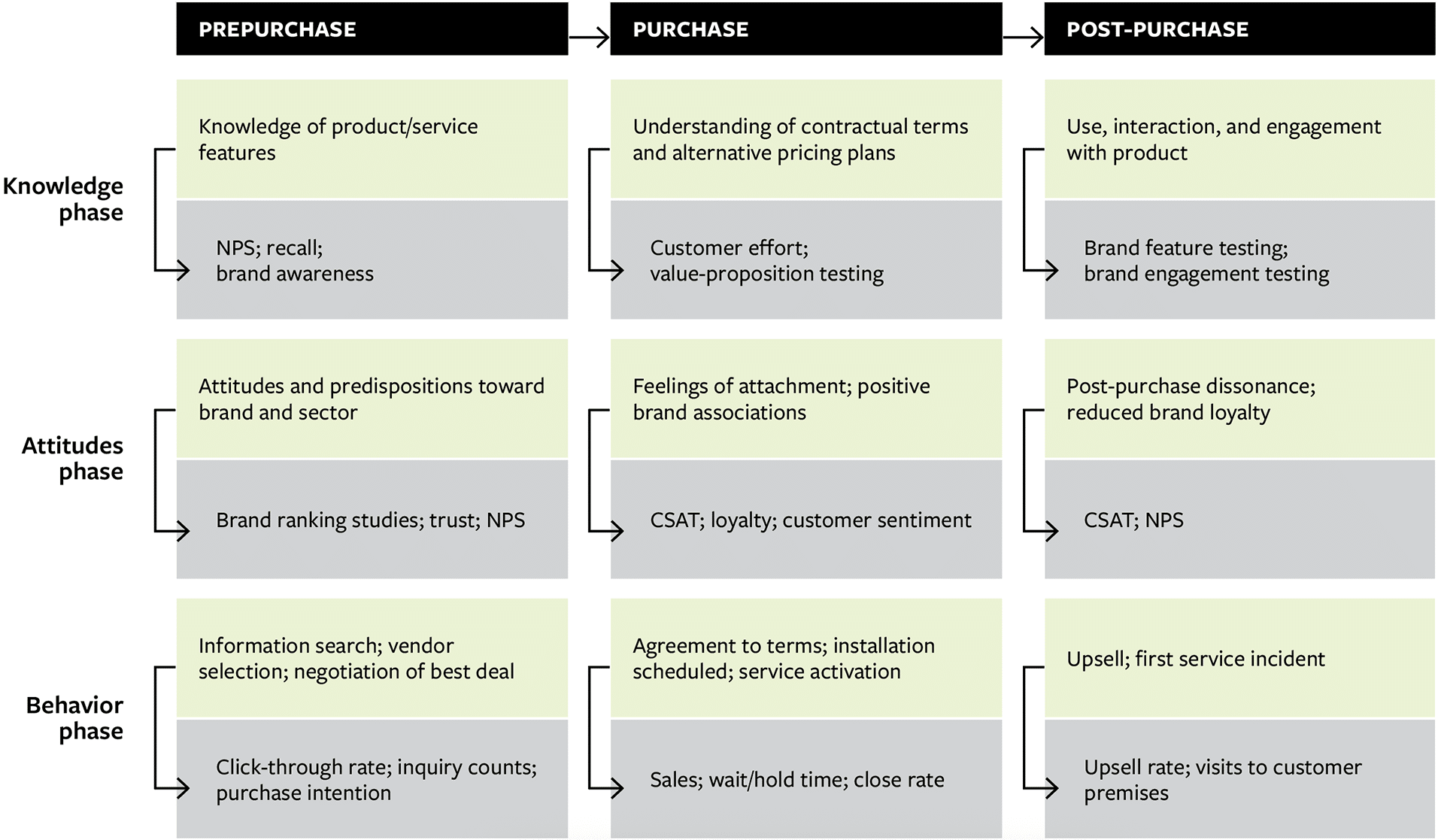
Central to this refined approach is the concept of the customer journey map, which visually delineates every interaction a customer has with a brand, from initial awareness to post-purchase support and advocacy. By superimposing CX metrics onto these specific journey stages, businesses can gain context and prioritize interventions. For example, metrics related to website navigation and content consumption are crucial during the awareness and consideration phases, while conversion rates and onboarding success metrics become paramount during the purchase and initial usage stages. Post-purchase, metrics like customer satisfaction (CSAT), Net Promoter Score (NPS), and Customer Effort Score (CES) provide insights into ongoing experience, support effectiveness, and loyalty. This alignment ensures that each metric serves a specific purpose, directly correlating to a particular customer need or business objective at a defined touchpoint.
A focused CX measurement framework typically synthesizes three core categories of metrics:

-
Customer Perception Metrics: These capture what customers think and feel about their interactions. Examples include NPS (measuring likelihood to recommend), CSAT (measuring satisfaction with a specific interaction), and CES (measuring the effort required to resolve an issue or complete a task). These provide direct feedback on the emotional and cognitive aspects of the customer experience, offering invaluable qualitative and quantitative insights into customer sentiment. Global benchmarks for these metrics can vary widely by industry and region, necessitating careful contextualization rather than blind adherence to averages.
-
Operational Performance Metrics: These measure the efficiency and effectiveness of the internal processes that deliver the customer experience. Examples include first contact resolution (FCR) rates, average handle time (AHT) in call centers, website load times, service level agreement (SLA) adherence, and order fulfillment accuracy. These metrics reveal the underlying systemic strengths and weaknesses that directly influence customer perceptions and can highlight areas for process optimization and resource allocation. A high FCR, for instance, not only reduces operational costs but significantly boosts customer satisfaction.
-
Financial Outcome Metrics: Ultimately, CX initiatives must demonstrably contribute to business success. These metrics link CX improvements to tangible financial results. Key examples include customer lifetime value (CLV), churn rate, customer acquisition cost (CAC), revenue per customer, cross-sell/upsell rates, and market share. By connecting perception and operational metrics to these financial indicators, organizations can articulate the return on investment (ROI) of their CX strategies, gaining executive buy-in and justifying further investment. A reduction in churn by even a few percentage points, driven by improved CX, can translate into millions in retained revenue, especially for subscription-based models.
Building an integrated CX measurement framework requires more than just selecting the right metrics; it demands organizational alignment and robust technological infrastructure. Cross-functional teams comprising representatives from marketing, sales, product development, IT, and customer service are crucial for establishing shared definitions of success and ensuring consistent data collection and interpretation. Furthermore, investing in unified CX platforms that can ingest, analyze, and visualize data from disparate sources is essential to break down data silos and provide a single source of truth for CX performance. Executive sponsorship is non-negotiable, as it fosters a culture where CX is viewed as a strategic differentiator rather than a departmental cost center.
Overcoming implementation challenges, such as integrating legacy systems, addressing data quality issues, or managing resistance to change, often requires a phased approach. Pilot programs focused on specific customer journey segments or product lines can demonstrate early wins and build momentum for broader adoption. Continuous training for employees on the importance of CX metrics and how their roles contribute to the overall customer journey is also vital. By fostering data literacy across the organization, companies empower their teams to leverage insights for daily decision-making.
The economic dividend of a focused, data-driven CX strategy is substantial. Companies that excel in CX often report higher customer retention rates, with some studies indicating that CX leaders outperform their competitors by a significant margin in terms of revenue growth and profitability. For example, businesses with superior CX have been shown to achieve a 5-10% higher CLV, reduce customer churn by 15-20%, and experience twice the revenue growth over five years compared to their CX-lagging counterparts. Beyond direct financial gains, a superior customer experience bolsters brand equity, enhances competitive differentiation, and cultivates a loyal customer base that acts as organic advocates.
In an increasingly competitive global marketplace, where product differentiation can be fleeting, customer experience has emerged as the ultimate battleground. Moving beyond the deluge of data to a strategic, streamlined approach to CX measurement is no longer an optional refinement but a fundamental driver of sustained business success. It enables organizations to transform raw data into genuine customer understanding, fostering innovation, optimizing operations, and ultimately creating enduring value for both customers and shareholders.