

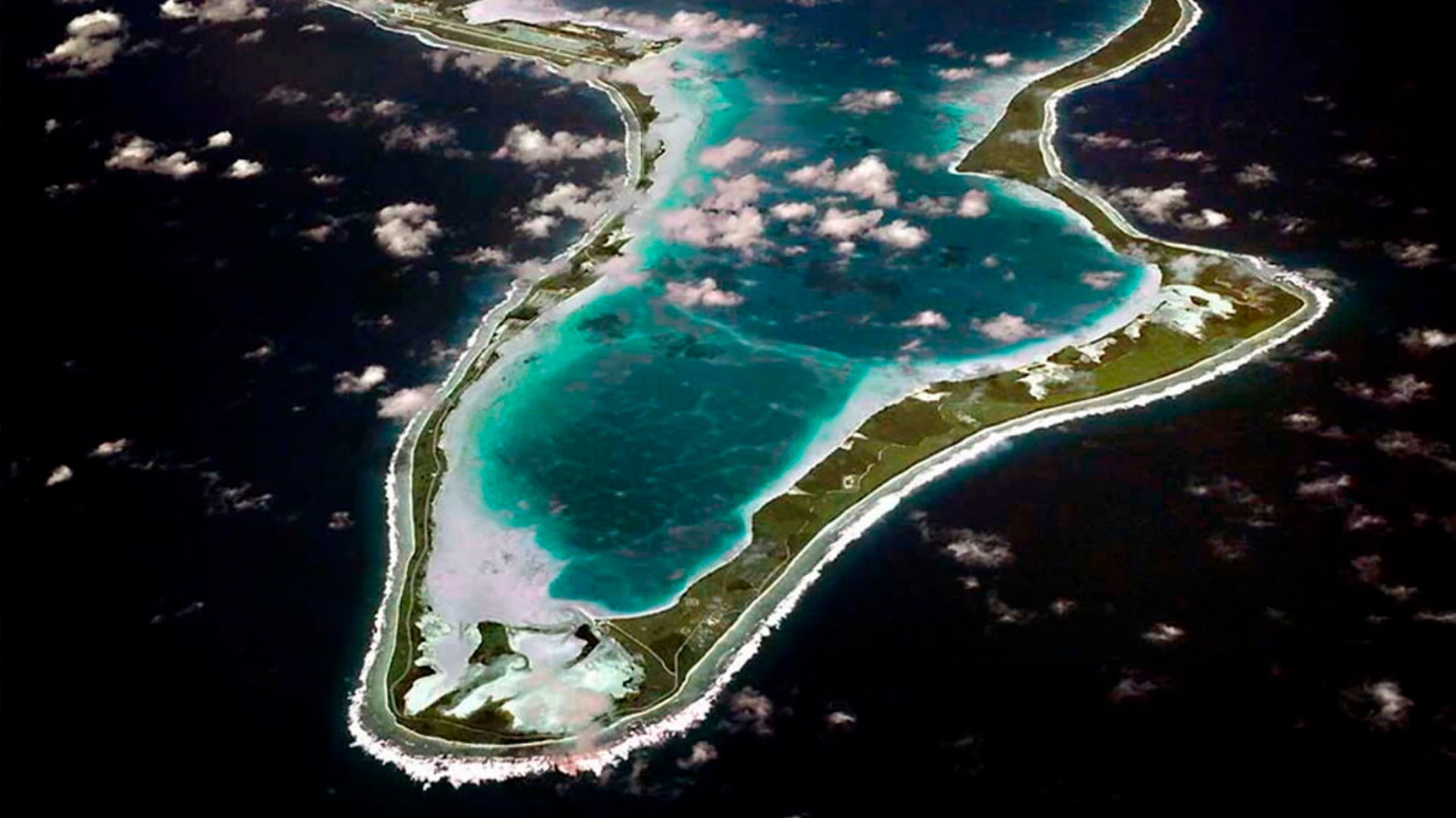
The intensifying friction between the administration of British Prime Minister Keir Starmer and the political orbit of Donald Trump has reached a new flashpoint over the future of the Chagos Archipelago. This remote chain of islands in the Indian Ocean, long a cornerstone of Anglo-American strategic defense, has become the center of a heated debate involving international law, decolonization, and the shifting balance of power in the Indo-Pacific. As Donald Trump renews his criticism of the UK’s plan to cede sovereignty of the islands to Mauritius, the dispute is no longer merely a bilateral territorial matter but a significant litmus test for the "Special Relationship" and Western maritime security.
At the heart of the controversy is the 2024 agreement reached by the Starmer government to relinquish British control over the British Indian Ocean Territory (BIOT), a move intended to resolve decades of legal disputes and international condemnation. However, the centerpiece of the archipelago, the island of Diego Garcia, remains the primary concern for Washington. Under the proposed deal, the United Kingdom will transfer sovereignty to Mauritius while securing a 99-year lease to maintain the joint UK-US military base on Diego Garcia. While London views this as a pragmatic solution to a "broken" status quo, critics in the United States, led by Trump and his national security advisors, argue that the deal represents a strategic surrender that could inadvertently empower the People’s Republic of China.
The strategic importance of Diego Garcia cannot be overstated. Often referred to as an "unsinkable aircraft carrier," the base provides the United States with a critical platform for long-range bomber operations, maritime surveillance, and logistics support across the Middle East, South Asia, and East Africa. It has played a pivotal role in every major American military intervention over the last five decades, from the Cold War to the wars in Iraq and Afghanistan. For the Trump camp, the prospect of Mauritius—a nation with increasingly deep economic ties to Beijing—holding ultimate sovereignty over the land beneath this base is a risk that outweighs any legal or diplomatic benefit.
The economic and political context of Mauritius adds a layer of complexity to the security debate. Over the last decade, Mauritius has positioned itself as a bridge between Africa and Asia, actively courted by Chinese investment through the Belt and Road Initiative (BRI). In 2021, Mauritius became the first African nation to implement a Free Trade Agreement with China, a move that significantly bolstered bilateral trade and infrastructure development. Trump’s allies argue that this economic proximity could give Beijing leverage over Port Louis, potentially leading to Chinese surveillance activities or even a future military presence in the archipelago that would directly challenge the operational integrity of the Diego Garcia base.
The Starmer administration, conversely, maintains that the deal is the only way to safeguard the long-term future of the base. For years, the UK has faced mounting pressure from the United Nations General Assembly and the International Court of Justice (ICJ), which ruled in 2019 that the continued British administration of the islands was "unlawful" and constituted an incomplete decolonization. From the perspective of the UK Foreign Office, clinging to the territory against the weight of international law was becoming diplomatically unsustainable, threatening to isolate Britain on the world stage and hand a propaganda victory to rivals who accuse the West of maintaining double standards regarding territorial integrity.
By formalizing a lease agreement with Mauritius, London argues it is providing a "legally robust" foundation for the base that will last for a century. Without such an agreement, the UK faced the risk of a hostile ruling from international tribunals that could have theoretically ordered the immediate evacuation of the islands, leaving the status of Diego Garcia in a legal vacuum. Government officials in London have emphasized that the deal includes specific safeguards to prevent third-party military activity on the outlying islands of the archipelago, a clause specifically designed to alleviate American anxieties regarding China.
Despite these assurances, the backlash from the American right has been swift and severe. Figures close to the Trump transition team have characterized the move as an act of "post-imperial retreat" that undermines the collective security of the AUKUS alliance and the broader "Free and Open Indo-Pacific" strategy. The critique is rooted in a broader "America First" philosophy that prioritizes hard power and territorial control over adherence to international institutional norms. For Trump, the Chagos deal is seen as a symptom of a weakened West, echoing his previous criticisms of NATO allies and traditional security frameworks that he perceives as failing to serve American interests.
The domestic political landscape in the United Kingdom further complicates the issue. The Conservative opposition has seized on the Trump-led criticism to paint Keir Starmer as a leader who is "soft on defense" and willing to sacrifice British interests for the sake of international approval. This internal division creates a precarious situation for Starmer, who is simultaneously trying to rebuild ties with the European Union while maintaining a functional relationship with a potentially returning Trump administration. If Trump were to return to the White House, the Chagos deal could become a primary point of contention, with the potential for the U.S. to withhold support for the treaty or demand a renegotiation of the lease terms.
The economic implications of the handover are also significant for the displaced Chagossian people. Forced to leave their homes in the late 1960s and early 1970s to make way for the base, the Chagossian diaspora has spent decades fighting for the right of return. While the new agreement allows for a "program of resettlement" on islands other than Diego Garcia, the logistical and financial burden of such an undertaking is immense. Mauritius has promised to invest in the infrastructure of the islands, but the economic viability of small-scale settlement in such a remote location remains unproven. The UK has pledged a significant financial package to Mauritius as part of the deal, effectively paying for the right to continue using the base, which adds a recurring cost to the British defense budget at a time of fiscal constraint.
From a global perspective, the Chagos dispute reflects a broader trend of "lawfare"—the use of international legal systems as a tool of geopolitical competition. As middle powers like Mauritius successfully leverage international courts to challenge the territorial holdings of major powers, the traditional rules of maritime hegemony are being rewritten. This poses a challenge to the United States and the United Kingdom, who have historically relied on a network of overseas territories and "lily pad" bases to project power globally.
As the debate continues, the focus remains on the specific language of the treaty and the mechanisms for its enforcement. Proponents of the deal argue that it represents a modern, partnership-based approach to security that respects national sovereignty. Opponents see it as a dangerous precedent that signals a lack of resolve in the face of rising Eastern influence. The Indian Ocean is increasingly becoming the center of global trade and military competition; nearly 80 percent of China’s oil imports pass through these waters. In this context, the stability and exclusivity of the Diego Garcia base are not just British or American concerns, but factors that influence the security of the entire global supply chain.
Ultimately, the Starmer government finds itself in a difficult balancing act. It must convince its closest ally that the Chagos handover is a strategic necessity that protects the Diego Garcia base from legal collapse, while simultaneously demonstrating to the international community that the UK is committed to a "rules-based order." With Donald Trump’s rhetoric signaling a potential shift in how the U.S. views its alliances and its expectations of partners, the Chagos Islands have become a symbol of the broader struggle to define the West’s role in a rapidly changing world. Whether the deal will provide the 99 years of stability promised, or whether it will be remembered as the moment the West lost its grip on a vital maritime corridor, remains a question that will be answered in the corridors of power in London, Washington, and Port Louis over the coming years.