

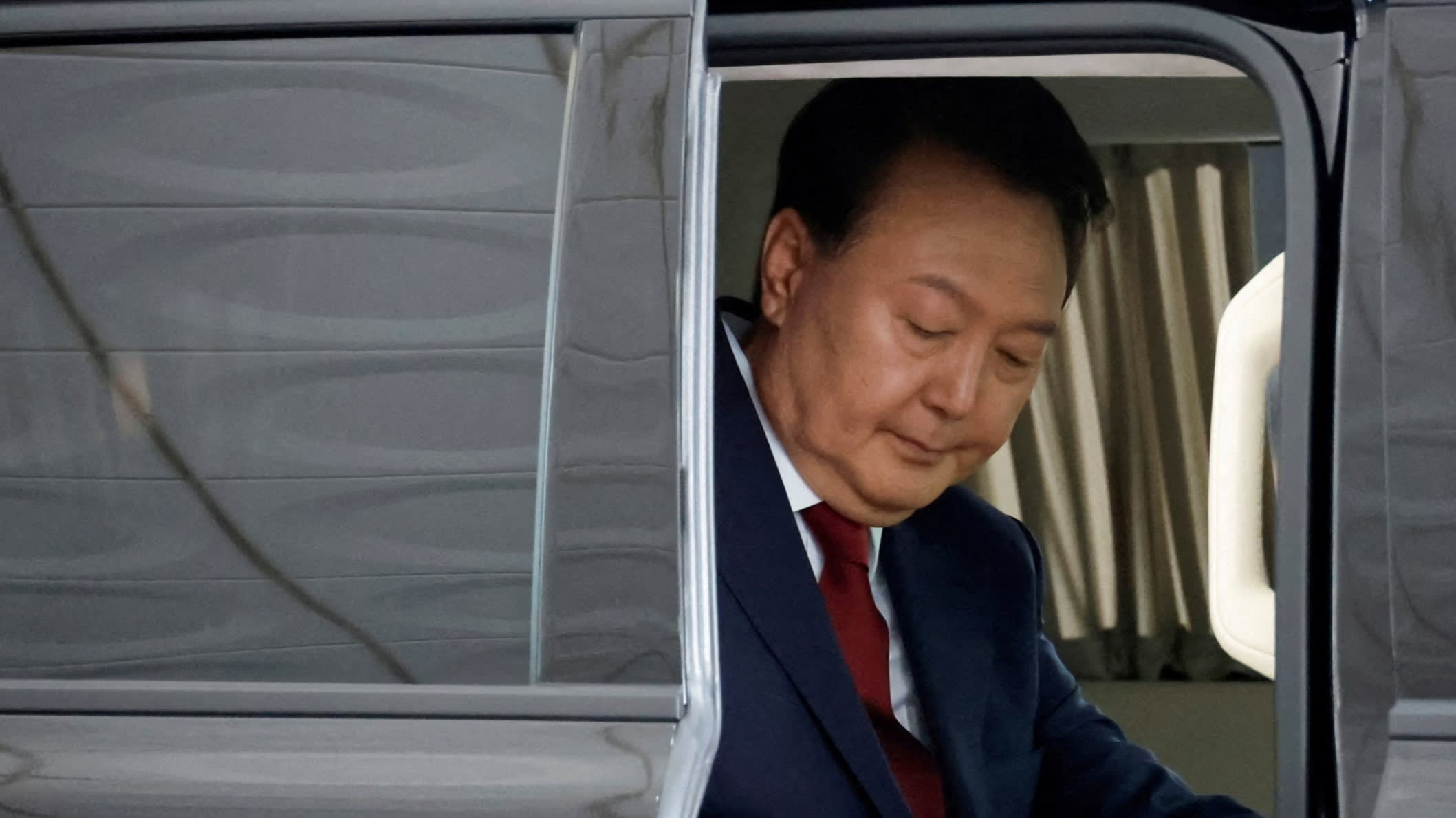
The sentencing of South Korea’s former head of state marks a watershed moment for one of Asia’s most vibrant yet volatile democracies, concluding a legal saga that has gripped the nation and sent ripples through global financial markets. By steering clear of the death penalty—a sentence sought by prosecutors who argued that the 2024 attempt to subvert the constitutional order constituted high treason—the court has opted for a path of rigorous accountability that stops short of the ultimate sanction. This judicial restraint reflects a complex balancing act, intended to uphold the rule of law while avoiding the further polarization of a society already deeply divided by the sudden and dramatic suspension of civilian rule last December.
The trial centered on the unprecedented events of late 2024, when the then-president shocked the world by declaring emergency martial law, citing "anti-state elements" and legislative paralysis. The move, which saw paratroopers enter the National Assembly and the suspension of political activities, lasted only six hours before being overturned by a unanimous vote of parliament. However, the short-lived decree triggered a massive constitutional crisis, leading to the president’s impeachment, removal from office, and subsequent indictment on charges of insurrection and abuse of power. For a nation that transitioned from military dictatorship to a flourishing democracy in the late 1980s, the trial served as a painful reminder of the fragility of institutional safeguards.
From an economic perspective, the verdict brings a much-needed, albeit cautious, sense of closure to a period of intense market instability. When martial law was first declared, the South Korean won plummeted to its lowest levels against the U.S. dollar since the global financial crisis, and the KOSPI index experienced a precipitous sell-off. The "Korea Discount"—a term used by investors to describe the chronic undervaluation of South Korean companies due to poor corporate governance and geopolitical risks—widened significantly during the crisis. Global credit rating agencies, including Moody’s and S&P Global, had placed the country’s sovereign rating under close scrutiny, warning that a failure to resolve the political vacuum through legal means could result in a long-term downgrade.
The court’s decision to impose life imprisonment rather than death is seen by legal analysts as a strategic move to preserve the integrity of the judiciary. While the prosecution argued that the gravity of the attempt to dismantle democratic institutions warranted the maximum penalty, the presiding judge noted that the lack of actual bloodshed and the president’s eventual compliance with the National Assembly’s vote to lift the decree were mitigating factors. This distinction is crucial; in South Korea’s modern history, previous leaders like Chun Doo-hwan and Roh Tae-woo were also sentenced for their roles in coups and massacres, with Chun initially receiving a death sentence that was later commuted. By avoiding the death penalty now, the court seeks to establish a precedent that focuses on life-long incarceration as a sufficient deterrent against executive overreach.
The impact on South Korea’s corporate landscape, dominated by the sprawling family-run conglomerates known as chaebols, has been profound. Throughout the trial, business leaders expressed concern that political upheaval would distract from critical economic reforms and the nation’s competitive edge in the semiconductor and electric vehicle sectors. With the verdict now rendered, there is a renewed push for "Value-Up" programs—government-led initiatives designed to improve shareholder returns and transparency. Market strategists suggest that the resolution of the former president’s legal status allows the current administration and the central bank to refocus on domestic issues, such as high household debt and a cooling property market, without the shadow of an unresolved treason trial looming over policy decisions.
Furthermore, the trial has underscored the resilience of South Korea’s civil society. The "Candlelight" protests that emerged during the martial law crisis demonstrated a public commitment to democratic norms that transcends partisan lines. This grassroots vigilance is increasingly viewed by international observers as a "social credit" that offsets the risks of executive volatility. Economic impact analysis suggests that while the initial crisis cost the economy billions in lost market capitalization, the orderly legal process that followed has actually bolstered the long-term perception of South Korea as a rule-of-law jurisdiction. This is a vital metric for attracting foreign direct investment (FDI), which had stalled amid the uncertainty of 2024.
Global comparisons illustrate the unique nature of this trial. Unlike many nations where former leaders enjoy immunity or flee into exile after failed power grabs, South Korea has consistently held its highest officials accountable through its court system. This "judicialization of politics" is a double-edged sword; while it ensures that no one is above the law, it also creates a cycle of retribution that can lead to extreme political tribalism. The decision to forgo the death sentence is an attempt to break this cycle, signaling that the state’s objective is the protection of the constitution rather than political vengeance.
The geopolitical implications are equally significant. South Korea’s role as a key U.S. ally and a linchpin of the "Silicon Shield" in East Asia makes its domestic stability a matter of international security. During the martial law crisis, the uncertainty regarding the chain of command raised alarms in Washington and Tokyo. The conclusion of the trial provides a degree of certainty to international partners that the Republic of Korea’s governance remains rooted in civilian control and constitutional procedure. It also serves as a stark contrast to the democratic backsliding observed in other parts of the world, positioning Seoul as a model for institutional recovery.
However, the road ahead remains fraught with challenges. The former president’s legal team has already signaled an intent to appeal, meaning the case could remain in the public consciousness for months to come. Moreover, the trial has exposed deep-seated flaws in the South Korean constitution, specifically the broad and somewhat ambiguous powers granted to the president regarding national security and emergency decrees. There is now a growing chorus of voices in the National Assembly calling for constitutional amendments to limit presidential authority and strengthen the oversight powers of the legislature and the Constitutional Court.
In terms of market data, the immediate reaction to the sentencing was one of "relief-rally" dynamics. The won stabilized, and foreign investors returned to blue-chip stocks like Samsung Electronics and SK Hynix, which had been disproportionately affected by the political risk premium. Nevertheless, economists warn that the "political scars" will take time to heal. The crisis diverted attention from the urgent need to address South Korea’s demographic crisis—the world’s lowest birth rate—and the structural shift toward an AI-driven economy. The opportunity cost of the martial law episode, measured in lost legislative time and delayed policy implementation, is estimated to have shaved 0.2 to 0.3 percentage points off the projected GDP growth for the fiscal year.
Ultimately, the verdict against the former president represents the closing of a dark chapter, but not the end of the story for South Korean democracy. The court has affirmed that the declaration of martial law for political expediency is a criminal act of the highest order, yet by sparing the defendant’s life, it has prioritized the long-term stability of the republic over the short-term satisfaction of punitive demands. As the nation moves forward, the focus will shift from the courtroom to the ballot box and the boardroom, as South Koreans seek to ensure that the events of 2024 remain a historical anomaly rather than a recurring theme. The resilience of the country’s institutions has been tested to the breaking point, and for now, those institutions have held, providing a blueprint for how a modern industrial power can navigate the most existential of internal threats.