

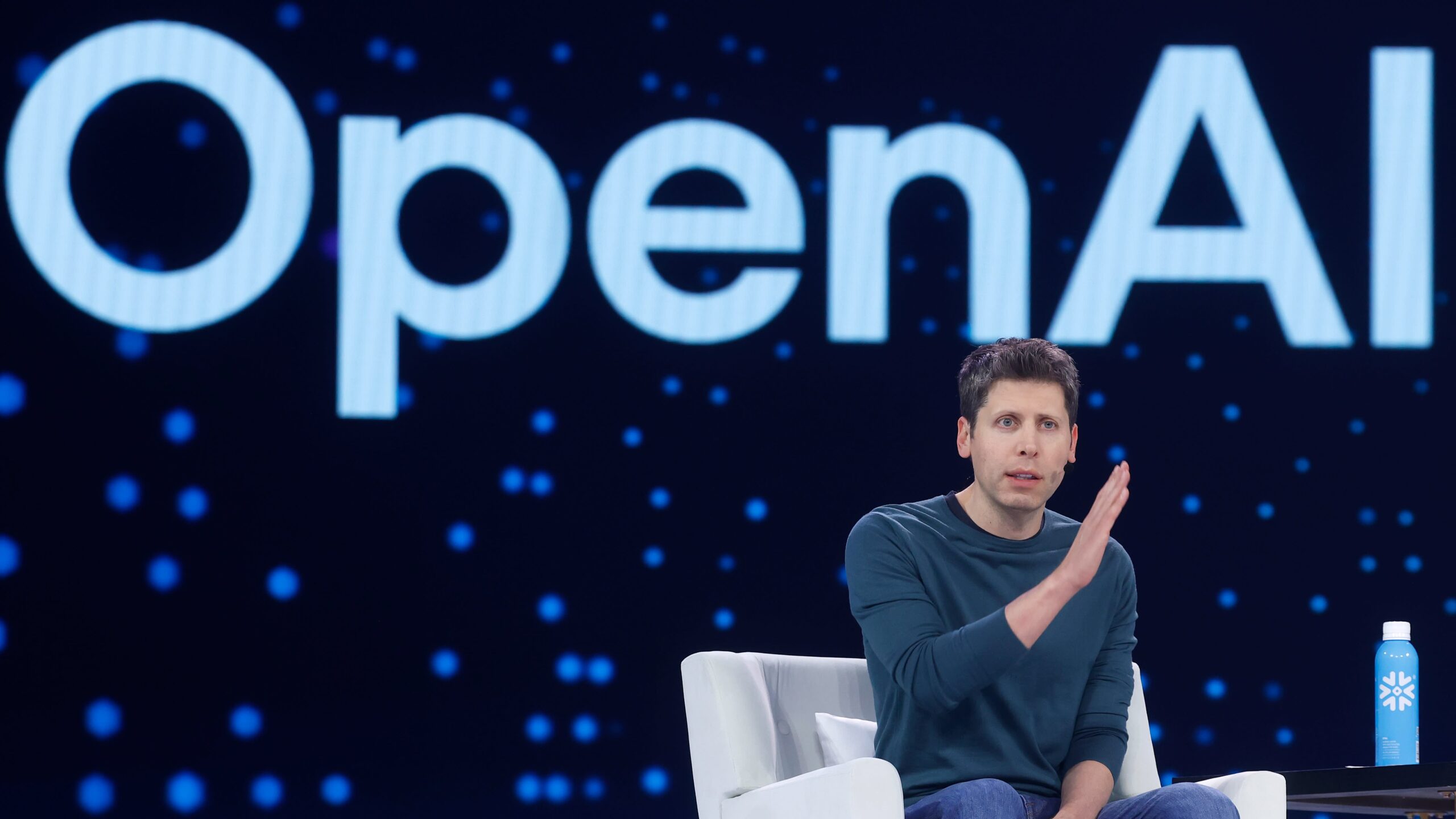
In a move that fundamentally redraws the map of the global technology sector, OpenAI has finalized a historic financing arrangement totaling up to $110 billion, marking the largest single private capital infusion into a technology company in history. This unprecedented commitment of capital—a figure that exceeds the annual gross domestic product of several mid-sized nations—represents a decisive moment in the race for artificial general intelligence (AGI) and underscores the staggering financial requirements of the next phase of the digital revolution. The deal, which includes a combination of direct equity investment, credit facilities, and long-term infrastructure commitments, positions the San Francisco-based laboratory as the undisputed heavyweight in a field increasingly defined by the raw scale of compute power and energy resources.
The sheer magnitude of this funding round reflects a growing consensus among institutional investors, sovereign wealth funds, and major technology partners: the path to frontier AI is no longer a battle of algorithms alone, but a war of industrial attrition. While the first wave of generative AI was characterized by the release of consumer-facing chatbots and image generators, the second wave requires a massive expansion of physical infrastructure. Industry analysts suggest that a significant portion of the $110 billion will be earmarked for "Project Stargate," a multi-phased initiative to build a series of massive data centers and supercomputers capable of training models exponentially more powerful than GPT-4. These facilities are expected to require gigawatts of power, necessitating a secondary investment strategy focused on nuclear energy and sustainable grid upgrades to sustain the heat and energy demands of hundreds of thousands of interconnected GPUs.
The economics of this deal are as complex as the technology itself. Unlike traditional venture capital rounds, which are typically used to scale operations or acquire users, OpenAI’s new capital base is designed to absorb the astronomical "burn rate" associated with high-end compute. Market data indicates that the cost of training a frontier model is currently doubling every six to nine months. If this trend continues, the cost of a single training run for a hypothetical "GPT-6" or "GPT-7" could exceed $10 billion. By securing $110 billion, OpenAI has effectively insulated itself from the volatility of public markets and the potential "AI fatigue" that some analysts feared might dampen investment in the mid-2020s. The deal grants the company the long-term runway necessary to pursue its mission of achieving AGI without the quarterly pressure of profitability that plagues public tech giants like Google and Meta.
From a market perspective, this capital injection creates a formidable "moat" around OpenAI. The barrier to entry for new competitors has shifted from the intellectual to the financial. While startups like Anthropic, Mistral, and Cohere have raised billions of their own, they now face a competitor with an order of magnitude more resources. This disparity has led to concerns among regulators regarding the centralization of AI power. In Washington and Brussels, antitrust authorities are closely monitoring the deal, particularly the role of existing partners like Microsoft. While Microsoft remains the primary cloud provider and a key stakeholder, the $110 billion deal reportedly involves a broader consortium of global investors, including prominent names from the Silicon Valley venture ecosystem and strategic partners from the Middle East and Asia. This diversification is seen as a strategic move by OpenAI CEO Sam Altman to maintain a degree of independence while securing the necessary funds to outpace rivals.
The global comparisons are striking. To put the $110 billion figure into perspective, it is nearly double the total venture capital invested across the entire European continent in 2023. It also rivals the scale of the U.S. CHIPS and Science Act, a government-led effort to revitalize domestic semiconductor manufacturing. The fact that a single private entity can command such a sum suggests a privatization of industrial policy, where the future of a critical technology is being funded by a global coalition of private interests rather than purely through public mandates. This has profound implications for the geopolitical landscape. As AI becomes a core component of national security and economic productivity, the concentration of such vast resources in a single company creates a new type of "tech-state" actor that must navigate the conflicting interests of its diverse global backers.
Expert insights suggest that the economic impact of this funding will ripple through the entire supply chain. Nvidia, the dominant provider of AI chips, is a primary beneficiary, as OpenAI’s infrastructure roadmap will likely involve the purchase of millions of next-generation Blackwell and Rubin architecture GPUs. Furthermore, the deal is expected to trigger a gold rush in the energy sector. OpenAI’s need for reliable, carbon-neutral baseload power has already led to discussions about restarting decommissioned nuclear plants and investing in Small Modular Reactors (SMRs). This convergence of AI and energy infrastructure represents a new investment thesis, where "bits" and "atoms" are no longer separate sectors but are instead inextricably linked in a single value chain.
However, the deal is not without significant risk. Critics argue that the $110 billion valuation—and the funding required to support it—assumes that AI will deliver a productivity miracle that has yet to fully materialize in the broader economic data. While generative AI has shown remarkable capabilities in coding, writing, and creative tasks, its impact on total factor productivity remains a subject of intense debate among economists. If OpenAI fails to bridge the gap between "impressive demos" and "essential economic utility," the current level of investment could be viewed in retrospect as one of the largest speculative bubbles in history. Moreover, the transition of OpenAI from a non-profit-controlled entity to a more commercial structure—a necessary step to attract such massive capital—has created internal friction and raised questions about the company’s original safety-first mission.
Despite these risks, the momentum appears irreversible. The $110 billion deal serves as a massive vote of confidence in the transformative potential of artificial intelligence. It signals to the world that the leaders of the AI movement believe they are on the cusp of a breakthrough that justifies such a colossal expenditure. As OpenAI begins to deploy this capital, the focus will shift from the boardroom to the data center. The success of this investment will be measured not just in financial returns, but in the company’s ability to solve the fundamental challenges of reasoning, reliability, and safety that still limit current AI systems.
In the broader context of economic history, this funding round may be remembered as the beginning of the "Age of Compute." Just as the 19th century was defined by the build-out of the railroads and the 20th century by the expansion of the electrical grid and the internet, the 21st century is increasingly defined by the construction of the intelligence grid. OpenAI’s $110 billion war chest is the first down payment on that future. It ensures that for the foreseeable future, the company will have the resources to remain at the vanguard of technological development, forcing competitors, governments, and society at large to adapt to a world where intelligence is no longer a scarce human resource, but a scalable commodity powered by unprecedented capital.
As the dust settles on this record-breaking transaction, the global tech ecosystem is left to contemplate a new reality. The era of the "lean startup" in AI is effectively over for those wishing to compete at the frontier. In its place is a landscape of industrial-scale laboratories where the price of admission is now measured in the tens of billions. OpenAI has set a new benchmark for what it means to be a "big tech" player, and in doing so, it has accelerated the timeline for the most significant technological transition of our era. The coming years will reveal whether this $110 billion bet will deliver the promised era of abundance or if it represents a reach for an AGI horizon that remains further away than the capital markets currently believe. Regardless of the outcome, the scale of the ambition is now undeniable, and the global economy will never be the same.