


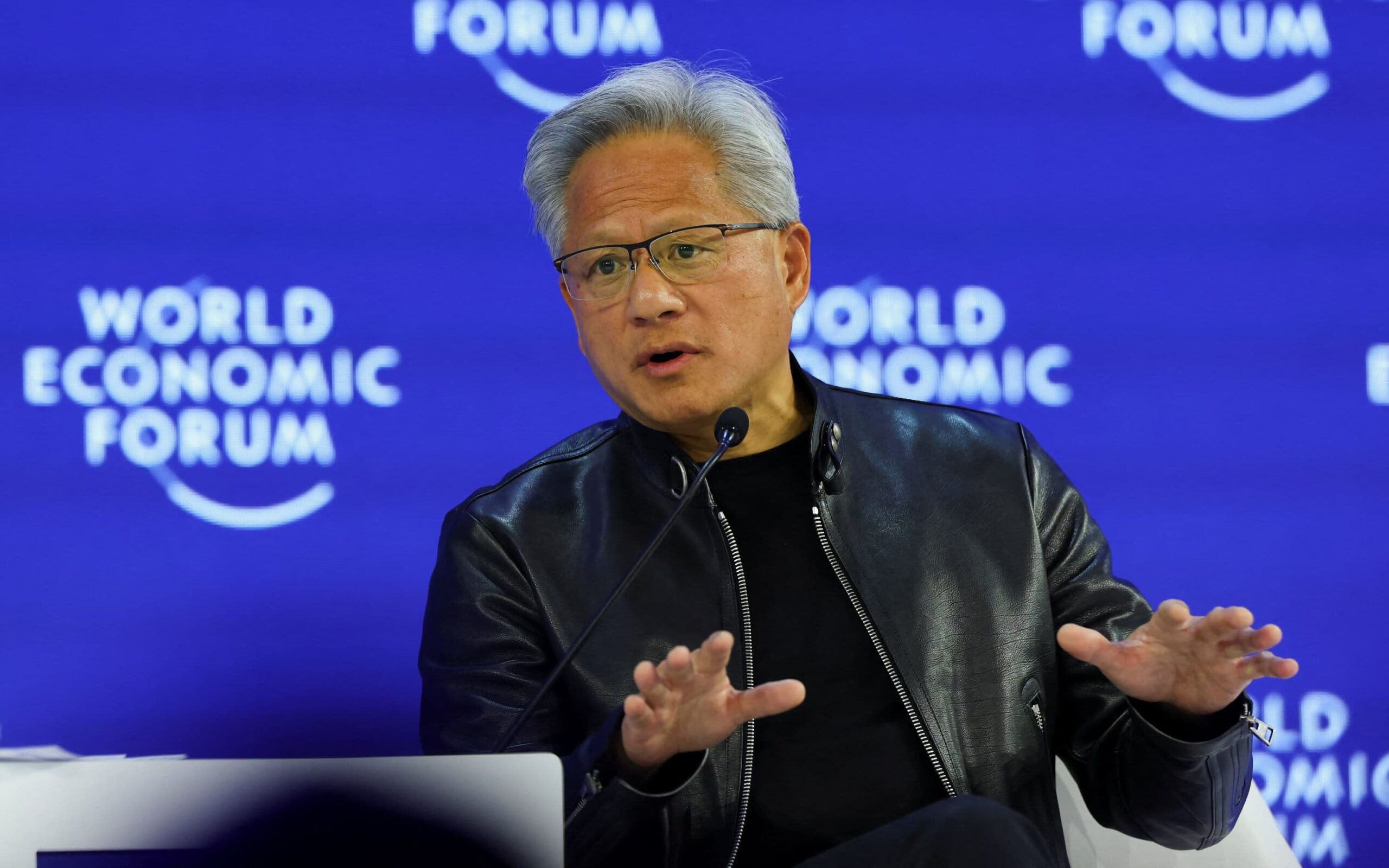
The impending visit of Nvidia Chief Executive Officer Jensen Huang to mainland China marks a critical juncture for the world’s most valuable semiconductor company as it attempts to recalibrate its relationship with its most complex market. Slated to arrive ahead of the Lunar New Year festivities in mid-February, Huang’s itinerary involves a delicate mix of internal morale-building and high-stakes diplomacy with major Chinese enterprise clients. This journey comes at a time when Nvidia’s dominance in the artificial intelligence hardware space is facing an unprecedented double-threat: tightening export controls from the United States government and a growing movement toward technological self-reliance within the Chinese domestic market.
For years, China served as a primary engine of growth for the Santa Clara-based chipmaker, historically contributing between 20% and 25% of its total data center revenue. However, that lucrative stream has been significantly throttled by a series of rolling restrictions imposed by the U.S. Department of Commerce. These regulations, designed to prevent advanced AI capabilities from being utilized by the Chinese military or for surveillance purposes, have effectively barred Nvidia from selling its most powerful hardware—the A100, H100, and the recently announced Blackwell series—to Chinese entities. Huang’s visit is widely viewed by industry analysts as a "charm offensive" intended to reassure local partners that Nvidia remains committed to the region despite the mounting regulatory obstacles.
The logistical challenges facing Nvidia in China are not merely legal but also competitive. To comply with U.S. export rules, Nvidia has developed "bespoke" versions of its chips, such as the H20, L20, and L2, which are intentionally downgraded in performance to fall below the "compute threshold" established by Washington. While these products allow Nvidia to maintain a legal presence in the Chinese market, they have met with a lukewarm reception from Chinese tech giants like Baidu, Tencent, and Alibaba. These companies are reportedly hesitant to invest heavily in "sanitized" silicon that offers significantly lower performance-per-watt than the chips available to their American counterparts, fearing that reliance on such hardware will leave them permanently behind in the global AI arms race.
Compounding this issue is the rapid ascent of domestic Chinese competitors. Huawei Technologies Co., once crippled by U.S. smartphone sanctions, has pivoted aggressively into the AI data center space. Its Ascend 910B chip is increasingly seen as a viable, albeit less mature, alternative to Nvidia’s restricted hardware. As Chinese firms face the perennial risk of further U.S. sanctions, many are choosing to "buy local" to ensure supply chain continuity, even if it means sacrificing some raw computational power. Huang’s meetings with potential buyers during this trip are expected to focus on the software ecosystem—Nvidia’s proprietary CUDA platform—which remains the company’s "moat." By emphasizing that Nvidia’s software stack provides a superior development environment that offsets some hardware performance losses, Huang hopes to stem the tide of customers defecting to domestic alternatives.
The economic stakes for Nvidia are staggering. While the company’s overall valuation has skyrocketed to over $2 trillion on the back of explosive demand from U.S. hyperscalers like Microsoft and Meta, the loss of the Chinese market represents a long-term strategic vacuum. In previous earnings calls, Nvidia leadership has acknowledged that while demand currently outstrips supply globally, the permanent loss of the Chinese market would result in a significant "opportunity cost" for the American semiconductor industry. The concern is that by ceding the Chinese market, the U.S. is inadvertently subsidizing the growth of a domestic Chinese semiconductor ecosystem that could eventually compete with American firms on the global stage.
The regulatory environment remains highly volatile. Recent reports suggest that the Chinese government itself may be intervening to limit the adoption of even the U.S.-approved Nvidia chips. There are indications that Beijing is encouraging, or in some cases requiring, local firms to prioritize domestic AI accelerators for large-scale infrastructure projects, reserving the use of Nvidia’s H200 or other specialized chips for niche research applications. This "tit-for-tat" technological decoupling creates a narrow corridor for Huang to navigate. If he leans too heavily into the Chinese market, he risks drawing the ire of U.S. regulators; if he retreats, he leaves billions of dollars in future revenue on the table and accelerates the maturity of his competitors.

From a broader macroeconomic perspective, Huang’s visit highlights the fracturing of the global technology supply chain. The era of "computational globalization," where a single architecture dominated every corner of the planet, is giving way to a fragmented landscape defined by "computational sovereignty." Nations are increasingly viewing high-end semiconductors not just as commodities, but as the foundational infrastructure of national power. This shift is forcing multinational corporations like Nvidia to operate as quasi-diplomatic entities, negotiating with multiple governments to maintain market access while adhering to conflicting national security mandates.
The timing of the visit, coinciding with the Lunar New Year, carries significant cultural weight. Huang, who was born in Taiwan and moved to the United States as a child, has frequently used personal engagement to bridge the gap between Nvidia’s American corporate identity and its East Asian manufacturing and consumer roots. His previous visits to Shanghai and Shenzhen involved engaging directly with R&D teams and celebrating local traditions, a move designed to maintain employee loyalty in a region where talent poaching by domestic rivals is rampant. By showing up in person during the country’s most important holiday period, Huang is signaling that China is not merely a line item on a balance sheet, but a core part of Nvidia’s long-term vision.
However, the "performance gap" remains the most significant hurdle. The U.S. Department of Commerce has been explicit in its intent to keep Chinese AI capabilities several generations behind the state-of-the-art. This means that as Nvidia releases more powerful chips in the West, the gap between what a developer in Silicon Valley can do and what a developer in Beijing can do will continue to widen. This disparity creates a "vicious cycle" for Nvidia in China: as the chips become less competitive, the incentive for Chinese firms to innovate their own hardware grows, which in turn leads to less revenue for Nvidia to reinvest, potentially weakening its overall market position over decades.
Furthermore, the role of Taiwan and TSMC (Taiwan Semiconductor Manufacturing Company) cannot be ignored in this equation. As the sole manufacturer of Nvidia’s high-end AI chips, TSMC sits at the heart of the geopolitical friction. Any visit by Huang to the region is scrutinized for clues regarding supply chain diversification and the stability of the "Silicon Shield." While Nvidia has explored diversifying its manufacturing partners, the sheer complexity of its latest Blackwell architecture makes it tethered to TSMC’s advanced packaging technologies for the foreseeable future.
Market analysts will be watching the outcomes of this trip closely for any signs of a "thaw" or a new strategy. If Huang can secure commitments from major Chinese cloud providers for the H20 series, it would provide a much-needed stabilization of Nvidia’s regional revenue. Conversely, if the visit yields no major announcements, it may confirm the market’s fears that the "decoupling" of the AI sector is now an irreversible reality. The success of the trip may ultimately be measured not in immediate sales figures, but in the preservation of relationships that will be essential should the geopolitical climate ever normalize.
As the AI revolution continues to reshape global economies, Nvidia finds itself in the unique position of being both the primary beneficiary of the boom and a central casualty of the accompanying trade war. Jensen Huang’s journey to China is more than just a business trip; it is a high-stakes test of whether a single company can maintain its global footprint in an age of rising digital borders. The outcome will likely set the tone for the entire semiconductor industry for the remainder of the decade, determining whether the future of AI will be a unified global effort or a divided competition between two distinct technological spheres. In the quiet corridors of Beijing and the bustling offices of Shanghai, the world’s most influential tech CEO is fighting to ensure that his company remains the bridge, rather than the wall, in the global race for intelligence.