

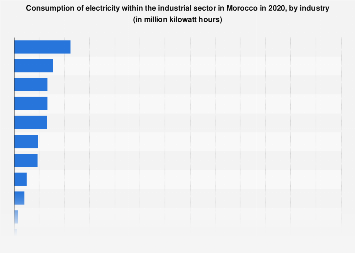
In 2020, Morocco’s industrial sector consumed approximately 23.6 billion kilowatt-hours (kWh) of electricity, a figure that underscores the nation’s growing industrial footprint and its reliance on energy to fuel economic activity. While this aggregate number represents a significant portion of the country’s overall energy consumption, a deeper dive into the data reveals considerable disparities in electricity demand across various industrial sub-sectors. These variations not only reflect the differing energy intensities of different manufacturing processes but also point to key areas of economic focus and potential for efficiency gains.
The electricity and water industry emerged as the largest single consumer within the secondary sector, accounting for an estimated 11.1 billion kWh of electrical energy. This substantial demand is intrinsically linked to the capital-intensive nature of water treatment, desalination, and electricity generation and distribution infrastructure. The operation of large-scale pumps, treatment facilities, and power generation units requires a continuous and substantial supply of electricity, making this sector a critical component of the nation’s energy landscape. Globally, similar trends are observed, where utilities and water management entities are consistently among the highest industrial electricity users due to the sheer scale of their operations and the essential nature of their services.
Following closely behind, the building industry, encompassing construction and related materials manufacturing, represented the second-largest segment of industrial electricity consumption, with an estimated demand of 3.8 billion kWh. This sector’s energy needs are driven by activities such as cement production, brick manufacturing, quarrying, and the operation of heavy machinery on construction sites. The burgeoning infrastructure development and urban expansion in Morocco necessitate a robust building materials sector, consequently translating into significant electricity requirements.
The chemical industry, a vital component of many modern economies, registered a demand of approximately 2.9 billion kWh. This sector’s energy-intensive processes, including chemical synthesis, refining, and product manufacturing, contribute significantly to its electricity consumption. The output of this sector often serves as feedstock for numerous other industries, highlighting its foundational role in the Moroccan economy.
Other significant industrial consumers included the food and beverage sector, which utilized around 1.8 billion kWh, reflecting the energy demands of processing, packaging, and refrigeration. The textile industry, a traditional pillar of Moroccan manufacturing, consumed approximately 1.5 billion kWh, largely for powering looms, spinning machines, and finishing processes. The metal and machinery sector, crucial for both domestic production and export, accounted for an estimated 1.4 billion kWh.
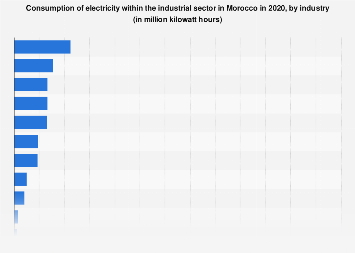
The paper and printing industry and the mining and quarrying sector each contributed approximately 1.1 billion kWh to the overall industrial electricity demand. These sectors, while distinct in their operations, share commonalities in their reliance on mechanical processes and material transformation, which are inherently energy-dependent. The remaining industrial sub-sectors collectively accounted for the final 0.8 billion kWh, indicating a more diversified but less energy-intensive spread of economic activities.
The data, though presented for a specific year, offers a snapshot into the dynamics of Morocco’s industrial energy consumption. The figures, particularly for the electricity and water and building industries, suggest a strong correlation between infrastructure development, utility provision, and overall economic growth. As Morocco continues to pursue its industrialization agenda, focusing on sectors like renewable energy, advanced manufacturing, and export-oriented industries, understanding these consumption patterns becomes paramount for effective energy policy, infrastructure planning, and sustainable development.
Globally, industrial electricity consumption is a key indicator of economic output and technological advancement. Nations with highly developed industrial bases typically exhibit higher per capita industrial electricity usage. However, the narrative is increasingly shifting towards energy efficiency and the integration of renewable energy sources. Morocco, with its ambitious renewable energy targets, is strategically positioned to leverage its solar and wind resources to meet the growing industrial demand more sustainably. The trend towards electrification of industrial processes, coupled with the adoption of energy-efficient technologies, will be crucial in managing this demand and reducing the carbon footprint of the manufacturing sector.
The substantial energy requirements of the electricity and water sector also highlight the critical link between energy security and water security. Investments in more efficient water management and desalination technologies, potentially powered by renewable energy, could offer a dual benefit, reducing both water scarcity and energy consumption. Similarly, the building industry’s significant demand presents an opportunity for promoting energy-efficient construction materials and practices, contributing to a more sustainable built environment.
Expert analysis suggests that while aggregate consumption figures are important, a granular understanding of sectoral energy intensity is vital for targeted interventions. Policies aimed at incentivizing energy efficiency upgrades, promoting the adoption of cleaner production technologies, and encouraging the use of domestically produced renewable energy within industrial facilities can have a significant impact. The Moroccan government’s commitment to industrial diversification and modernization, as outlined in its development strategies, will undoubtedly be influenced by its ability to manage and optimize industrial energy consumption. As the country progresses, continued monitoring and analysis of these consumption patterns will be essential to ensure that industrial growth is both robust and environmentally responsible. The data for 2020 serves as a baseline, against which future trends and the effectiveness of policy interventions can be measured, paving the way for a more energy-efficient and sustainable industrial future for Morocco.