

The landscape of the Chinese coffee market, already one of the most competitive retail environments in the world, has undergone a fundamental shift with the opening of Luckin Coffee’s first high-end flagship store in Shenzhen. This move marks a definitive departure from the brand’s historical identity as a budget-friendly, "grab-and-go" kiosk operator and places it in direct competition with the premium "Reserve" experience pioneered by Starbucks. Situated strategically in the bustling southern metropolis bordering Hong Kong, the Luckin Coffee Origin Flagship represents the company’s 30,000th store—a milestone that underscores its massive domestic scale and its newfound ambition to capture the affluent consumer segment.
For years, the battle lines in China’s coffee industry were clearly drawn. Starbucks occupied the "third place" premium tier, offering a lifestyle-oriented experience with spacious seating and higher price points, while Luckin Coffee disrupted the market with an aggressive, app-centric model that focused on convenience and deep discounts. However, the debut of the Shenzhen flagship signals that Luckin is no longer content with dominating the low-end market. The new 420-square-meter, two-story facility is designed to rival the aesthetic and sensory appeal of the Starbucks Reserve Roastery in Shanghai, which opened in 2017 as a temple to coffee culture. By introducing premium pour-over options and cold brews made from specialty beans sourced from Ethiopia, Brazil, and China’s own Yunnan province, Luckin is leveraging the "origin" narrative to elevate its brand equity.
The financial backdrop of this expansion is equally telling. Luckin Coffee recently reported a staggering 48% year-on-year increase in revenue, reaching $1.55 billion for the third quarter of 2025. This growth is primarily driven by its self-operated stores, which constitute more than half of its total footprint. In contrast, Starbucks, while still a powerhouse, has seen a more tempered trajectory in the region. During its most recent fiscal quarter, Starbucks reported China net revenue of approximately $831.6 million, with comparable same-store sales growth hovering around 7%. The disparity in store counts—Luckin’s 30,000 versus Starbucks’ roughly 8,000 in China—highlights a massive lead in physical penetration that Luckin is now attempting to convert into brand prestige.

This strategic pivot occurs at a time of significant transition for Starbucks in China. The Seattle-based giant recently announced plans to sell a 60% stake in its Chinese operations to Boyu Capital, a move that values the China business at approximately $13 billion. This restructuring suggests a shift toward a more localized partnership model, perhaps in response to the fierce price wars and the rapid rise of domestic competitors like Luckin, Cotti Coffee, and Manner. While Starbucks remains a symbol of aspirational middle-class status, the entry of Luckin into the high-end space threatens to erode the "exclusivity" moat that Starbucks has long enjoyed.
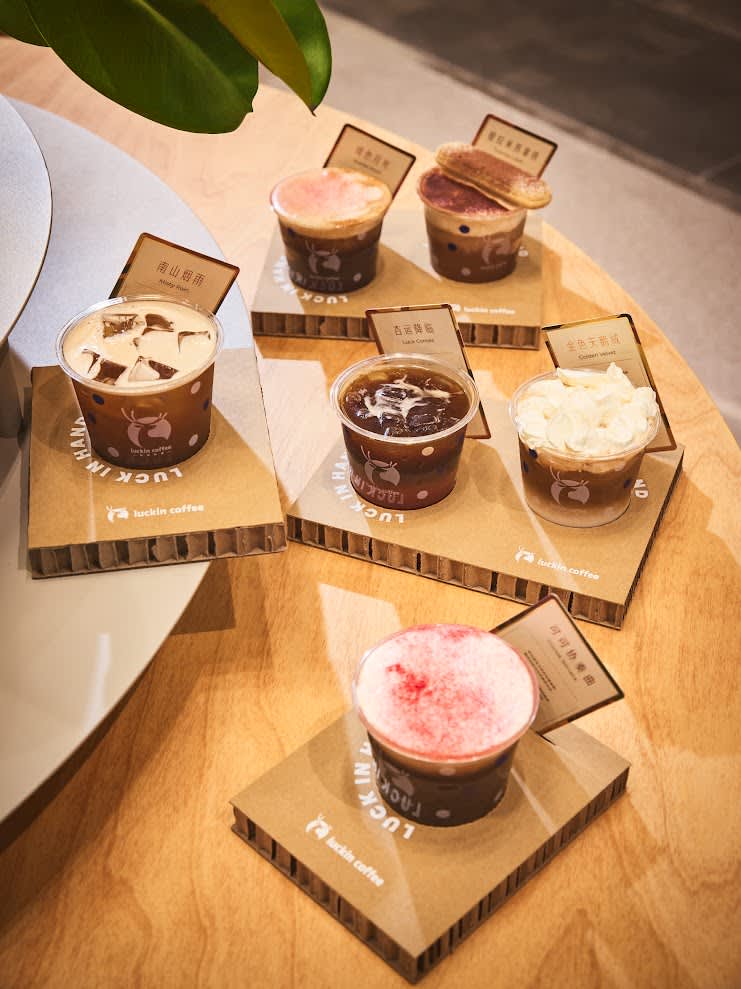
The consumer experience at the new Luckin flagship also reflects a sophisticated understanding of modern Chinese retail trends. Unlike the standard Luckin experience, where customers typically pay $1 or $2 for a caffeine fix, the Origin Flagship offers specialty beverages like the "tiramisu latte," complete with pastry toppings, aimed at a younger demographic that views coffee consumption as a form of "emotional fulfillment" and social currency. On social media platforms such as Xiaohongshu, the store has already become a viral sensation, with users reporting wait times of up to three hours during the soft-launch phase. This level of engagement demonstrates that Luckin’s ability to generate "private traffic" through its digital ecosystem is now being successfully married to a high-touch, physical brand experience.
Luckin’s resurgence is particularly remarkable given its tumultuous history. In 2020, the company was rocked by a fraud scandal involving fabricated sales figures, leading to its delisting from the Nasdaq and a $180 million penalty to settle with the U.S. Securities and Exchange Commission. Many analysts predicted the brand’s demise, but Luckin underwent a rigorous internal restructuring, replaced its leadership, and leaned into a technology-first approach that prioritized operational efficiency. Today, with a market valuation of over $10 billion in the over-the-counter market, the company is reportedly eyeing a return to a major U.S. exchange, a move that would complete one of the most dramatic turnarounds in corporate history.
The company’s marketing prowess has also been a key differentiator. Luckin has mastered the art of the "collab," partnering with diverse entities ranging from the premium spirits brand Moutai—resulting in a wildly popular alcohol-infused latte—to the global gaming phenomenon Black Myth: Wukong. These collaborations allow Luckin to remain culturally relevant and maintain a high frequency of app engagement, which is the cornerstone of its business model. By integrating these marketing wins with the new premium store format, Luckin is attempting to create a "lifestyle ecosystem" that spans from the daily commuter to the weekend connoisseur.

Beyond the borders of mainland China, Luckin is also accelerating its global footprint, challenging the international dominance of Western chains. The company recently debuted its 10th store in New York City, marking a bold entry into Starbucks’ home turf. It has also established a firm foothold in Southeast Asia, with nearly 70 stores in Singapore and dozens of locations in Malaysia. This international expansion suggests that Luckin believes its digital-first, high-efficiency model is exportable and can compete on a global stage, particularly in markets where consumers are increasingly tech-savvy and price-conscious.
The broader economic implications of Luckin’s premium shift are significant. As China’s economy navigates a period of cooling consumer confidence and shifting spending habits, the "coffee wars" serve as a microcosm of the larger retail landscape. While some luxury sectors have seen a slowdown, the "affordable luxury" segment—where a $5 premium coffee sits—continues to show resilience. Consumers who might postpone a major purchase like a car or a high-end designer bag are still willing to spend on elevated daily experiences. Luckin’s move into the flagship space is a calculated bet on this "lipstick effect," where small, high-quality indulgences remain a priority for the urban middle class.
Expert analysts suggest that the success of the Origin Flagship will depend on Luckin’s ability to maintain quality control at scale. While the company has mastered the logistics of rapid expansion and digital payments, the premium sector requires a level of artisanal consistency and service that is difficult to automate. Starbucks has spent decades cultivating its image as a curator of coffee culture; Luckin must now prove that it can offer more than just speed and a low price point. The inclusion of high-quality beans from the Yunnan province is a strategic touch, tapping into a growing sense of "Guochao" or "national trend," where Chinese consumers increasingly favor domestic brands that celebrate local heritage and quality.
As Luckin Coffee continues to blur the lines between a budget disruptor and a premium powerhouse, the pressure on Starbucks and other international players will only intensify. The Shenzhen flagship is not just a store; it is a statement of intent. It signals that the era of Western brands holding an uncontested monopoly on the "premium" experience in China is over. In a market where 30,000 stores can be built in less than a decade, the speed of evolution is unprecedented, and Luckin’s latest move ensures that the next chapter of the global coffee industry will be written largely in the streets of China’s tier-one cities. Whether Luckin can successfully bridge the gap between mass-market utility and high-end aspiration remains to be seen, but its current trajectory suggests a formidable challenge to the established global order of specialty coffee.