

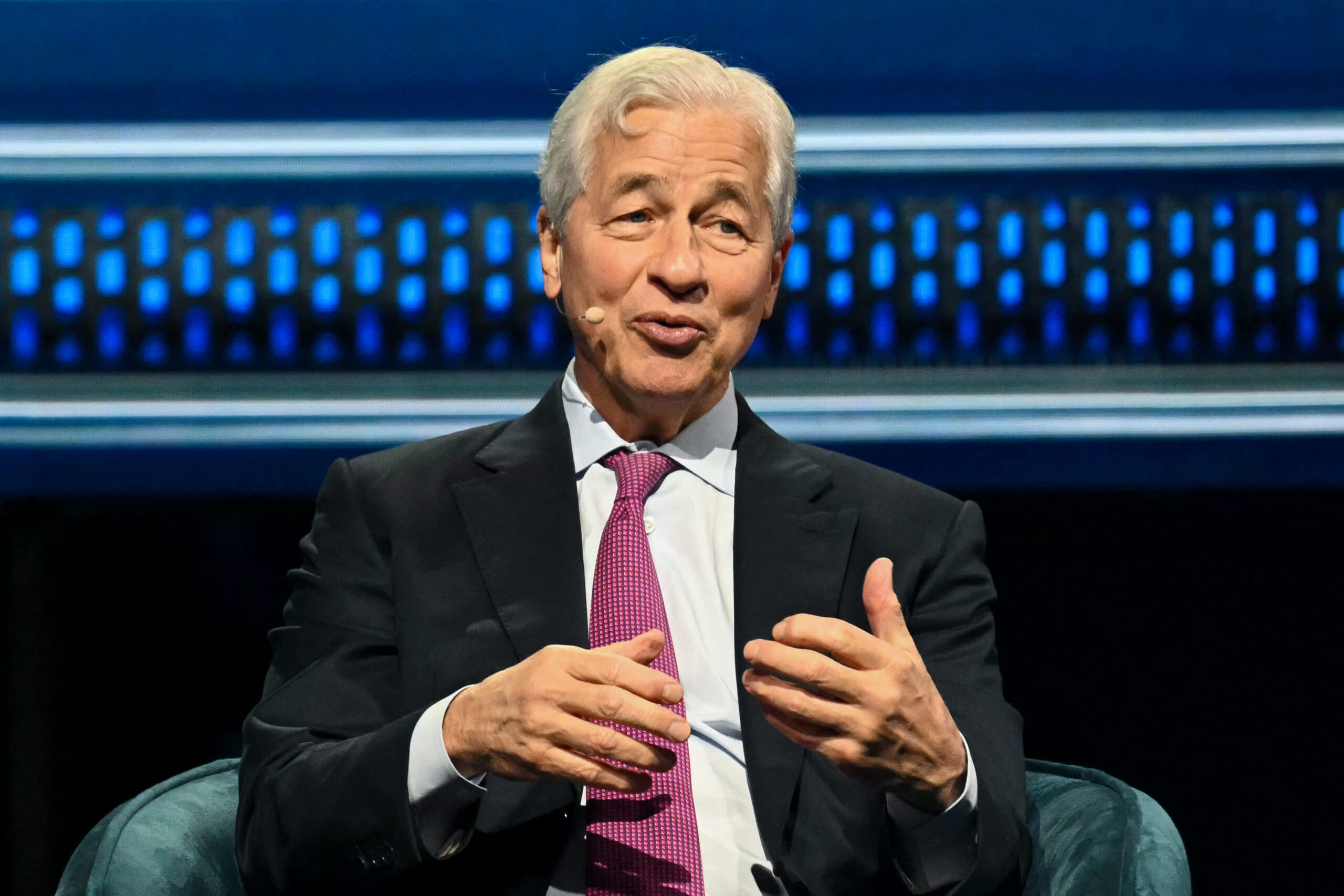
The annual gathering of the global elite at the World Economic Forum in Davos, Switzerland, has long served as a theater for the clashing ideologies of high finance and populist governance. This year, the spotlight fell squarely on Jamie Dimon, the Chairman and CEO of JPMorgan Chase, who used the international stage to issue a biting critique of President Donald Trump’s latest economic gambit: a proposed 10% ceiling on credit card interest rates. In a move that blended high-stakes policy warning with sharp political theater, Dimon suggested that if the administration is intent on testing such "price controls," it should begin by imposing them exclusively on the residents of Vermont and Massachusetts—the home states of two of the banking industry’s most persistent critics.
The proposal from the White House, which calls for a voluntary one-year moratorium on interest rates exceeding 10%, has sent ripples through the American financial sector. Currently, the national average for credit card annual percentage rates (APRs) hovers near record highs, often exceeding 21% following years of aggressive rate hikes by the Federal Reserve. For the nation’s largest lenders, including JPMorgan Chase, Citigroup, and Bank of America, the gap between the President’s 10% target and the market reality represents tens of billions of dollars in annual revenue. Dimon, speaking on a panel Wednesday, did not mince words regarding the potential fallout of such a mandate, characterizing it as a looming "economic disaster" that would fundamentally dismantle the American credit system.
The core of the banking industry’s argument rests on the mechanics of risk-based pricing. Under the current model, lenders extend credit to a broad spectrum of the American public by adjusting interest rates to reflect the likelihood of default. High-risk borrowers pay higher rates to offset the potential losses they represent to the bank. By capping these rates at 10%—a level significantly below the current cost of unsecured lending for most consumers—Dimon warned that banks would be forced to undergo a "drastic reduction" in their credit card business. The JPMorgan chief estimated that as much as 80% of the American population could find themselves priced out of the market, as banks would simply stop issuing cards to anyone who does not meet the most stringent "super-prime" credit criteria.
To illustrate his point, Dimon directed his focus toward the political architects of the rate-cap movement. By suggesting Vermont and Massachusetts as the "laboratories" for this experiment, he took a thinly veiled swipe at Senators Bernie Sanders and Elizabeth Warren. Both lawmakers have long advocated for a permanent legislative cap on usury, arguing that high interest rates are predatory and trap low-income families in a cycle of permanent debt. Dimon’s "great idea," as he sarcastically termed it, was to let the constituents of these lawmakers experience the consequences of such a policy firsthand. He predicted that the "left" would learn a harsh lesson when credit availability vanished, leading to a cascade of defaults on other essential obligations.
The secondary effects of a sudden credit contraction would likely extend far beyond the balance sheets of Wall Street firms. Dimon noted that credit cards are the primary engine for consumer spending in the United States, supporting everything from local restaurants and retailers to the travel and hospitality sectors. Furthermore, he argued that the inability to access revolving credit would lead to an increase in missed payments for utilities and municipal services, as families often use credit cards as a short-term bridge to cover monthly expenses. "The people crying the most won’t be the credit card companies," Dimon told the Davos audience. "It’ll be the restaurants, the retailers… because people miss their water payments."

The political friction surrounding the proposal is intensified by the President’s call for "voluntary" compliance. On Tuesday, the deadline set by the White House for banks to implement the lower rates, several major lenders remained silent or quietly indicated that no changes were forthcoming. While no executive wished to be seen as openly defying the administration, the consensus among banking analysts is that a voluntary cap is a non-starter for publicly traded companies with fiduciary duties to their shareholders. To enact a mandatory nationwide cap, most legal experts agree that the Trump administration would require an act of Congress—a prospect that faces a steep uphill climb even in a Republican-controlled House and Senate.
House Speaker Mike Johnson has already signaled skepticism, echoing the industry’s concerns about market interference. Traditional conservative economic philosophy typically rejects price controls as a distortion of the free market that leads to shortages—in this case, a shortage of capital. The tension highlights a growing rift within the Republican party between the populist, "America First" wing that favors direct intervention to aid the working class and the traditional pro-business wing that views such measures as anathema to capitalist principles.
From a historical perspective, the debate over interest rate caps, or usury laws, is as old as the American republic itself. For much of the 20th century, individual states set their own interest rate ceilings. However, the 1978 Supreme Court decision in Marquette National Bank of Minneapolis v. First of Omaha Service Corp. effectively deregulated the industry by allowing national banks to charge the interest rate permitted in the state where they are headquartered, rather than where the customer resides. This led to a migration of credit card operations to states like South Dakota and Delaware, which have virtually no interest rate caps. Reversing this decades-long trend would require a massive restructuring of federal banking law, potentially through a repeal or modification of the National Bank Act.
Global comparisons further complicate the narrative. Many European nations maintain much lower interest rate caps than the United States, often resulting in a credit market that is far more conservative. In countries like France or Germany, getting a credit card is significantly more difficult, and the "revolving debt" model that defines American consumerism is far less prevalent. Proponents of a cap, such as Senator Elizabeth Warren, argue that the U.S. model is an outlier that encourages reckless lending and profits off the financial distress of the vulnerable. In a stinging response to Dimon’s Davos comments, Warren criticized the "world’s richest people" for flying private jets to a Swiss ski resort to complain about measures intended to provide relief to struggling families. "It’s time to pass a law and get this done," she asserted.
As the standoff continues, JPMorgan Chase is reportedly preparing a comprehensive economic impact analysis to present to the Trump administration. This report is expected to detail the specific demographic groups that would lose access to credit and the projected decline in consumer spending that would follow. For the banking sector, the stakes are not merely about the billions in lost interest income, but about the precedent of government involvement in private-sector pricing. Dimon’s insistence that "it’s wrong for the government to get involved extensively in pricing of stuff" reflects a broader anxiety on Wall Street that the current administration may be willing to use executive pressure to override market forces.
Ultimately, the debate over a 10% credit card cap is a proxy for a larger conversation about the role of debt in the American economy. With total U.S. household debt exceeding $17 trillion and credit card balances alone surpassing $1 trillion, the cost of borrowing has become a central political issue. Whether the solution lies in a government-mandated cap or in the continued autonomy of the private market remains a point of fierce contention. For now, Dimon’s provocative suggestion to "test" the policy in Vermont and Massachusetts serves as a stark reminder that the battle between Washington’s populist ambitions and Wall Street’s economic realities is only just beginning.