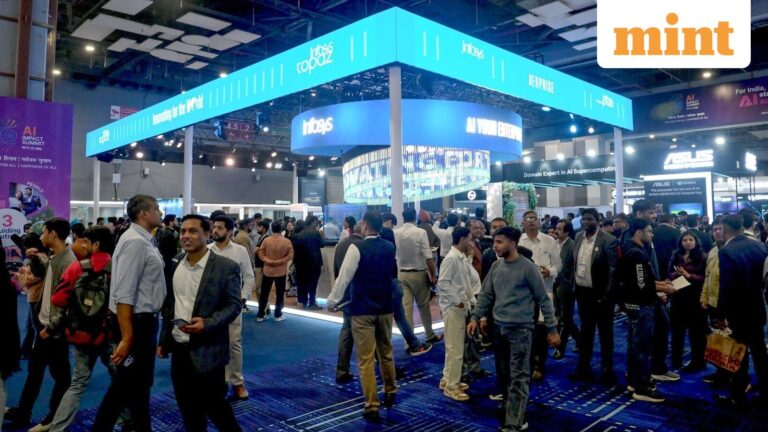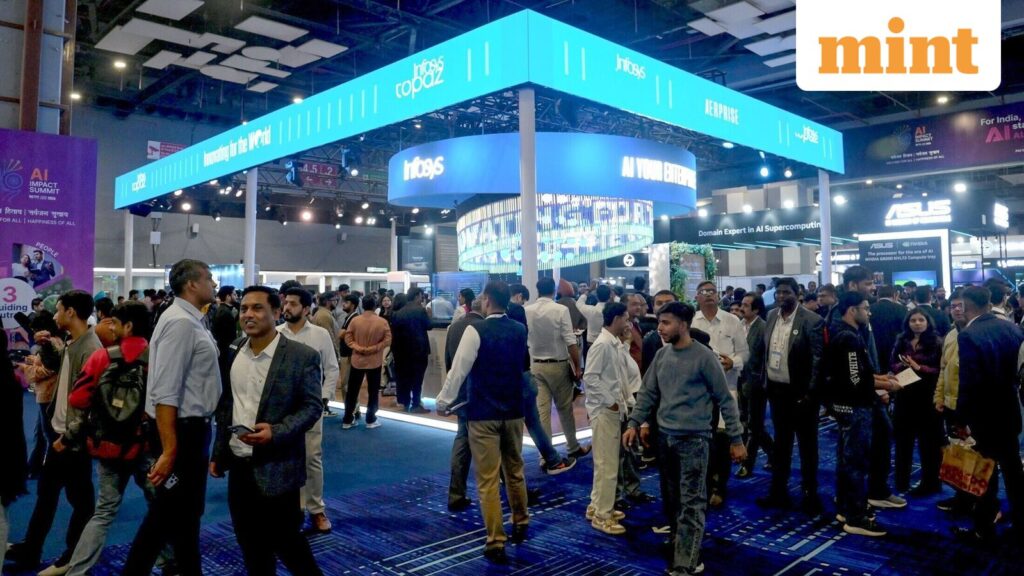


The air at the Nasscom Technology and Leadership Forum (NTLF) 2026, held from February 23-24 at the Fairmont Mumbai, was thick with a paradoxical blend of cautious optimism and palpable apprehension. While the long-term promise of Artificial Intelligence loomed large, offering visions of unprecedented efficiency and innovation, the immediate future presented a starkly different picture of disruption and potential upheaval for India’s robust $297 billion IT services sector. This tension became the unspoken, yet undeniable, undercurrent of the 34th edition of the forum, where over a thousand executives from IT services, customer support, AI, software products, and engineering firms gathered to chart a course through these uncharted waters.
A pivotal moment that crystallized this industry-wide anxiety occurred during a fireside chat on February 24, when C. Vijayakumar, CEO of HCL Technologies Ltd., articulated a stark warning. "This transition is different… it is going to be painful because it really involves people," he stated, referring to the profound impact of AI. His words resonated deeply, eliciting nods of agreement from some attendees, while others, momentarily distracted from their devices, fixed their gaze on the podium. This sentiment underscored a growing recognition that the current wave of AI, particularly advanced autonomous agents like Anthropic’s Claude Cowork, was not merely an incremental technological advancement but a fundamental re-architecting of how work is conceived, executed, and compensated, threatening to redefine the very foundations of a sector built on human capital.
The market’s reaction to this impending transformation had already sent shivers through the investor community. In the weeks leading up to the NTLF, concerns over AI’s potential to automate vast swathes of traditional IT services work triggered a significant downturn. Shares of India’s five largest IT services firms – Tata Consultancy Services Ltd., Infosys Ltd., HCL Technologies Ltd., Wipro Ltd., and Tech Mahindra Ltd. – collectively saw approximately $45 billion in investor wealth evaporate since the beginning of February, with individual stocks experiencing drops of up to 6% on multiple occasions. This sharp correction underscored the market’s unease regarding the sector’s valuation amidst an existential threat to its established revenue models and operational paradigms.
The industry itself remains sharply divided on the magnitude and nature of AI’s impact. Visionary venture capitalist Vinod Khosla has famously warned that AI could render much of conventional tech services work obsolete by 2030, painting a picture of radical displacement. In contrast, industry titans like N. Chandrasekaran, chairman of Tata Sons, and Nandan Nilekani, chairman of Infosys, have adopted a more sanguine outlook. They contend that IT services firms will retain their critical relevance, evolving to play an indispensable role in integrating complex AI technologies into enterprise clients’ intricate backend systems and legacy infrastructure. This perspective posits a shift from direct task execution to strategic orchestration and deep domain expertise, requiring a significant pivot in core competencies.
Amidst these deepening fault lines, the NTLF became a platform for leaders to confront "the elephant in the room." K. Krithivasan, CEO of Tata Consultancy Services (TCS), echoed the concerns about a paradigm shift, notably highlighting the prospect of "revenue cannibalization." Speaking on February 23, he emphasized the need for an "AI-first" approach, even if it meant disrupting existing revenue streams. "We need to tell them that one: I am giving you enough opportunity to learn, and two: I am encouraging you to ensure that every solution you provide to your customer is AI-first. As I said, even if it means that we are cannibalizing the revenue," Krithivasan asserted, advocating for proactive self-disruption to stay ahead of the curve. This indicates a strategic imperative for companies to embrace AI not just as an efficiency tool, but as a core driver of new, albeit potentially different, value propositions.
However, the path forward is anything but clear. Mid-level IT executives expressed considerable ambiguity regarding the practical application and true impact of this nascent technology. One executive from a major IT firm, speaking anonymously, revealed, "We don’t know what AI’s impact will be. We might enter into partnerships with every hyperscaler and AI company in the world, but that is of no use if our clients do not have up-to-date technology to embed this AI. Currently, conversations revolve only around productivity as clients want to bill fewer people." This highlights a critical chasm between technological potential and enterprise readiness, exacerbated by legacy systems and a prevailing client focus on immediate cost reduction through automation rather than expansive AI-driven transformation.
This sentiment aligns with an analysis by Bank of Baroda Capital Markets, which, in a February 17 report, tempered fears by stating that while AI-induced "lower workforce demand could put revenue growth and profit estimates at risk," it was "not an existential risk." The report detailed several factors hindering rapid AI adoption: enterprises’ slow readiness, CIOs’ preference for AI model stabilization, the need for clear Return on Investment (ROI) thresholds, the imperative for further error reduction in AI models, and crucially, the ongoing requirement for integrators to harmonize AI with diverse legacy enterprise technologies, alongside the persistent demand for deep domain skills. These factors collectively suggest a more gradual, complex integration pathway for AI, one that still necessitates significant human intervention and expertise.

The shifting landscape also implies a radical redefinition of client engagement and deal structures. Babak Hodjat, Chief AI Officer of Cognizant Technology Solutions Corp., acknowledged this during a panel discussion on February 23. He observed that the traditional model of the software services industry, characterized by "large, sweeping deals with multi-year tenures and billion-dollar outlays," is rapidly becoming obsolete. "That entire idea is going to go out of the window, given the pace at which AI is moving. Things are changing every few months, and enterprises can’t sign long-term deals for such a transition," Hodjat explained. This necessitates a move towards more agile, modular, and outcome-based contracts, requiring IT service providers to demonstrate continuous value and adaptability.
Perhaps the most significant and unsettling implication of the AI revolution for India’s IT sector is its effect on employment. Rajesh Nambiar, President of Nasscom, during the launch of the annual strategic revenue press conference, candidly addressed the "divergence between headcount growth and revenue growth." He noted, "I believe revenue is increasingly tied to tangible business results, as opposed to, you know, traditionally, it was linked to the headcount. So that divergence… is finally here." This shift has immediate and profound consequences for the millions of engineering graduates India produces annually, historically a primary talent pool for the IT industry. Nambiar confirmed, "There is no question that the overall hiring from the campus has come down significantly from wherever it used to be."
For a nation that graduates approximately 1.5 million engineers each year, the slowing pace of hiring in the IT sector—a major employer of fresh talent—rings alarm bells for economic stability and youth employment. In the fiscal year 2024-25, the IT sector added 133,000 employees, bringing the total workforce to 5.82 million. Nasscom projects a marginal increase for the current fiscal year, with an estimated 135,000 new hires, reaching 5.95 million employees—a mere 2.3% year-on-year increase. This modest growth rate, compared to historical figures, underscores the impact of automation and AI on workforce expansion, prompting a strategic rethink of education and skill development nationwide.
The "deep water" metaphor aptly described the sentiment by the end of the two-day forum. Despite carefully constructed optimism, an overarching apprehension about AI’s potential to disrupt billions of dollars in economic value and displace thousands of jobs in the near term was undeniable. Nasscom’s leadership note in its 2026 Strategic Review report, penned by Nambiar, acknowledged AI as "the driving force behind the transformation of tech services." The report highlighted a shift from experimentation to operational deployment by 2025, with enterprises demanding measurable ROI, talent strategies evolving from "headcount-first to capability-first," and roles emphasizing "ownership of outcomes rather than task delivery." This vision, while aspirational, necessitates a radical internal transformation for IT firms.
Krithivasan of TCS further underscored this urgency, exhorting senior executives to move beyond theoretical understanding and actively "learn and build AI solutions," warning against the risks of obsolescence. This reflects the current reality where many IT companies are not merely "riding" the AI wave but are actively "battling" its disruptive force. Srikanth Velamakanni, co-founder and CEO of enterprise AI company Fractal Analytics, encapsulated this dynamic on February 24: "There is an AI-led expansion that’s happening inside these (IT) companies. It’s masked by AI-led compression that’s also happening in these companies… AI is compressing traditional work, and it is expanding some other pieces of work, and the net balance is what you’re seeing."
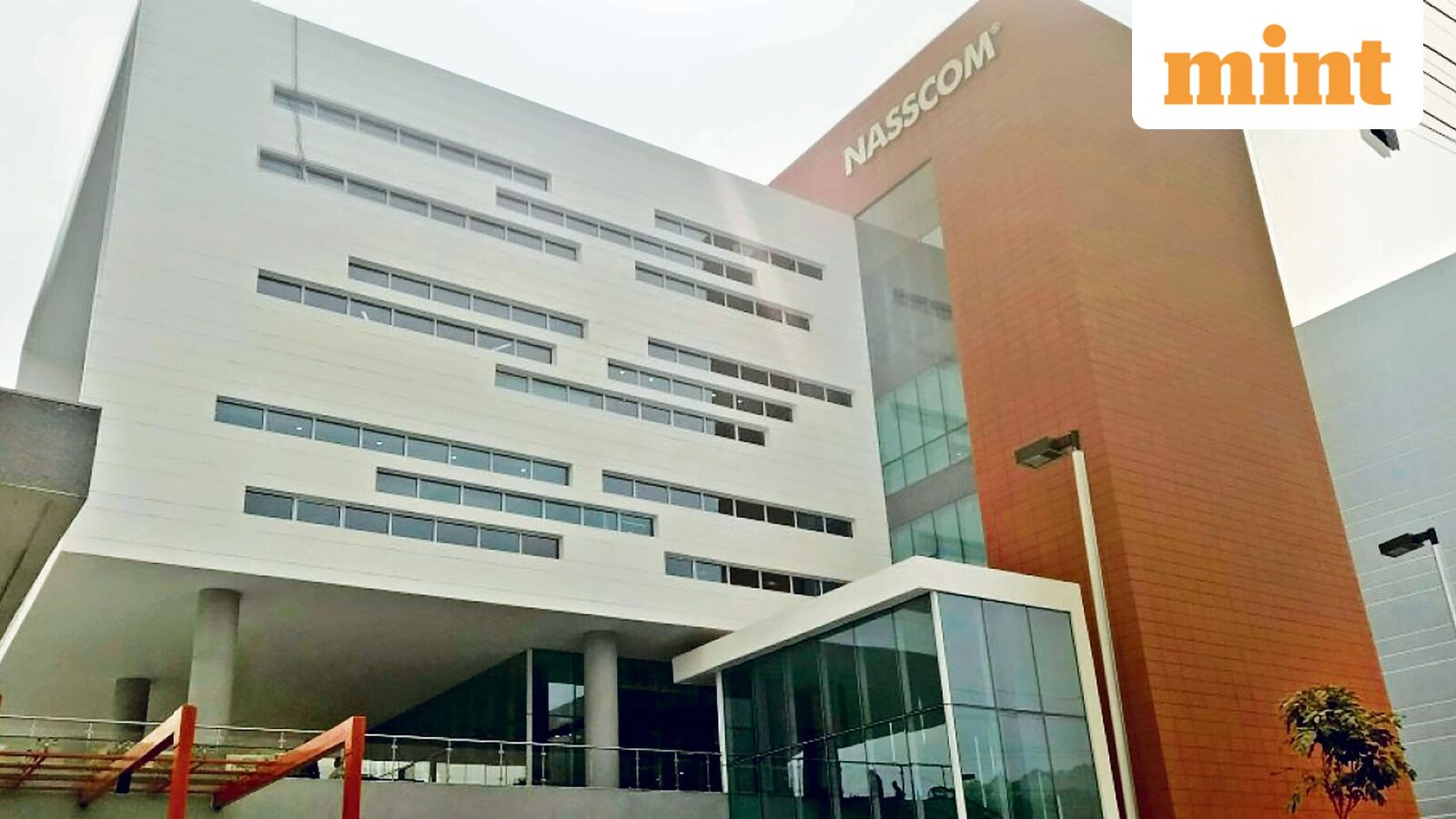
This unprecedented AI onslaught has even led Nasscom, the 1988-founded industry body, to revise its revenue estimates for the past three years. This marks the second time in as many years that the organization has had to undertake such an exercise, broadening the scope of companies it tracks to accurately capture the evolving sector. Sangeeta Gupta, Nasscom’s Chief Strategy Officer, acknowledged the volatility: "We cannot do everything at the same time, but we will keep going back and looking at every sub-sector, studying it in detail, and back-correcting it if need be. Hopefully, we don’t have to keep correcting. But given how much the sector is changing, we had to do it once or twice." For the fiscal year 2025-26, Nasscom revised its revenue projection to a three-year high of 6.1% growth, reaching $315 billion, up from an earlier estimate of $300 billion in February 2025. This upward revision suggests that while disruptive, AI is also opening new avenues for growth, albeit in areas that require significant adaptation and investment.
Despite the prevailing anxieties, the outlook is not entirely bleak. Nasscom’s report projects that the industry’s average revenue growth pace, while potentially remaining stagnant, is expected to stabilize in the mid-single digits in the near future. Fresher hiring, though not experiencing drastic growth, is also anticipated to remain at least flat. This indicates a period of recalibration rather than outright collapse, a strategic pivot towards higher-value services and specialized AI integration. India’s IT sector, known for its resilience and adaptability, now faces its most significant challenge yet – to transform its vast human capital into a specialized workforce capable of harnessing AI’s power, moving beyond headcount-driven models to become architects of the intelligent enterprise. The NTLF 2026 served as a stark reminder that the future of global IT services will be defined not by avoiding AI, but by mastering its complexities and leveraging its transformative potential.