

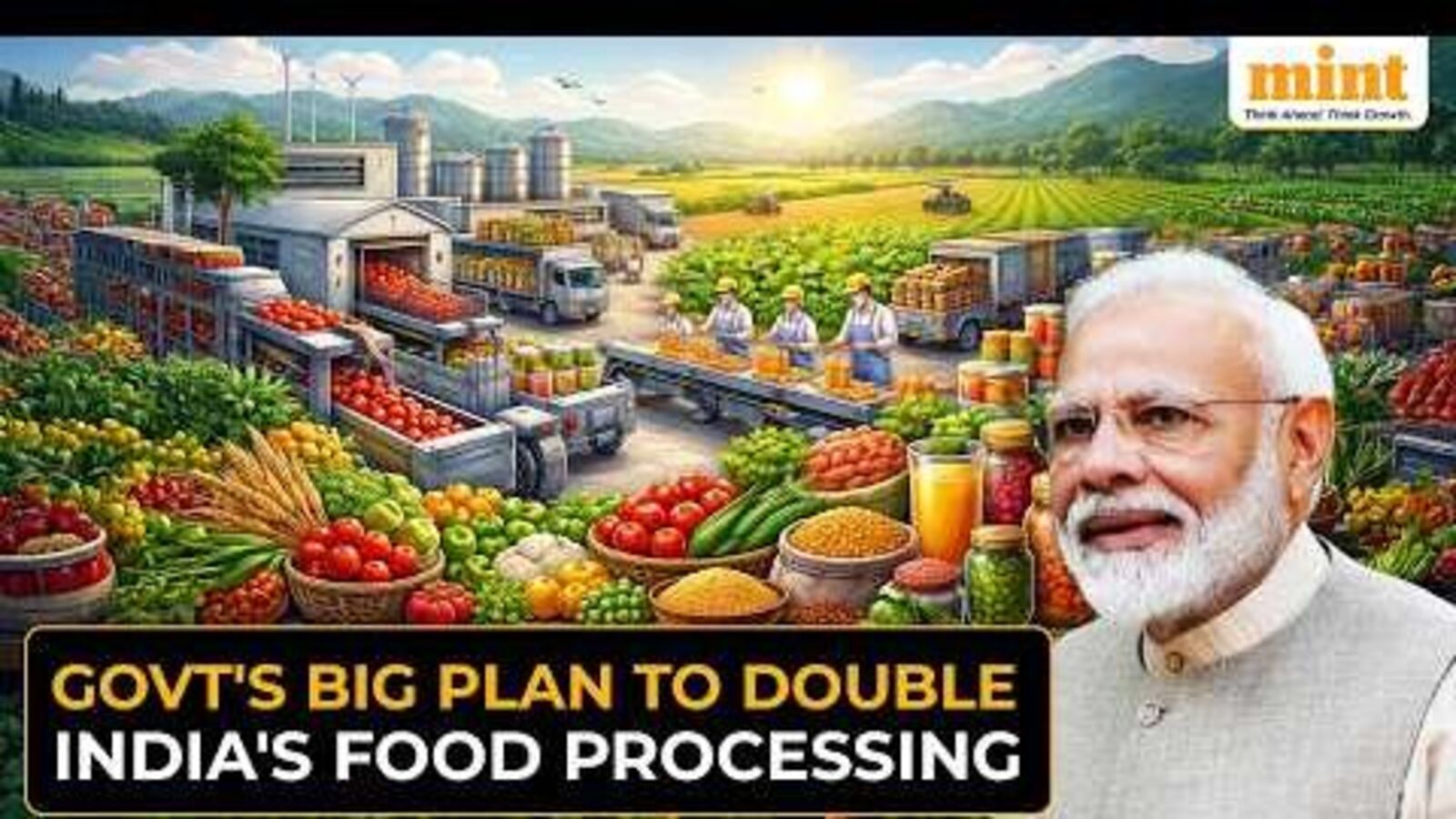
The Indian government is embarking on an ambitious drive to fundamentally transform its agricultural landscape, setting a target to significantly increase the share of processed food in the nation’s agricultural output from approximately 12% to 25% within the next five years. This strategic push, recently outlined by the Ministry of Food Processing Industries (MoFPI), represents a concerted effort to mitigate colossal post-harvest losses, estimated at an staggering ₹1.53 trillion annually, while simultaneously modernizing the farm economy, stabilizing farmer incomes, and bolstering India’s position in global food trade. The initiative seeks to shift the locus of value creation from raw agricultural produce towards more sophisticated processed and packaged food products, promising a profound impact across the entire food value chain.
The Economic Imperative: Stemming the Tide of Wastage
The urgency behind this policy pivot is underscored by the immense economic drain caused by post-harvest inefficiencies. India, despite being one of the world’s largest agricultural producers, grapples with severe losses at various stages of its supply chain, from farm gates to consumer markets. Research by institutions like the Indian Council for Research on International Economic Relations (ICRIER) pegs these annual losses between 2020 and 2022 at approximately ₹1.53 trillion, or roughly $18.5 billion. This figure represents not just lost produce but also wasted resources – water, energy, and labor – that went into their cultivation. The problem is particularly acute for highly perishable commodities like fruits and vegetables, which account for a substantial portion of these losses. However, staple crops are not immune; soybean recorded the highest percentage loss at 15.34%, followed by wheat at 7.87%, paddy at 6.37%, and maize at 5.95% during the same period. These losses disproportionately affect small and marginal farmers, eroding their potential earnings and contributing to agrarian distress. Given that agriculture and allied sectors contribute approximately 16% to India’s Gross Domestic Product (GDP) and sustain nearly 46% of the national workforce, the economic ramifications of such inefficiencies are profound, impacting national food security, rural livelihoods, and overall economic growth. Professor R.S. Ghuman, a distinguished academic in rural and industrial development, emphasizes that "strengthening food processing is emerging as a key strategy to boost farmers’ incomes and reduce wastage, as it extends shelf life and improves storage."
A Multi-Pronged Policy Framework
To achieve its ambitious 25% processing target, the government is leveraging a robust suite of existing policy tools and introducing new strategic interventions. Central to this approach are schemes such as the Production Linked Incentive (PLI) scheme for food processing, the Pradhan Mantri Formalisation of Micro Food Processing Enterprises (PMFME) scheme, and the Pradhan Mantri Kisan SAMPADA Yojana (PMKSY). These programs are designed to offer a comprehensive package of support, including capital subsidies, credit access, infrastructure development, branding assistance, and incentives for value-added products. The PLI scheme, for instance, targets large-scale food manufacturing, encouraging companies to invest in expanding capacity and creating global brands in segments like ready-to-eat meals, processed fruits and vegetables, marine products, and organic produce. This scheme aims to make Indian food manufacturers globally competitive. Complementing this, the PMFME scheme focuses on the grassroots, providing credit-linked subsidies and technical support to micro food processing units, self-help groups (SHGs), and farmer producer organizations (FPOs). This decentralized approach is critical for empowering small entrepreneurs and fostering processing at the local level, ensuring that benefits percolate down to individual farmers and rural communities. Meanwhile, PMKSY acts as an umbrella scheme, concentrating on integrated cold chain development, creation of agro-processing clusters, and establishing modern food testing laboratories, thereby strengthening the entire ‘farm-to-fork’ supply chain infrastructure. The government’s commitment is evident in the disbursement of approximately ₹15,000 crore in incentives to the food processing industry over the past four to five years, which officials, including MoFPI Secretary Avinash Joshi, state has "catalysed actual investments that are four to five times higher."
Revolutionizing Infrastructure and Supply Chains

A cornerstone of this transformation is the aggressive expansion and modernization of infrastructure. The strategy prioritizes strengthening farm-level aggregation, facilitating direct linkages between farmers and processors, and investing heavily in advanced cold-chain logistics and warehousing solutions. This is crucial for perishable goods, ensuring produce can be stored and transported efficiently, minimizing spoilage. The integration of technology, such as IoT-enabled tracking systems and AI-driven supply chain optimization, is also being explored to enhance transparency and efficiency. Beyond physical infrastructure, there is a strong emphasis on elevating food quality and safety standards to meet stringent international benchmarks. This includes establishing more sophisticated food testing laboratories and promoting best practices across the processing industry. Such measures are vital not only for boosting consumer confidence domestically but also for unlocking premium export markets. The focus on micro, small, and medium enterprises (MSMEs) and FPOs is particularly significant here, as they are seen as key drivers for deepening processing at the grassroots level, transforming agricultural surplus into value-added products closer to the source of production.
Catalyzing Private Investment and Startup Ecosystems
Attracting private capital and fostering an innovative startup ecosystem are integral to realizing the sector’s full potential. The government is actively seeking to draw private investment through a combination of incentives, credit-linked grants, simplified regulatory approvals, and improved access to institutional finance. The PMFME scheme, launched in June 2020, exemplifies this by sharing expenditure between the Centre and states, with enhanced central funding for North-Eastern and Himalayan states, signaling a regionally balanced development approach. As of December 2025, over 172,000 micro food processing units have been sanctioned under PMFME, representing a total project cost of ₹16,000 crore, benefiting a wide array of stakeholders from individual beneficiaries to producer cooperative societies. Similarly, under PMKSY, approximately 1,618 projects worth ₹21,917 crore have been approved since August 2017, showcasing significant investment momentum. Agri-tech startups and food processing MSMEs are envisioned as catalysts for innovation in areas such as sustainable packaging, advanced traceability solutions, and the development of export-oriented products tailored for diverse global palates. Institutions like the National Institute of Food Technology Entrepreneurship and Management (NIFTEM-K) play a pivotal role, organizing events such as the "International Conference on Advanced Next Generation Vision for Emerging and Sustainable Healthy Foods (ANVESH–2026)" to foster industry-academia collaboration and entrepreneurial spirit.
Global Aspirations and Export Potential
India’s current food processing rate of 12% lags significantly behind developed economies, where processing levels often exceed 60-70%. This disparity highlights a vast untapped potential. Globally, food losses are a universal challenge, though their nature varies. While estimates by the U.S. Department of Agriculture suggest roughly one-third of American food supply goes uneaten, largely at retail and consumer stages, India’s challenge lies primarily at the post-harvest, supply chain, and processing stages. By curtailing these losses and enhancing value addition, India aims to strengthen its position as a major global food supplier. The strategy includes promoting Indian processed food products through a unified "Brand India" initiative, improving market access via bilateral and multilateral trade agreements, leveraging digital platforms for market intelligence, and even employing "gastro-diplomacy" to popularize Indian cuisine and food products worldwide. The World Food India summit, concluded in September 2025, served as a significant platform for this, securing investment commitments worth ₹1.02 trillion from 26 domestic and international companies across segments like dairy, beverages, packaged foods, and alcoholic drinks. These investments are poised to expand processing capacity, modernize supply chains, and diversify India’s export basket beyond traditional raw commodities.
Navigating Challenges and Charting the Future
While the blueprint is comprehensive and ambitious, its successful implementation hinges on overcoming historical challenges. Past efforts in food processing have often struggled with issues related to fragmented landholdings, inadequate cold chain infrastructure, bureaucratic hurdles in project clearances, and limited access to finance for smaller players. Sustained private investment, efficient execution of government schemes, and a seamless coordination between central and state agencies will be critical. Furthermore, as processing capacity expands, considerations of sustainability – including responsible water usage, waste management, and energy efficiency – will become paramount. Skill development programs will also be essential to create a workforce capable of operating modern processing units and adhering to international standards. If effectively implemented, officials anticipate these investments will not only significantly reduce food wastage but also expand farmer participation in value chains, create millions of new jobs, and substantially increase India’s share in global processed food exports. This transformation is not merely about economic growth; it is about building a more resilient, equitable, and food-secure future for India, positioning the nation as a powerhouse in the global agri-food economy.