

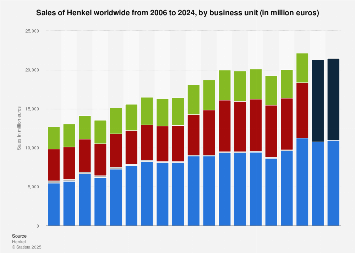
As the global economic landscape continues its intricate dance of recovery and adaptation, a crucial indicator for assessing the health and strategic direction of multinational corporations lies in the granular breakdown of their sales performance by business unit. For Henkel, a German chemical and consumer goods giant with a venerable history spanning over a century, understanding the projected sales trajectories for its distinct operational segments in 2024 offers valuable insights into its market positioning, competitive strengths, and future growth avenues. While precise, real-time figures often require specialized access, an analysis of available market intelligence and industry trends provides a robust framework for understanding the likely performance of Henkel’s core divisions: Adhesive Technologies, Beauty Care, and Laundry & Home Care.
The Adhesive Technologies segment stands as Henkel’s industrial powerhouse, a critical driver of its B2B revenue streams. This division encompasses a vast portfolio of adhesives, sealants, and functional coatings serving a diverse array of industries, including automotive, electronics, aerospace, packaging, and construction. In 2024, the performance of this unit is intrinsically linked to the global manufacturing output and the pace of industrial investment. Forecasts suggest continued resilience, buoyed by sustained demand in emerging markets and the ongoing trend towards lightweighting and material innovation in sectors like automotive, where advanced adhesives are crucial for vehicle assembly and performance enhancement. Furthermore, the burgeoning e-commerce sector, a consistent growth engine, will likely fuel demand for sophisticated packaging adhesives. However, this segment is not without its headwinds. Fluctuations in raw material costs, particularly petrochemical derivatives, can impact profit margins. Geopolitical uncertainties and potential supply chain disruptions, as witnessed in recent years, also pose risks. Analysts project that Henkel’s strong market share, coupled with its commitment to research and development for sustainable and high-performance solutions, will enable Adhesive Technologies to maintain a steady, albeit potentially moderate, growth trajectory in 2024, likely outperforming more consumer-discretionary driven segments. The company’s strategic focus on digitalization within its industrial applications, offering smart solutions and data-driven services, is also expected to provide a competitive edge.
Transitioning to the consumer-facing realms, the Beauty Care division navigates a dynamic and highly competitive retail environment. This segment, encompassing haircare, hair coloring, body care, and skincare products, is susceptible to shifts in consumer preferences, economic discretionary spending, and the ever-evolving digital marketing landscape. In 2024, the outlook for Henkel’s Beauty Care is likely to be shaped by several key factors. The continued rise of direct-to-consumer (DTC) brands, the increasing importance of online retail channels, and a growing consumer demand for sustainable and ethically sourced products present both opportunities and challenges. While Henkel possesses established brands, the ability to innovate rapidly, adapt to emerging beauty trends, and effectively engage consumers through digital platforms will be paramount. Market data indicates a global beauty market that is recovering, with a particular emphasis on premiumization and specialized product offerings. Henkel’s strategy of portfolio optimization, potentially divesting underperforming brands and investing in high-growth niches or acquisitions, will be crucial. The performance of this segment in 2024 will likely reflect a mixed bag, with some categories showing robust growth driven by innovation and strong brand equity, while others may face margin pressures due to intense competition and the need for significant marketing investment. The economic sentiment in key consumer markets will also play a significant role, as beauty products can be subject to cutbacks during periods of economic contraction.
The Laundry & Home Care division, another cornerstone of Henkel’s consumer business, operates in a more mature yet consistently essential market. This segment includes laundry detergents, fabric softeners, dishwashing products, and household cleaners. In 2024, the performance of this unit is expected to be characterized by stability, driven by the non-discretionary nature of its products. However, growth is often tied to innovation in product efficacy, sustainability, and convenience. The increasing consumer awareness regarding environmental impact is a significant driver, pushing manufacturers towards eco-friendly formulations, reduced plastic packaging, and concentrated product formats. Henkel’s investments in sustainable product development and its efforts to communicate these benefits effectively to consumers are likely to be key differentiators. Competition in this segment is fierce, with both global players and strong private label offerings vying for market share. Price sensitivity remains a factor, particularly in emerging economies. Therefore, Henkel’s ability to maintain a competitive price-performance ratio while highlighting its sustainability credentials will be crucial for sustained growth. Market projections suggest that while the overall volume growth might be modest, value growth could be driven by premiumization and innovation in specialized cleaning solutions. The company’s established distribution networks and brand loyalty will continue to provide a strong foundation for this segment in 2024.
Globally, the performance of these three business units will be influenced by macroeconomic conditions, currency exchange rates, and regional market dynamics. Emerging markets in Asia, Latin America, and parts of Africa often present higher growth potential but also greater volatility. Developed markets in Europe and North America typically offer more stable demand but also face saturation and intense competition. Henkel’s diversified geographic presence allows it to mitigate some of these regional risks, but a synchronized global economic downturn could still impact overall sales. The company’s strategic initiatives, such as its focus on sustainability, digitalization, and portfolio management, are designed to build long-term resilience and capitalize on evolving market demands. As 2024 unfolds, close monitoring of Henkel’s quarterly earnings reports and management commentary will be essential to ascertain the precise performance of each business unit and to gauge the effectiveness of its strategic imperatives in navigating the complex global economic terrain. The interplay between industrial demand, consumer spending power, and evolving societal priorities will ultimately define the success of Henkel’s diverse business operations in the coming year.