


The financial architecture of the global markets is currently undergoing a structural realignment as the "Sell America" trade transitions from a speculative whisper to a tangible shift in capital allocation. While much of the recent market discourse has centered on the rotation of equity capital away from overextended U.S. technology valuations and toward undervalued international stocks, a more profound and perhaps more consequential transformation is taking place within the fixed-income universe. Investors, increasingly wary of domestic fiscal volatility and a softening U.S. dollar, are aggressively diversifying their bond holdings, with emerging market debt emerging as the unexpected vanguard of the 2025-2026 performance cycle.
For decades, the U.S. Treasury market served as the undisputed bedrock of global finance, the "risk-free" benchmark against which all other assets were measured. However, a confluence of macroeconomic headwinds—including persistent fiscal deficits, a shifting geopolitical landscape under the current administration’s foreign policy, and the technical necessity of performance chasing—has led institutional and retail investors alike to look beyond American borders. The result is a surge in appetite for international fixed income that is rewriting the traditional playbook for balanced portfolios.
The most striking evidence of this shift is found in the performance metrics of emerging market (EM) debt. In 2025, the iShares JPMorgan USD Emerging Markets Bond ETF (EMB), a bellwether for the asset class, delivered a total return exceeding 13%. This performance was mirrored by more specialized instruments, such as the BondBloxx JP Morgan USD Emerging Markets 1-10 Year Bond ETF (XEMD), which capitalized on the sweet spot of the yield curve. These returns stand in stark contrast to the relatively muted performance of broad U.S. bond aggregates during the same period, signaling to the market that the "safety" of domestic bonds may currently come at the cost of significant opportunity loss.
At the heart of this rotation is the weakening of the U.S. dollar. For international bond investors, the greenback’s trajectory is the primary engine of total returns. As the dollar’s multi-year rally shows signs of fatigue, the relative value of non-U.S. assets naturally ascends. This currency pressure is not merely a technical fluctuation but a reflection of deeper anxieties regarding the American fiscal trajectory. With the U.S. federal deficit continuing to expand and high levels of government spending becoming a permanent fixture of the economic landscape, the "fiscal health" argument has become a central pillar for those advocating for international diversification.
Market analysts note that the current environment is characterized by a "reinvestment risk" of historic proportions. For the past several years, the investment world has been dominated by a "cash is king" mentality, with trillions of dollars parked in money market funds yielding upwards of 5%. As central banks, including the Federal Reserve, begin the inevitable process of normalizing interest rates, that mountain of sidelined capital is beginning to move. The question for 2026 is no longer whether this money will move, but where it will land. While a significant portion is expected to flow back into U.S. equities, the "Sell America" sentiment suggests that a record-breaking percentage is being earmarked for international credit markets.
Despite the rhetoric of a Great Rotation, the data suggests a more nuanced reality: U.S. investors are not so much abandoning the domestic market as they are re-weighting it. According to recent data from Morningstar, January 2026 saw a record-breaking $156 billion in net inflows into U.S. market ETFs. However, in a parallel trend that highlights the growing appetite for diversification, international equity ETFs also saw a monthly record of $51 billion in net positive flows. In the bond space specifically, taxable bond ETFs attracted $46 billion in a single month, led by massive allocations into the Vanguard Total Bond Market ETF (BND) and the Vanguard Intermediate-Term Corporate Bond ETF (VCIT). This suggests that while the U.S. remains the core of most portfolios, the "satellite" allocations to international and emerging markets are growing at an accelerated pace.

The resilience of the U.S. economy remains a formidable counter-argument to the "Sell America" narrative. Corporate balance sheets in the United States are, by and large, in their strongest position in a generation. Earnings growth has remained steady, and the domestic yield curve has begun to exhibit a healthy steepening—a technical signal where long-term rates sit comfortably above short-term rates, suggesting a normalization of economic expectations. This "behaving appropriately" of the yield curve provides a level of predictability that still makes the U.S. the most liquid and robust fixed-income market in the world.
However, the definition of "safety" in a portfolio is evolving. For the modern investor, bonds are no longer viewed strictly as a defensive hedge against equity volatility. Instead, they are being utilized as an active "opportunity and income set." This is particularly evident in the credit markets, where investors are moving down the quality spectrum to capture higher yields without necessarily taking on excessive default risk. The "BBB" rated segment of the investment-grade market has become a particular area of focus. With yields in this tier offering a significant premium over "AAA" or "AA" rated debt, and with corporate defaults remaining near historic lows, the risk-reward profile of mid-tier investment-grade credit has become highly attractive.
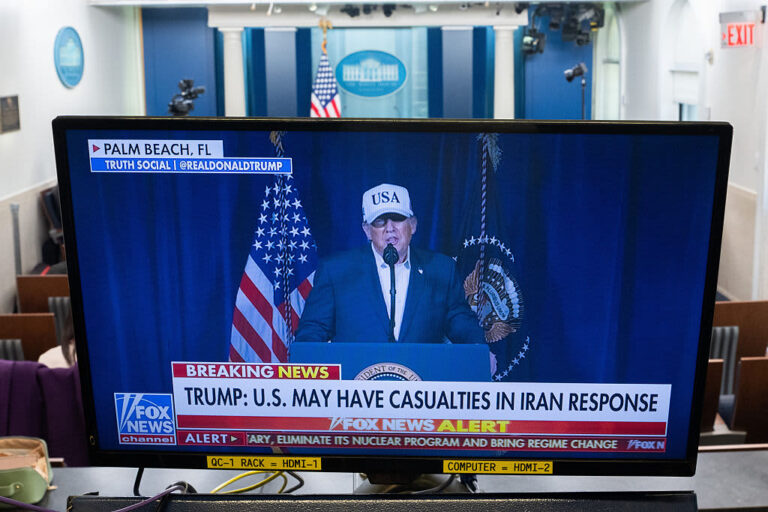
The geopolitical dimension cannot be ignored. The foreign policy initiatives of the Trump administration have introduced a new layer of complexity to international investing. Trade tensions, tariff threats, and a transactional approach to diplomacy have historically created volatility in emerging markets. Yet, many investors now view this volatility as a source of alpha rather than a reason to retreat. By selectively investing in emerging markets that are less sensitive to U.S. trade policy or those that stand to benefit from "near-shoring" and "friend-shoring" trends, savvy bond traders are finding pockets of resilience that defy the broader "Sell America" trend.
Furthermore, the debate over a potential "private credit bubble" has added fuel to the public bond market’s resurgence. As concerns grow that the opaque and rapidly expanded private lending sector may be hiding systemic risks, the transparency and liquidity of the public bond market—both domestic and international—have gained renewed appeal. For many institutional allocators, the 13% returns seen in emerging market sovereign debt are far more attractive when they come with the daily liquidity and regulatory oversight of an exchange-traded fund (ETF) compared to the locked-up capital requirements of private credit.
Global comparisons further illustrate the shifting tides. While Europe struggles with sluggish growth and the structural challenges of the Eurozone, and while China grapples with a protracted real estate crisis, a select group of emerging economies in Latin America and Southeast Asia are benefiting from high real interest rates and improving fiscal discipline. This has created a "carry trade" opportunity that is difficult to ignore. When an investor can capture a high coupon in a stabilizing emerging market currency while the U.S. dollar is flat or declining, the total return potential far exceeds the modest yields currently offered by ten-year Treasuries.
Ultimately, the transformation of the bond market in 2026 is a story of sophistication. The "Sell America" trade is perhaps a misnomer; it is more accurately described as the "Buy the World" trade. Investors are no longer content with the home-country bias that has dominated American portfolios for the last decade. They are recognizing that in a fragmented, multi-polar global economy, the most effective way to manage risk is to ensure that their fixed-income sleeve is as geographically and currency-diverse as their equity sleeve.
As we move deeper into the year, the "trillions on the sidelines" will continue to seek a home. If the trends of early 2026 persist, a significant portion of that capital will bypass the traditional safety of the U.S. Treasury and flow into the high-yielding, high-growth corridors of the emerging world. The bond market, once the quietest corner of the financial world, has become the loudest indicator of a global economic order in flux. Whether this shift is a temporary reaction to currency fluctuations or a permanent realignment of global credit remains to be seen, but for now, the biggest changes in the "Sell America" era are undeniably found in the once-ignored corners of the international bond market.