

For seven decades, Germany has stood as a beacon of economic prosperity and democratic stability in Europe. From the foundational years under Konrad Adenauer to the extended leadership of Angela Merkel, the Federal Republic cultivated an image of unwavering strength, successfully integrating the former East German economy following the fall of the Berlin Wall. While the post-war era was not without its trials, including the terrorism of the Red Army Faction and the economic turbulence of the 1970s oil shocks, Germany’s economy generally experienced robust, inclusive growth, powered by its formidable export sector. However, the nation is now grappling with a significant economic and social recalcitrant, prompting a re-evaluation of its long-held success narrative. The very export-led model that fueled decades of growth is now showing signs of strain, facing intensified competition from China and a global shift in trade dynamics. Simultaneously, societal cohesion is being tested by growing resentment towards immigration, a trend exacerbated by the 2015 decision to open borders to over a million refugees. This confluence of economic headwinds and social friction has fueled a surge in right-wing populism, with parties like the Alternative for Germany (AfD) challenging the fundamental norms and principles that have guided the Federal Republic since its inception in 1949. The question now looms large: can Germany reinvent itself and sustain its prosperity without another existential crisis?
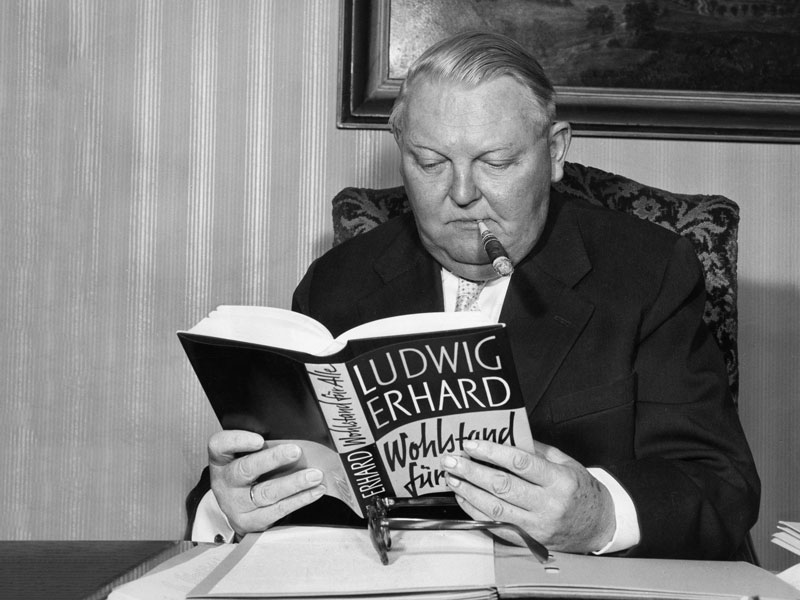
The narrative of Germany’s post-war resurgence, the famed "Wirtschaftswunder," is often attributed to two pivotal events in 1948: the currency reform engineered by Ludwig Erhard and the European Recovery Programme, commonly known as the Marshall Plan. Officially enacted by US President Harry Truman on April 3, 1948, the Marshall Plan provided crucial financial aid to war-torn European nations, including West Germany. In return for this assistance, Germany was mandated to adhere to a stringent set of economic policies. These included balancing the budget, curbing inflation, dismantling rationing, removing price and wage controls, fostering private enterprise, and liberalizing trade – policies that bear a striking resemblance to the "Washington Consensus" that would emerge decades later.
A cornerstone of this economic restructuring was Erhard’s currency reform, introduced in June 1948. The Reichsmark was replaced by the Deutsche Mark, effectively eliminating the vast monetary overhang that had fueled black market activity and shortages in the controlled economy. This conversion, occurring at a rate of approximately 10 Reichsmarks to one Deutsche Mark, was a decisive step in stabilizing the monetary system. Erhard, acting as the highest-ranking German economic official under the occupation authorities, not only oversaw the introduction of the new currency but also, unilaterally, abolished most price controls and rationing the following day. This decisive action, coupled with fiscal discipline and the removal of price distortions, led to the remarkable reappearance of goods on store shelves, stimulating agricultural production and industrial output. Farmers, now possessing a stable currency, could invest in equipment and bring their produce to market, while businesses found renewed incentives to export and expand. The result was an unprecedented period of growth, with West Germany achieving an average annual GDP growth rate of six percent in the quarter-century following the war, solidifying its position as the world’s third-largest economy by 1973.
However, recent scholarly work is challenging this triumphant narrative. Books by Carl-Ludwig Holtfrerich, an emeritus professor of economics, and Tobias Straumann, a professor of economics, offer a more nuanced perspective on the origins and sustainability of the Wirtschaftswunder. Holtfrerich contends that Erhard played a less central role in designing the currency reform than he later claimed, attributing its conception to Edward Tenenbaum, a civilian advisor to the Office of Military Government, United States (OMGUS). Straumann, on the other hand, argues that the economic recovery was far from assured in 1948 and that the long-term success of the miracle was significantly dependent on the 1953 London Debt Agreement.
The London Debt Agreement, the culmination of years of negotiation between Germany and its 20 creditor nations, crucially absolved Germany of its massive reparation obligations to its wartime enemies. This stands in stark contrast to the punitive reparations imposed after World War I, which contributed to the collapse of the Weimar Republic and the subsequent rise of Nazism. Straumann posits a "lessons of history" hypothesis, suggesting that policymakers on all sides were acutely aware of the devastating consequences of the post-WWI reparations and were determined to avoid a similar outcome.
While historical lessons were indeed heeded, the geopolitical context of the Cold War played an equally critical role. The urgent need to bolster West Germany as a bulwark against Soviet influence created an imperative for economic recovery that was absent in the aftermath of the first world war. Normalizing Germany’s financial relations with the international community was essential for its industrial heartland to operate at full capacity, allowing for foreign investment and unimpeded exports. The London Debt Agreement achieved this by having Germany service its pre-war and post-war foreign debts while deferring reparations until potential reunification.
Furthermore, the nascent European integration movement, spearheaded by the French initiative for joint control of heavy industry, leading to the European Coal and Steel Community, was instrumental. This initiative aimed to harness Germany’s industrial might for the economic reconstruction of Western Europe while simultaneously providing assurances against its potential misuse. The successful launch of the Coal and Steel Community was likely facilitated by progress on the debt front, creating a more stable environment for economic cooperation. The agreement also enabled Germany to normalize relations with Israel, a significant step in coming to terms with the atrocities of the Holocaust, by providing financial resources for crucial imports and aid.
Holtfrerich’s biography of Edward Tenenbaum reveals a figure who was instrumental in designing the currency reform but remained remarkably self-effacing. Tenenbaum, an intelligence officer during the war and later a civilian advisor to OMGUS, worked closely with Charles Kindleberger, a prominent economist who later taught at MIT. It was Kindleberger who, decades later, shared Tenenbaum’s crucial role with Holtfrerich, thus inspiring the biography. The disparity in public recognition between Tenenbaum and Erhard is attributed to several factors: Tenenbaum’s inherent modesty, Erhard’s relentless self-promotion, and West Germany’s profound need for national heroes and a positive self-image in the wake of its wartime legacy. Erhard, a skilled politician, proved adept at adapting his policy stances to changing circumstances, advocating for state intervention before the war and embracing free-market principles afterward.
Today, Germany stands as a testament to the legacy of the Wirtschaftswunder: a wealthy, democratic nation deeply integrated into the European Union. However, the economic and social landscape is evolving. The nation’s traditional strengths in manufacturing are facing new challenges from global competitors and a rapidly changing technological environment. The demographic shifts, driven by both an aging population and immigration, present both opportunities and strains on the social welfare system and labor market. The rise of populism underscores a societal anxiety about the future and a questioning of established political and economic paradigms. To preserve the hard-won gains of the post-war era, Germany requires not only economic adaptation but also visionary leadership capable of navigating these complex contemporary challenges and charting a course for sustained prosperity in a rapidly transforming world. The economic miracle of the past may provide valuable lessons, but the path forward demands innovation, resilience, and a willingness to redefine success in the 21st century.