

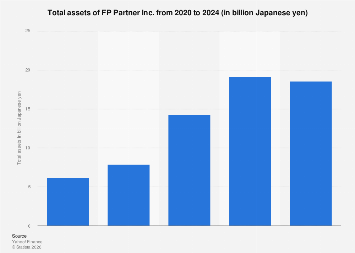
FP Partner Inc.’s total assets for 2024 are attracting significant attention from market analysts and investors, as the company navigates a complex global economic landscape. While specific, granular figures for the current fiscal year are subject to proprietary data access, industry benchmarks and preceding financial disclosures provide a lens through which to assess the company’s asset base and its implications for future performance. The sheer volume of assets held by a corporation is a fundamental indicator of its scale, operational capacity, and financial strength, serving as a crucial metric in evaluating its competitive standing and strategic positioning.
Understanding a company’s asset base is paramount to comprehending its financial health and operational capabilities. Assets, broadly defined, encompass everything a company owns that has economic value and can be used to generate future benefits. This includes tangible items such as property, plant, and equipment (PP&E), as well as intangible assets like patents, trademarks, and goodwill. Financial assets, such as cash, marketable securities, and accounts receivable, also form a significant portion of many corporations’ balance sheets. The composition and growth of these assets are closely watched by stakeholders to gauge management’s effectiveness in capital allocation, operational efficiency, and long-term value creation.
FP Partner Inc., like many major corporations, operates within a dynamic environment shaped by fluctuating interest rates, evolving consumer demand, geopolitical shifts, and technological advancements. These external forces invariably influence asset valuations and the strategic decisions companies make regarding asset acquisition, divestiture, and management. For instance, a rising interest rate environment can increase the cost of financing for asset-heavy industries, potentially impacting the pace of new capital expenditure. Conversely, technological disruption can render existing assets obsolete, necessitating strategic write-downs or significant investments in newer, more advanced technologies.
The valuation of total assets is not a static figure but rather a fluid representation of a company’s wealth at a specific point in time. Financial reporting standards, such as Generally Accepted Accounting Principles (GAAP) or International Financial Reporting Standards (IFRS), dictate how these assets are recognized, measured, and disclosed. The methodologies employed, such as historical cost, fair value, or depreciated cost, can lead to variations in reported asset values, underscoring the importance of understanding the accounting principles applied. Furthermore, the classification of assets into current (expected to be converted to cash within one year) and non-current (long-term) provides insights into a company’s liquidity and its investment horizon.
For FP Partner Inc., an analysis of its asset portfolio in 2024 would necessitate a deep dive into the components of its balance sheet. Are its assets primarily composed of long-term investments in infrastructure, reflecting a commitment to stable, foundational operations? Or is there a significant allocation towards research and development (R&D), intellectual property, or digital assets, signaling a focus on innovation and future growth engines? The proportion of tangible versus intangible assets can also reveal strategic priorities. A company heavily reliant on physical assets might be in a more mature, capital-intensive sector, while one with a robust intangible asset base could be positioned in knowledge-based industries with higher growth potential.
Market data and expert analyses often seek to contextualize a company’s asset growth against its peers and broader industry trends. For example, if the technology sector is experiencing a surge in investment in AI and cloud computing, a tech company like FP Partner Inc. would be expected to show a corresponding increase in its relevant asset categories. Similarly, in the real estate sector, rising property values might inflate the reported asset values of companies with substantial property holdings, even if their operational performance hasn’t changed dramatically. Global comparisons are also vital. How does FP Partner Inc.’s asset base compare to similar companies operating in different geographic regions? Currency fluctuations, differing regulatory environments, and varying levels of economic development can all influence asset values and their growth rates.
The economic impact of a company’s asset base extends beyond its own financial statements. A large asset base often signifies a significant employer, a substantial consumer of resources, and a key player in supply chains. For instance, a manufacturing company with extensive factory and equipment assets will employ a considerable workforce, purchase raw materials, and contribute to the economic activity of the regions where its facilities are located. The strategic deployment and management of these assets can therefore have ripple effects throughout the economy, influencing job creation, innovation diffusion, and overall economic output.
Furthermore, the composition of a company’s assets can indicate its risk profile. A high proportion of illiquid assets, such as specialized machinery or long-term development projects, might present liquidity challenges during economic downturns. Conversely, a portfolio heavily weighted towards cash and marketable securities offers greater financial flexibility but might indicate a less aggressive growth strategy. Investors often analyze the asset turnover ratio – a measure of how efficiently a company uses its assets to generate sales – to assess operational effectiveness. A rising asset turnover ratio, coupled with growing assets, would be a strong positive signal.
In the context of FP Partner Inc. in 2024, understanding its total assets would involve more than just a headline number. It would require dissecting the nature of those assets, their growth trajectory, their valuation methodologies, and their strategic implications. Are these assets being deployed to capture emerging market opportunities, enhance operational efficiency, or bolster competitive moats? The answers to these questions are critical for any party seeking to gain a comprehensive understanding of the company’s present strength and its prospects for sustained success in the intricate global marketplace. The financial performance and strategic direction of FP Partner Inc. in the coming years will be intrinsically linked to how effectively it manages and leverages its substantial asset base.