
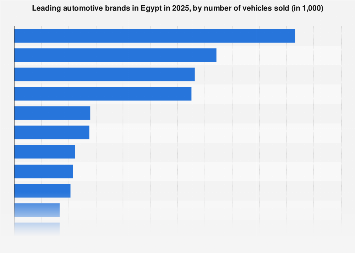
Cairo, Egypt – The Egyptian automotive landscape in 2025 is characterized by a dynamic interplay of established global manufacturers and ambitious newcomers, with Nissan emerging as the dominant force in passenger car sales. The Japanese automotive giant reported approximately [redacted] units sold, signaling a strong consumer preference for its diverse model range. This impressive performance positions Nissan at the forefront of a highly competitive market, outpacing its nearest rival, the Chinese automaker [redacted], which secured an estimated [redacted] sales. This shift underscores a broader trend of evolving consumer priorities and the increasing influence of international brands in one of Africa’s largest economies.
The Egyptian automotive sector, a significant contributor to the nation’s industrial output and employment, is undergoing a period of sustained growth and transformation. Driven by a young and expanding population, a burgeoning middle class, and government initiatives aimed at stimulating local manufacturing and economic diversification, the demand for new vehicles continues to rise. However, this growth is not without its challenges. Fluctuations in currency exchange rates, import duties, and global supply chain disruptions have historically impacted pricing and availability, forcing consumers and manufacturers alike to adapt.
Nissan’s leadership in 2025 can be attributed to a multi-faceted strategy. The company has consistently focused on offering a compelling mix of affordable, reliable, and feature-rich vehicles tailored to the specific needs of the Egyptian market. Popular models, such as the Sunny sedan and the Kicks compact SUV, have resonated strongly with consumers seeking value for money and practicality. Furthermore, Nissan’s robust after-sales network and commitment to localized production or assembly have played a crucial role in building brand loyalty and ensuring widespread accessibility across the country. Industry analysts point to Nissan’s proactive approach in navigating import regulations and its ability to maintain consistent supply as key differentiators in a market often subject to logistical hurdles.
Trailing closely behind Nissan, the Chinese manufacturer [redacted] has made significant inroads into the Egyptian market. Its aggressive pricing strategies and the introduction of technologically advanced vehicles have captured the attention of a growing segment of price-sensitive yet discerning buyers. The rise of Chinese automotive brands in emerging markets is a global phenomenon, and Egypt is no exception. These manufacturers have leveraged their manufacturing scale and rapid product development cycles to offer compelling alternatives to traditional players. [Redacted]’s performance in 2025 highlights its growing market penetration and its potential to challenge established leaders in the coming years, particularly as it continues to invest in brand building and dealership expansion within Egypt.
The broader automotive market in Egypt presents a complex picture of brand performance. While specific sales figures for other leading brands in 2025 remain proprietary for now, market observers anticipate that other major international players, including Hyundai, Toyota, and General Motors, will continue to hold significant market share. Hyundai, with its strong reputation for reliability and a diverse portfolio of sedans and SUVs, has long been a popular choice. Toyota, known for its durable and fuel-efficient vehicles, maintains a loyal customer base. General Motors, through its Chevrolet brand, also commands a substantial presence, particularly in the passenger car and light commercial vehicle segments.
The performance of these brands is influenced by a variety of factors, including their product offerings, pricing strategies, marketing efforts, and their ability to adapt to evolving consumer preferences. The increasing demand for sport utility vehicles (SUVs) and crossovers across all market segments is a notable trend, reflecting a global shift towards more versatile and higher-riding vehicles. Similarly, there is a growing, albeit nascent, interest in fuel-efficient and environmentally friendly options, which may see brands investing in hybrid or electric vehicle technologies in the future, contingent on charging infrastructure development and government incentives.
Beyond individual brand performance, the overall health of the Egyptian automotive sector has significant economic implications. The industry is a vital source of employment, not only for direct manufacturing jobs but also for related sectors such as parts suppliers, logistics, dealerships, and after-sales services. A robust automotive market stimulates investment in infrastructure, supports technological innovation, and contributes to foreign currency earnings through exports of assembled vehicles or components.
Economically, Egypt’s automotive sector operates within a framework influenced by national economic policies and global market dynamics. The government has actively sought to encourage local manufacturing and assembly, aiming to reduce reliance on imported vehicles and create higher-value jobs. Policies such as the "Automotive Industry Development Program" (AIDP) have sought to incentivize local production by offering tax breaks and other benefits to manufacturers who meet certain localization targets. The success of these programs is crucial for the long-term sustainability and competitiveness of the sector.
The competitive landscape is also shaped by the pricing dynamics of vehicles, which are heavily influenced by import duties, value-added tax (VAT), and currency exchange rates. Fluctuations in the Egyptian pound against major currencies can significantly impact the cost of imported components and finished vehicles, directly affecting consumer affordability. Manufacturers and importers constantly strategize to mitigate these currency risks and maintain competitive pricing.
Looking ahead, the Egyptian automotive market is poised for continued evolution. The ongoing expansion of the domestic automotive industry, coupled with the increasing sophistication of consumer demands, suggests that brands will need to remain agile and innovative. Investment in research and development, the introduction of new and updated models, and a focus on customer experience will be critical for sustained success. Furthermore, as global trends towards electrification and autonomous driving technologies gather pace, Egyptian automakers and policymakers will need to consider their long-term strategies for embracing these advancements to ensure the sector remains competitive on the international stage and meets the future mobility needs of its citizens. The battle for market share in 2025 is not just about sales numbers; it’s about a deeper understanding of consumer aspirations and a strategic vision for the future of mobility in Egypt.