

The structural unwinding of China’s real estate market has entered a more precarious phase, as leading credit analysts warn that the correction is proving deeper and more persistent than previously modeled. S&P Global Ratings has significantly downgraded its outlook for the country’s property sales for 2026, signaling that the "vicious cycle" of falling prices and eroding consumer confidence has yet to find a floor. This revision, coming just two months into the new year, underscores the immense difficulty Beijing faces in stabilizing a sector that was once the primary engine of national economic growth.
According to the latest report from S&P, primary real estate sales in China are now projected to contract by 10% to 14% throughout 2026. This is a stark departure from the firm’s previous estimate, issued in October, which anticipated a more moderate decline of 5% to 8%. The speed and scale of this revision highlight a market where traditional demand drivers have stalled, leaving a massive overhang of unsold inventory that continues to exert downward pressure on valuations. Analysts at the firm noted that the downturn is now so deeply entrenched that private sector mechanisms are no longer sufficient to spark a recovery; instead, they argue that only large-scale government intervention to absorb excess supply can break the current deadlock.
The collapse of the Chinese property market is not a sudden event but the culmination of a multi-year deleveraging campaign. At its peak in 2021, annual property sales reached a staggering 18.2 trillion yuan ($2.5 trillion), accounting for more than a quarter of China’s total economic output. By the end of 2025, that volume had plummeted to approximately 8.4 trillion yuan, representing a more than 50% decline in just four years. This contraction has wiped out trillions in paper wealth and fundamentally altered the investment landscape for Chinese households, who historically held as much as 70% of their assets in real estate.
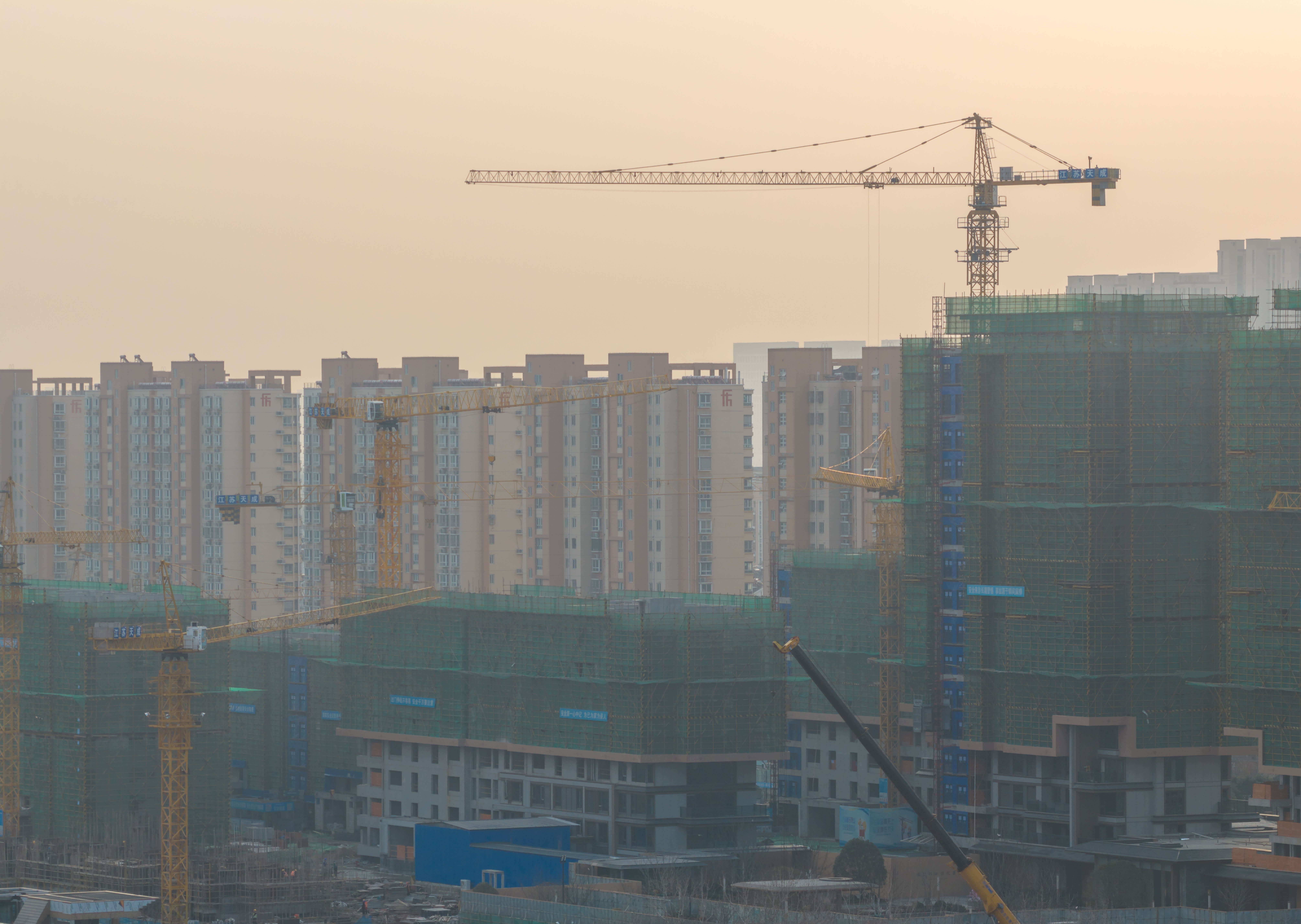
One of the most persistent hurdles to a recovery is the sheer volume of unsold housing stock. Despite the sustained slump in sales, construction has not halted at a pace sufficient to rebalance the market. The industry is now entering its sixth consecutive year of rising inventory for completed, unsold new housing units. This glut is a direct result of developers’ desperate need for cash flow; many have continued to build in the hopes of generating liquidity through sales, even as the pool of willing buyers shrinks. S&P analysts expect this oversupply to force prices down by an additional 2% to 4% this year, following a similar contraction in 2025.

The psychological impact of falling prices cannot be overstated in the context of the Chinese economy. For decades, property was viewed as a "one-way bet"—a guaranteed source of wealth accumulation. As prices continue to slide, the negative wealth effect is curbing broader consumer spending, creating a deflationary feedback loop. When homeowners see the value of their primary asset diminish, they become increasingly risk-averse, further dampening the very demand needed to stabilize the market.
Perhaps the most alarming development for policymakers is the loss of resilience in China’s "Tier 1" cities. Historically, the premium markets of Beijing, Shanghai, Guangzhou, and Shenzhen were considered insulated from the broader national downturn due to their high demand and limited supply. However, that insulation appears to have worn thin. S&P noted that price declines in these major hubs worsened significantly in the final quarter of 2025. Beijing, Guangzhou, and Shenzhen all recorded price drops of at least 3% last year. Shanghai remained the lone outlier among the top-tier cities, posting a 5.7% increase in 2025, but the overall trend suggests that even the most affluent urban centers are now vulnerable to the national malaise.
The ongoing crisis is also placing renewed strain on the credit profiles of China’s remaining property developers. While the initial wave of defaults in 2021 and 2022 claimed giants like Evergrande, the current environment is threatening even those companies that were previously considered "survivors." S&P warned that if sales figures fall 10 percentage points below their current base-case scenario over the next two years, nearly half of the Chinese developers currently rated by the firm could face downward rating actions.
Even industry stalwarts like China Vanke, which for years was held up as a model of fiscal prudence, are feeling the heat. Late last year, Vanke sought to delay repayments on some of its debt obligations, a move that sent shockwaves through the credit markets and signaled that the liquidity crunch is moving up the quality ladder. As borrowing costs rise and access to traditional financing remains restricted, the ability of developers to complete existing projects—a key requirement for maintaining social stability—is being called into question.
Beijing’s response to the crisis has been characterized by many economists as cautious and incremental. While the government has introduced "white lists" to encourage bank lending to specific housing projects and lowered mortgage rates, these measures have largely failed to stimulate a broad-based recovery. The S&P report suggests that the state may eventually need to step in as a "buyer of last resort," purchasing unsold inventory to convert into affordable housing. While some pilot programs of this nature have been launched, they remain "piecemeal" in the eyes of market observers and lack the scale necessary to move the needle on a national level.

The reluctance to launch a massive, property-focused stimulus package reflects a strategic shift in Beijing’s economic priorities. Under the leadership of President Xi Jinping, China is attempting to pivot its economy away from a debt-fueled real estate model toward "high-quality growth" driven by advanced technology, green energy, and domestic manufacturing. The goal is to replace the "old three" drivers (property, infrastructure, and low-end manufacturing) with the "new three" (electric vehicles, lithium-ion batteries, and renewable energy products).
However, evidence is mounting that this transition will be long and painful. Recent analysis from the Rhodium Group suggests that China’s push into high-tech sectors is currently not large enough to offset the massive drag created by the property slump. The real estate sector’s contribution to GDP is so significant that even double-digit growth in the EV and semiconductor industries cannot fully compensate for its decline. This leaves the Chinese economy increasingly reliant on exports to maintain growth targets—a strategy that is heightening trade tensions with the United States, the European Union, and other major trading partners who are wary of a flood of cheap Chinese goods.
As top policymakers prepare for the upcoming parliamentary meetings, where economic growth targets for the year will be formalized, the property sector remains the proverbial elephant in the room. The government faces a difficult balancing act: it must prevent a systemic financial collapse and social unrest stemming from uncompleted homes, while simultaneously avoiding a return to the speculative property bubbles of the past.
The global implications of a prolonged Chinese property slump are profound. China is the world’s largest consumer of industrial metals, including iron ore and copper, much of which is used in construction. A sustained downturn in building activity will continue to weigh on global commodity prices and impact the economies of major exporters like Australia and Brazil. Furthermore, the deflationary pressure emanating from China’s cooling domestic market could have ripple effects on global inflation dynamics, as Chinese firms look to export their way out of a domestic slowdown.
In conclusion, the updated forecasts from S&P Global Ratings provide a sobering reality check for those hoping for a quick turnaround in the world’s second-largest economy. The "vicious cycle" of the property market appears to be gaining momentum, fueled by an inventory glut that shows no signs of clearing and a consumer base that has lost faith in the long-term value of real estate. Without a more decisive and large-scale intervention from the central government, the property sector is likely to remain a significant headwind for China’s economic ambitions for years to come.