

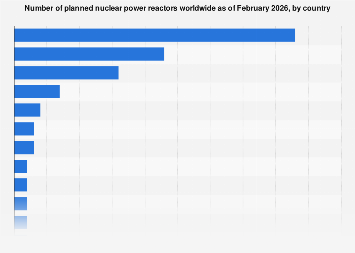
As of February 2026, China stands as the undisputed leader in the global ambition to expand nuclear power capacity, with a commanding presence in planned reactor construction. The People’s Republic is set to embark on the development of 43 new nuclear units, representing more than a third of the 115 planned reactors worldwide. This ambitious undertaking underscores China’s strategic pivot towards nuclear energy as a cornerstone of its future power generation mix, aiming to balance growing energy demands with its climate commitments. Following closely behind China, Russia has outlined plans for 23 new nuclear reactors, indicating a sustained commitment to nuclear technology within its energy strategy.
Nuclear reactors are sophisticated devices designed to initiate and meticulously control nuclear chain reactions. The immense thermal energy released from these controlled reactions is harnessed to heat a working fluid, typically water. This heated fluid then drives turbines, a fundamental process that generates electricity for a wide array of applications, from powering entire nations to propelling large vessels. Beyond electricity generation, the controlled fission process also plays a critical role in the production of isotopes essential for medical diagnostics and treatments, as well as for various industrial applications. Furthermore, nuclear technology forms the basis for the development of nuclear weapons, a sensitive geopolitical dimension.
The global nuclear industry is characterized by significant variations in construction timelines. Data compiled for reactors completed between 2014 and 2023 reveals a worldwide average construction period of approximately ten years. This figure, however, masks considerable disparities across different regions and projects. China, demonstrating remarkable efficiency, has managed to complete reactor projects within an average of six years. In stark contrast, Slovakia recorded the longest construction time during this period, with some projects stretching to an extraordinary 38 years, highlighting the complex regulatory, technical, and logistical challenges that can plague large-scale infrastructure developments. These variations are influenced by factors such as regulatory frameworks, supply chain maturity, labor availability, and the specific technological choices made for each project.
While China and Russia are at the forefront of planning new nuclear facilities, the United States currently boasts the largest operational nuclear fleet. As of February 2026, the U.S. reported 94 nuclear reactors actively generating electricity, underscoring its long-standing reliance on nuclear power. This established infrastructure provides a stable and carbon-free baseload power source for the American grid. However, when focusing on reactors currently under active construction, China again emerges as the leader, with 37 units in various stages of development. This intense construction activity signals China’s immediate focus on augmenting its nuclear power generation capacity in the near term, supplementing its ambitious long-term planning.
The global expansion of nuclear power is being driven by a complex interplay of factors. Foremost among these is the urgent need to decarbonize energy systems to combat climate change. Nuclear power plants produce virtually no greenhouse gas emissions during operation, making them an attractive option for countries seeking to reduce their carbon footprint while maintaining energy security. This is particularly relevant for rapidly developing economies like China, which face escalating energy demands but are also under international pressure to meet ambitious climate targets.
Furthermore, energy security considerations are prompting a re-evaluation of nuclear power’s role. Geopolitical instability and volatile fossil fuel prices have underscored the importance of diverse and reliable energy sources. Nuclear power, with its long operational lifespans and domestic fuel sources for many nations, can offer a degree of energy independence and price stability. Countries are increasingly looking to nuclear energy to supplement intermittent renewable sources like solar and wind, providing a consistent and dispatchable power supply that is crucial for grid stability.
The economic implications of this global nuclear renaissance are substantial. The construction of new nuclear power plants represents multi-billion dollar investments, creating significant employment opportunities in engineering, manufacturing, construction, and skilled trades. The long operational life of nuclear facilities also provides sustained economic activity through maintenance, fuel management, and eventual decommissioning. However, the high upfront capital costs and lengthy construction periods associated with nuclear projects remain a significant financial hurdle, often requiring substantial government support and innovative financing models.
Market analysts are closely observing the trends in reactor technologies. There is a growing interest in Small Modular Reactors (SMRs), which promise lower upfront costs, shorter construction times, and enhanced safety features. While most of the currently planned large-scale reactors are traditional in design, the development and potential deployment of SMRs could further reshape the future landscape of nuclear power. Their modularity and scalability could make nuclear energy more accessible to a wider range of countries and applications, including remote communities and industrial processes.
Globally, the debate surrounding nuclear power continues to be multifaceted. While proponents highlight its low-carbon credentials and reliability, critics raise concerns about nuclear waste disposal, proliferation risks, and the potential for accidents. Public perception and political will remain critical determinants of nuclear energy’s trajectory in many nations. However, the undeniable urgency of the climate crisis and the pursuit of energy security appear to be creating a renewed impetus for nuclear power, particularly in Asia, where ambitious expansion plans are most pronounced. The coming decade will be pivotal in determining whether these planned reactors translate into a significant increase in global nuclear power generation and its contribution to a sustainable energy future.