

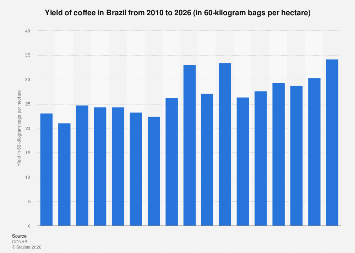
Brazil’s coffee sector is projected to experience a notable increase in yield in 2026, with forecasts indicating an average output of approximately [REDACTED] bags per hectare. This represents a substantial rise from the preceding year’s yield of [REDACTED] bags per hectare. The anticipated surge in productivity is expected to contribute to a total production volume of nearly [REDACTED] million bags for the year. This projection underscores the inherent cyclical nature of coffee cultivation, a phenomenon characterized by a biennial pattern of high-yield years followed by periods of comparatively lower production.
This forecast for 2026 arrives at a critical juncture for the global coffee market, which is highly dependent on Brazilian output. As the world’s largest coffee producer and exporter, any significant fluctuation in Brazil’s harvest has ripple effects across international supply chains and commodity prices. The biennial yield effect, often referred to as the "on-year" and "off-year" cycle, is a fundamental aspect of Arabica coffee cultivation, influencing crop management strategies, investment decisions, and market speculation among producers, traders, and consumers alike. Understanding these patterns is crucial for stakeholders seeking to navigate the complexities of the coffee commodity market.
The biennial bearing habit of coffee plants, particularly the Arabica variety which dominates Brazilian production, is primarily driven by the physiological demands placed on the plant during a heavy fruiting year. Following an abundant harvest, the plant depletes its nutrient reserves and requires a period of rest and recovery to replenish these resources. This natural cycle dictates that a year of exceptionally high yields is typically followed by one with reduced output, as the plant focuses on vegetative growth and the development of future flower buds rather than fruit production. While Robusta varieties can exhibit a less pronounced biennial effect, the overall output of Brazil is heavily influenced by its dominant Arabica crop.
Several factors contribute to the variability and overall trend in Brazilian coffee yields. Climatic conditions, including rainfall patterns, temperature fluctuations, and the incidence of frost or drought, play a pivotal role. For instance, favorable weather during the flowering and fruit development stages can significantly boost yield, while adverse conditions can lead to substantial losses. Furthermore, agricultural practices such as fertilization, pest and disease management, and pruning techniques employed by farmers can either mitigate the impact of natural cycles or enhance the plant’s productive capacity.
In recent years, the Brazilian coffee industry has also been investing in technological advancements and improved farming methods to enhance efficiency and resilience. This includes the adoption of precision agriculture, the development of more disease-resistant coffee varieties, and improved irrigation systems, particularly in regions susceptible to drought. These initiatives aim to not only increase yields but also to stabilize production in the face of increasingly unpredictable weather patterns attributed to climate change.
The economic implications of Brazil’s coffee production are far-reaching. The coffee sector is a significant contributor to the country’s Gross Domestic Product (GDP) and a vital source of employment, particularly in rural areas. Exports of coffee are a crucial component of Brazil’s trade balance, generating substantial foreign exchange earnings. Therefore, a robust harvest in 2026 would not only benefit Brazilian farmers and the national economy but also contribute to global coffee supply stability, potentially moderating price increases for consumers worldwide.
Looking at global context, Brazil’s dominance in coffee production is unparalleled. The country consistently accounts for over a third of the world’s total coffee output. Other major coffee-producing nations, such as Vietnam (primarily Robusta), Colombia (Arabica), Indonesia, and Ethiopia, also play significant roles in the global market. However, Brazil’s sheer scale means that its production trends are a primary determinant of global supply dynamics. Any disruption to Brazil’s harvest, whether due to weather, disease, or policy changes, can trigger significant volatility in international coffee prices.
The forecast for 2026 suggests an "on-year" for Brazilian coffee production, following a period of lower yield in the preceding year. This cyclical pattern is a well-understood phenomenon within the agricultural economics of coffee. The intensity of the "on-year" will depend on a confluence of factors, including the effectiveness of management practices implemented after the previous harvest and the prevailing weather conditions during the critical growth phases. Experts closely monitor weather forecasts and crop development reports from Brazil throughout the year to refine production estimates.
The estimated production volume of [REDACTED] million bags in 2026 is a substantial figure that will likely influence market sentiment and pricing strategies for the upcoming crop year. Traders and commodity analysts will be scrutinizing this figure against historical averages and other market indicators. The availability of this volume is critical for meeting the steady global demand for coffee, which has been on an upward trajectory, driven by growing populations and expanding middle classes in emerging markets, as well as a sustained consumer preference for coffee in established markets.
The biennial effect is not solely a biological phenomenon; it also has significant economic implications. Farmers often plan their investments and expenditures based on anticipated yields. A strong "on-year" can provide much-needed revenue to reinvest in farm infrastructure, technology, and sustainable practices. Conversely, an extended period of low yields can strain farm finances and lead to reduced investment, potentially impacting long-term productivity. Government policies, agricultural credit availability, and international commodity prices all interact with this natural cycle to shape the economic landscape for Brazilian coffee farmers.
Moreover, the quality of the coffee produced is as crucial as the quantity. While the 2026 forecast focuses on yield, the underlying factors influencing this yield also impact the bean’s quality. Optimal weather conditions, balanced nutrition, and timely harvesting contribute to the development of high-quality beans, which command premium prices in the specialty coffee market. The interplay between yield and quality is a constant consideration for producers aiming for both volume and value.
In conclusion, the projected substantial increase in Brazil’s coffee yield for 2026, reaching an estimated [REDACTED] bags per hectare and contributing to a total production of nearly [REDACTED] million bags, highlights the critical role of this agricultural giant in the global coffee market. This forecast, underpinned by the inherent biennial bearing cycle of coffee plants and influenced by a complex interplay of climatic, agricultural, and economic factors, signals a period of robust supply. Stakeholders across the coffee value chain will be closely observing the unfolding harvest, as Brazil’s output continues to be a cornerstone of global coffee availability and price stability. The industry’s ongoing efforts to enhance productivity and resilience through technological adoption and sustainable practices are vital for navigating future challenges and capitalizing on the enduring global demand for this ubiquitous beverage.