

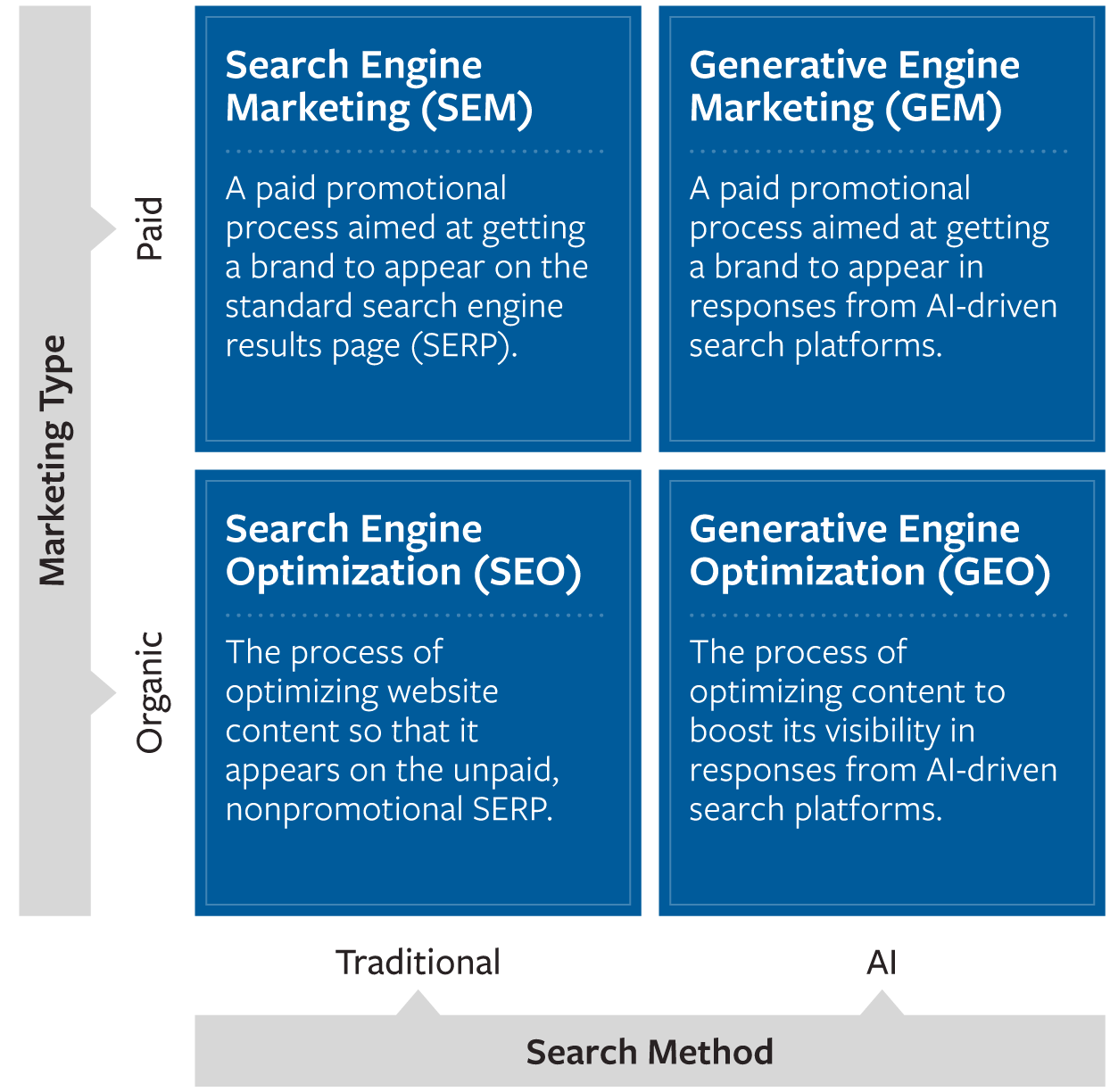
The digital landscape is undergoing a profound metamorphosis, driven by the rapid proliferation of generative artificial intelligence (GenAI) platforms that are fundamentally reshaping how consumers discover information and interact with brands online. This paradigm shift has caught many businesses off guard, with even established market leaders now facing the unprecedented risk of slipping into algorithmic obscurity. The very foundation of online visibility, traditionally anchored in search engine optimization (SEO) and paid advertising, is being redefined, presenting both immense opportunities for agile innovators and existential threats to those clinging to outdated strategies.
At the heart of this transformation lies the evolution of the search experience itself. Where conventional search engines primarily served as navigational tools, offering a list of links for users to sift through, GenAI-driven platforms like ChatGPT, Google’s Search Generative Experience (SGE), Microsoft Copilot, and Perplexity AI provide synthesized, direct answers to complex queries. This shift from link aggregation to intelligent information synthesis means that a significant portion of user interactions now occur directly within the AI interface, often obviating the need to click through to an external website. This phenomenon, widely known as "zero-click search," dramatically alters the brand-consumer touchpoint, compressing the traditional marketing funnel and demanding a radical recalibration of digital presence strategies.
The economic stakes are monumental. The global digital advertising market, a significant portion of which is dedicated to search, is projected to exceed $700 billion by 2027. Within this colossal market, search visibility directly translates into market share, customer acquisition, and revenue generation. Brands that fail to adapt risk not only declining organic traffic but also erosion of brand equity as competitors, even smaller and more niche players, gain preferential algorithmic positioning. Recent data indicates that well over half of all online searches now result in no clicks, with users finding their answers directly on the search results page or within AI summaries. This trend is set to accelerate, forcing companies to confront a new reality where the battle for attention is fought not on page one, but within the AI’s distilled response.
Early warning signs have already surfaced across diverse industries. Consider the experience of a prominent U.S. fitness brand, a major franchisee within a globally recognized chain, which boasts substantial investments in traditional media, digital marketing, and sophisticated SEO. A recent internal audit of their visibility on leading AI platforms yielded a startling discovery: a small, local fitness studio operating in a specific neighborhood was consistently outranking them in AI-generated recommendations for relevant queries. This was a stark wake-up call, demonstrating that historical market dominance and hefty marketing budgets do not automatically translate into relevance in the AI era. Similarly, a senior executive at a top-tier financial services firm, a market leader by any traditional metric, observed a consumer bypass Google entirely, opting instead for a GenAI tool to research investment options. To their dismay, the AI’s recommendations favored a much smaller, specialized firm, completely omitting their own well-established institution despite its expansive market share and superior investment in conventional marketing channels.

These anecdotes underscore a critical shift in how AI algorithms "understand" and prioritize information. Unlike keyword-matching algorithms, GenAI models employ advanced natural language processing to grasp the semantic intent and contextual nuances of a query. They don’t just find keywords; they synthesize information from various sources to construct a coherent, direct answer. This means that brands must move beyond mere keyword stuffing and superficial content. Instead, they need to cultivate deep, authoritative, and contextually rich content that AI models can readily interpret and trust as a definitive source of truth. The opaque nature of these evolving algorithms, often described as "black boxes," presents a formidable challenge, requiring continuous experimentation and sophisticated analytics to decode.
To navigate this complex environment, businesses must adopt an "Information Search Marketing" framework, re-evaluating their resource allocation and strategic priorities. The focus shifts from simply optimizing for search engine crawlers to becoming a credible and easily digestible source of information for AI models. This necessitates a multi-pronged approach:
Firstly, Content Strategy Reimagined: The era of shallow, keyword-dense content is over. Brands must invest in creating comprehensive, expert-level content that thoroughly addresses user queries. This means developing thought leadership pieces, in-depth guides, research reports, and educational resources that establish the brand as an undeniable authority in its domain. The content must be structured logically, using clear headings, bullet points, and summaries, making it easy for AI models to extract key information and present it succinctly. Furthermore, embracing diverse content formats – including video, infographics, and interactive tools – can enhance discoverability, as AI models increasingly draw from multimedia sources.
Secondly, Building Algorithmic Trust and Authority: GenAI platforms prioritize sources deemed trustworthy and authoritative. This concept, often encapsulated by Google’s E-A-T (Expertise, Authoritativeness, Trustworthiness) guidelines, is more critical than ever. Brands must actively demonstrate their credentials through credible author profiles, academic citations, endorsements from industry experts, and positive user reviews. Establishing a robust network of reputable backlinks from high-authority sites continues to signal credibility to algorithms, but the emphasis shifts to genuine, contextually relevant citations rather than mere link volume. For specialized industries, this might mean cultivating relationships with academic institutions or professional bodies whose content is frequently referenced by AI.
Thirdly, Technical Optimization for the AI Era: Beyond traditional technical SEO, brands need to consider how their data is structured and presented to AI models. Implementing schema markup and structured data is paramount, as it provides explicit semantic meaning to content, making it easier for AI to understand and categorize. Brands should also explore opportunities for API integration and data feeds, allowing AI platforms direct access to their product catalogs, service information, and other proprietary data in a machine-readable format. Ensuring a fast, mobile-first website experience remains crucial, as AI models increasingly factor user experience signals into their ranking algorithms. The advent of voice search, often powered by GenAI, also demands optimization for natural language queries and conversational interfaces.

Fourthly, Strategic Resource Reallocation: Marketing budgets, traditionally allocated to PPC campaigns and conventional SEO, must be re-evaluated. Significant investment is now required in AI-specific content creation, data science capabilities, and advanced analytics tools to track AI visibility and engagement. This may involve hiring data scientists and AI specialists, or partnering with agencies proficient in AI optimization. Furthermore, brands should explore direct partnerships with AI developers and platforms, seeking opportunities to become preferred data sources or to integrate their offerings directly into AI-generated recommendations, albeit with careful consideration of transparency and ethical guidelines.
Finally, Agility and Niche Opportunities: While established brands grapple with legacy systems and traditional mindsets, smaller, more agile companies have a unique opportunity. By focusing on hyper-niche content, cultivating deep expertise in a specific domain, and rapidly adapting their content strategies, they can carve out significant visibility in AI-driven search, even outperforming larger competitors in targeted queries. Their ability to iterate quickly and experiment with new AI optimization techniques can level the playing field, offering a new channel for market penetration. Larger brands, in turn, must leverage their existing brand equity and extensive content libraries, ensuring these assets are refactored and optimized for AI consumption.
The transition to an AI-first search environment is not a fleeting trend but a fundamental recalibration of the digital ecosystem. For brands globally, the imperative is clear: embrace proactive adaptation or risk irrelevance. Continuous monitoring of AI algorithm updates, experimentation with new content formats, investment in advanced data analytics, and fostering cross-functional collaboration between marketing, IT, and product development are no longer optional but essential for sustained visibility and competitive advantage in this new, algorithmically governed era of discovery.