


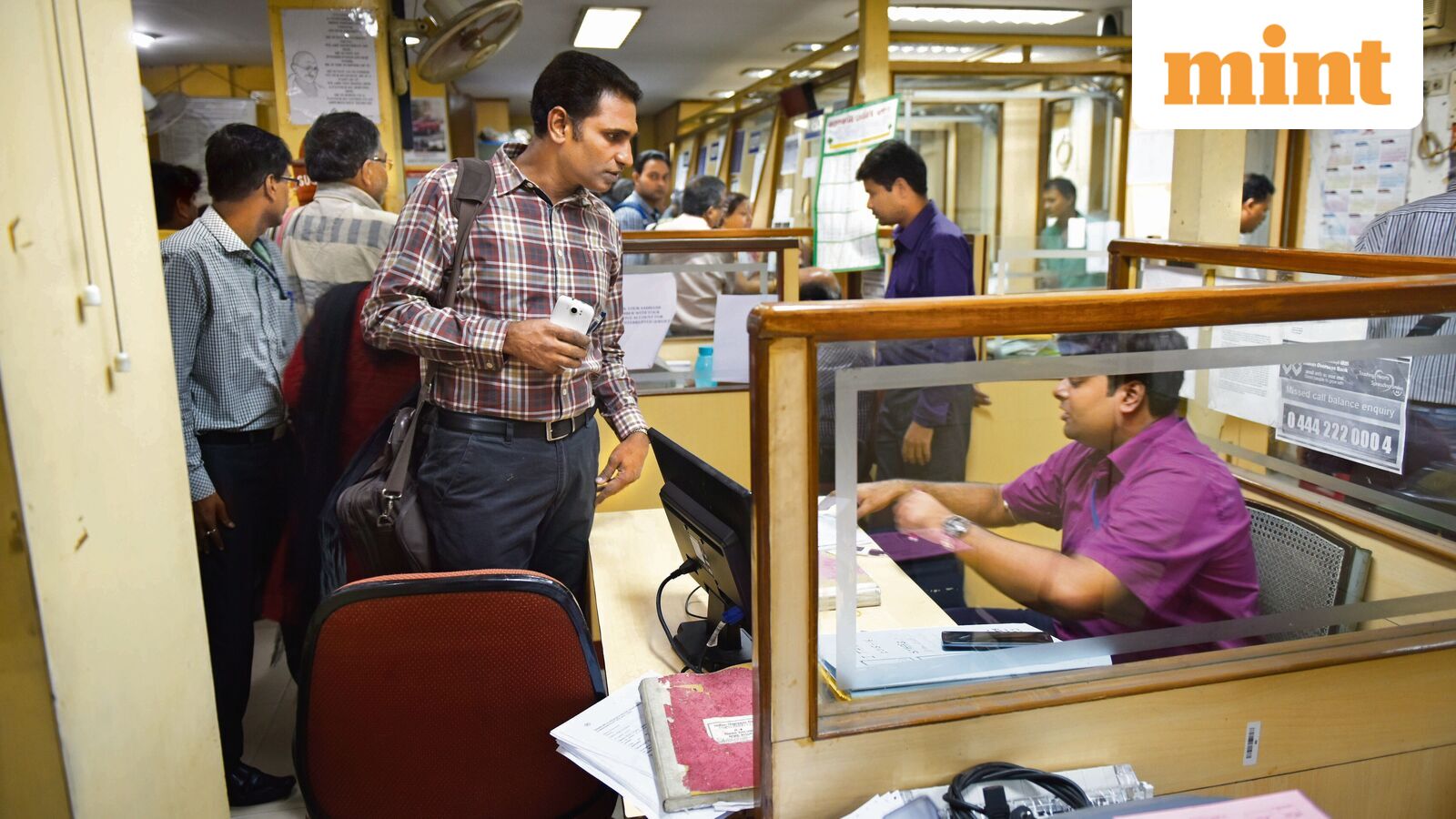
India’s expansive banking sector is bracing for significant operational disruptions as multiple prominent employee unions have issued a nationwide strike call for February 12, 2026. This industrial action, spearheaded by powerful bodies such as the All India Bank Employees’ Association (AIBEA), the All India Bank Officers’ Association (AIBOA), and the Bank Employees Federation of India (BEFI), under the broader umbrella of the United Forum of Bank Unions (UFBU), signals a deepening schism between financial sector employees and policymakers over critical issues of labour welfare and economic policy. While public sector lenders like Bank of Baroda have formally alerted stock exchanges to potential service interruptions, the strike’s ripple effects are anticipated to extend across the nation’s financial arteries, impacting millions of customers and a multitude of businesses.
At the heart of the impending strike are two central demands that underscore the evolving landscape of labour relations in a rapidly modernising economy. Firstly, unions are pressing for the implementation of a five-day work week across all public sector banks, a move that would grant employees all Saturdays off, in contrast to the current system where only the second and fourth Saturdays are holidays. This demand, which reportedly found consensus during the 12th Bipartite Settlement signed with the Indian Banks’ Association (IBA) in March 2024, awaits crucial government notification to become effective. Secondly, and perhaps more contentious, is the call for a complete rollback of the four new Labour Codes introduced by the central government. These codes, which aim to consolidate and streamline 29 existing labour laws, are viewed by the unions as detrimental to worker rights, representing "increasing attacks on the working class" and threatening to dilute hard-won protections. This latter demand has garnered support from over ten Central Trade Unions (CTUs) nationwide, highlighting a broader discontent with the direction of labour reforms.
The push for a five-day work week in banking is not merely a request for more leisure; it reflects a global trend towards enhanced work-life balance and improved employee well-being. In many developed economies, a five-day work week is standard across most industries, including financial services. Proponents argue that it can lead to increased productivity during working hours, reduced stress, and better retention of talent in a competitive sector. For India’s banking employees, who often face demanding schedules, particularly during peak transaction periods and financial year-ends, the current system of alternating Saturday offs can lead to fatigue and burnout. While the IBA’s reported agreement signals an acknowledgment of these concerns from the employers’ side, the delay in government notification suggests a careful weighing of the economic implications, including potential impacts on customer service accessibility, operational costs, and the overall pace of financial inclusion initiatives, particularly in rural and semi-urban areas.
The controversy surrounding the four new Labour Codes – namely, the Code on Wages, the Industrial Relations Code, the Code on Social Security, and the Occupational Safety, Health and Working Conditions Code – represents a more profound ideological battle. The government’s stated objective behind these reforms is to simplify India’s complex labour regulatory framework, promote ease of doing business, attract investment, and formalize employment. However, trade unions argue that these codes systematically weaken collective bargaining power, make it easier for employers to hire and fire workers, and dilute social security benefits, thereby eroding fundamental labour rights that have been established over decades. For the banking sector, specific concerns might revolve around job security, the ease of contractualisation, and the scope of union activities, particularly in an era where technology is reshaping traditional banking roles and requiring significant workforce adaptability. The unified stance of numerous trade unions against these codes indicates a widespread apprehension about their long-term impact on the Indian workforce, extending far beyond the financial services industry.

The economic ramifications of a nationwide banking strike, even for a single day, are substantial. India’s banking system, comprising over 120,000 branches and millions of employees, processes trillions of rupees in transactions daily, facilitates critical credit flows, and underpins the entire financial infrastructure. A strike can bring to a halt essential services such such as cheque clearing, loan disbursements, treasury operations, and foreign exchange transactions. While digital payment platforms like UPI and internet banking have significantly mitigated the reliance on physical branches for routine transactions, a considerable segment of the population, particularly in semi-urban and rural areas, still depends on branch banking for complex services, cash withdrawals, and interactions with bank staff. Small and medium-sized enterprises (SMEs), often operating on tight liquidity cycles, are particularly vulnerable to disruptions in banking services, which can impact supply chains, payroll processing, and urgent business payments.
Market analysts and economists often point to such recurrent industrial actions as factors that can temper investor confidence in specific sectors or even the broader economy. While the immediate impact on stock markets might be contained if the strike is a one-off event, a pattern of unresolved labour disputes could signal underlying instability. For public sector banks, which dominate a significant portion of the Indian financial landscape, prolonged or frequent strikes can affect their operational efficiency, customer goodwill, and ultimately, their valuation. Conversely, private sector banks, whose employees are generally not part of these striking unions (such as HDFC Bank, ICICI Bank, IDFC First Bank, and Axis Bank), often leverage such situations to gain market share by ensuring uninterrupted services, highlighting a growing disparity in service delivery and labour relations within the sector. This bifurcation could accelerate the shift of customers and business towards private lenders, further intensifying competition.
Historically, India has a robust tradition of trade unionism, particularly in core sectors like banking, insurance, and public administration. The strength of umbrella bodies like UFBU, representing millions of employees and officers, has often been instrumental in negotiating better wages, benefits, and working conditions. However, the dynamics of labour relations are evolving. The rise of automation, digital banking, and a younger workforce with potentially different priorities poses new challenges and opportunities for unions. The January 27 strike, observed by UFBU and preceding three national holidays, served as a potent reminder of the unions’ capacity to disrupt, underscoring the strategic timing of their actions to maximize impact. Such coordinated strikes underscore the collective bargaining power that unions continue to wield, even as the formal economy grapples with the imperatives of technological advancement and global competitiveness.
Looking ahead, the resolution of these demands will be critical for fostering stability within India’s financial ecosystem. For the five-day work week, the ball lies squarely in the government’s court, requiring a policy decision that balances employee welfare with broader economic considerations. For the Labour Codes, the path to resolution is more complex, potentially requiring further dialogue, amendments, or even judicial review to address the profound concerns raised by the labour movement. The February 12 strike, therefore, is more than just a day of halted banking services; it is a flashpoint in the ongoing debate about the future of work in India, the balance between economic reforms and social protections, and the evolving role of organized labour in shaping national policy. The outcome of these negotiations and the government’s response will undoubtedly set precedents for labour relations across other vital sectors of the Indian economy, influencing both the welfare of millions of workers and the nation’s trajectory towards its ambitious economic goals.