


The global technological landscape is currently witnessing a capital expenditure cycle of unprecedented proportions, as Alphabet Inc. maneuvers to maintain its dominance in an era increasingly defined by generative artificial intelligence. In a series of recent strategic moves, the parent company of Google has returned to the debt markets to secure billions in funding, even as it issues sobering warnings regarding the long-term viability of its current business model and the inherent risks of its massive infrastructure build-out. This dual-track strategy—aggressive financial expansion coupled with heightened risk disclosure—highlights the precarious balancing act facing Big Tech as the industry transitions from traditional software and search to a compute-heavy AI paradigm.
To fuel its ambitious AI roadmap, Alphabet is moving to raise approximately $20 billion through a multi-tranche U.S. dollar bond sale. According to market insiders, the offering has seen overwhelming demand, reportedly becoming five times oversubscribed. This surge in investor interest underscores a continued confidence in Alphabet’s balance sheet, despite the company’s rapidly mounting debt. Notably, the sale is expected to include a 100-year bond denominated in sterling, a rare financial instrument that signals a century-long bet by investors on the company’s institutional permanence. This latest capital raise follows a $25 billion bond sale in late 2025, a year that saw Alphabet’s long-term debt quadruple to $46.5 billion.
The primary driver behind this borrowing spree is a staggering projection for capital expenditure. Alphabet has signaled that its capex could reach as high as $185 billion this year, a figure that more than doubles its 2025 spending. This level of investment is not merely an incremental increase but a fundamental shift in the company’s capital allocation strategy. To put this into perspective, $185 billion exceeds the annual gross domestic product of many mid-sized nations and represents a significant portion of the total global investment in semiconductor and data center infrastructure.
However, the sheer scale of this investment has forced Alphabet to provide more granular disclosures regarding the potential pitfalls of the AI revolution. In its most recent annual financial report, the company highlighted a suite of new risks that could undermine its financial stability. Chief among these is the threat of "excess capacity." As Alphabet races to build out data centers and secure high-end GPUs, there is a lingering fear that the actual demand for AI services may not scale at the same rate as the infrastructure. If the "AI bubble" cools or if monetization strategies fail to keep pace with the cost of compute, Alphabet could find itself saddled with billions of dollars in depreciating hardware and vacant server space.

Furthermore, the operational complexity of this build-out is introducing new layers of counterparty risk. Alphabet has increasingly turned to third-party operators for leasing arrangements to meet the relentless demand for AI training and inference. The company noted in its SEC filing that these large-scale commercial agreements could increase liabilities and operational hurdles, particularly if vendors or counterparties fail to perform. This shift toward a more decentralized infrastructure model marks a departure from Google’s historical preference for owning and controlling its entire stack, from the fiber-optic cables to the server racks.
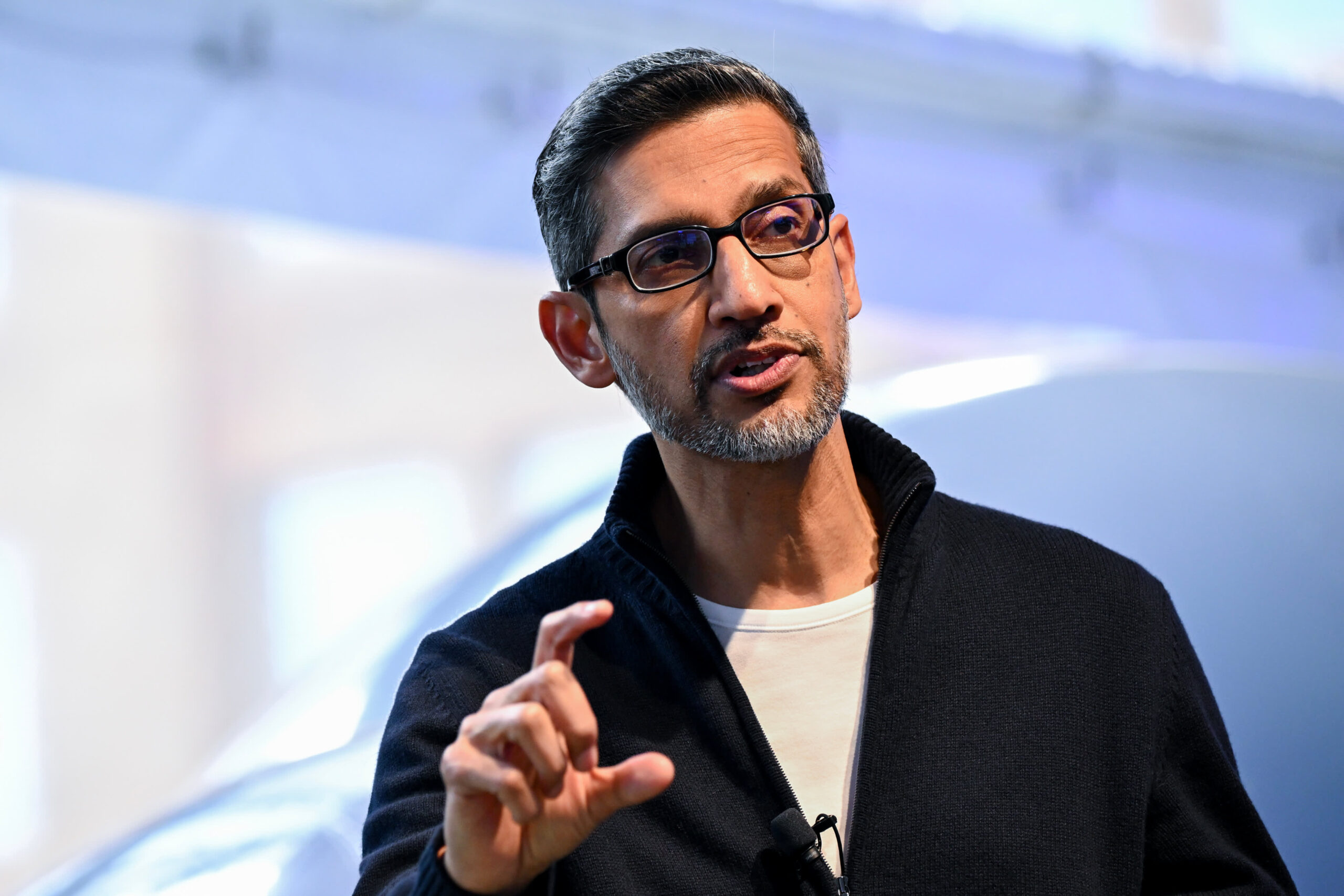
The logistical hurdles are equally daunting. During a recent earnings call, CEO Sundar Pichai was asked what issues occupy the minds of the executive team. His response was telling: "compute capacity." Pichai expanded on this by citing the critical constraints of land, power, and supply chains. The energy requirements for training large language models (LLMs) like Gemini are astronomical, leading to a global scramble for renewable energy sources and stable power grids. As data centers become more power-hungry, Alphabet is competing not just with other tech firms, but with entire industrial sectors for access to electricity and cooling water.
This infrastructure race is taking place against a backdrop of intense competitive pressure. Alphabet, Microsoft, Meta, and Amazon are collectively projected to increase their capital expenditures by more than 60% this year compared to 2025 levels. This "arms race" mentality is driven by the fear of obsolescence. For Alphabet, the stakes are uniquely high because of its reliance on the search-based advertising model. For decades, Google Search has been the primary gateway to the internet, generating the lion’s share of the company’s $82.28 billion in quarterly ad revenue. However, the rise of generative AI assistants—including Alphabet’s own Gemini, as well as OpenAI’s ChatGPT and Anthropic’s Claude—threatens to change how users interact with information.
If users shift from browsing a list of search results to receiving direct, synthesized answers from an AI, the traditional "cost-per-click" advertising model faces a structural threat. Alphabet acknowledged this vulnerability for the first time in its risk disclosures, noting that there is no guarantee the company will effectively adapt its advertising formats to meet this evolving consumer behavior. While the company’s fourth-quarter ad revenue showed a healthy 13.5% year-over-year increase, analysts remain wary of the long-term "cannibalization" of search. The challenge lies in monetizing a chat interface as effectively as a search results page without degrading the user experience or providing biased information.
To counter these threats, Alphabet is aggressively integrating Gemini across its product suite. The company recently reported that the Gemini AI app has reached 750 million monthly active users, a significant jump from 650 million just one quarter prior. This rapid adoption is a testament to Google’s massive distribution network via Android and the Workspace ecosystem. However, the cost of serving these users is significantly higher than that of a standard search query. Inference—the process of an AI generating a response—requires vastly more computational power than retrieving a cached search result. This "inference tax" is a primary reason why Alphabet must maintain such high levels of capex.

The fiscal stewardship of this transition falls largely on the shoulders of CFO Anat Ashkenazi. On the company’s recent earnings call, Ashkenazi emphasized the need for "fiscal responsibility" even in the face of massive spending. The goal is to invest enough to win the AI race without compromising the company’s overall financial health or credit rating. This involves a delicate optimization of the supply chain and a focus on "efficiency," a buzzword that has become a mantra for Big Tech over the last 24 months.
Market analysts are divided on the long-term implications of this spending spree. Some see the $185 billion capex as a necessary price of admission for the next era of computing, arguing that the returns on AI will eventually dwarf the initial investment. Others draw parallels to the fiber-optic boom of the late 1990s, where over-investment led to a market crash and years of underutilized capacity. However, unlike the dot-com era, Alphabet and its peers are entering this cycle with massive cash reserves and proven revenue engines.
The global economic impact of Alphabet’s pivot is also significant. By tapping the debt markets for $20 billion, the company is influencing interest rate dynamics and liquidity in the corporate bond market. Its demand for chips is keeping Nvidia and other semiconductor manufacturers at record valuation levels, while its need for data centers is reshaping real estate and energy markets from Virginia to Singapore.
As Alphabet continues to navigate this transition, the coming year will be a litmus test for the generative AI era. The company must prove that it can turn its massive infrastructure investments into sustainable, high-margin revenue streams that can offset the potential decline of its traditional search business. With $185 billion on the line and a century-long bond commitment, Alphabet is no longer just a software company; it is a massive industrial enterprise betting its future on the silicon and power that drive the AI revolution. The risks are clearly stated, the capital is secured, and the race to define the next century of technology is officially in its most expensive phase.