


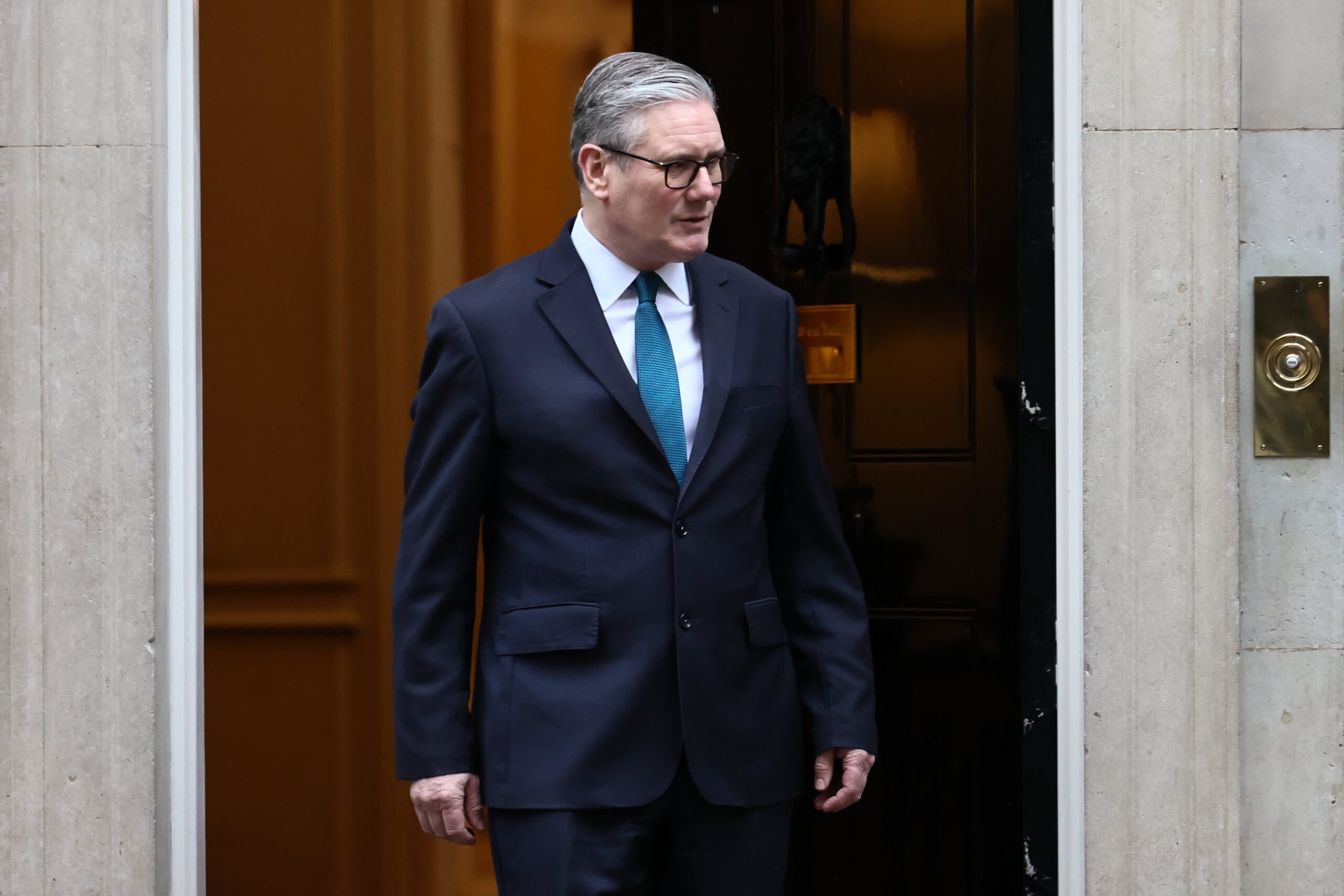
The departure of a high-level British delegation to Beijing marks the most significant recalibration of United Kingdom-China relations in nearly a decade. Prime Minister Keir Starmer’s arrival in the Chinese capital, accompanied by a formidable cohort of approximately 60 business leaders and cultural representatives, represents the first state visit by a British premier in eight years. This diplomatic mission occurs at a critical juncture for the global economy, characterized by shifting trade alliances, protectionist rhetoric from Washington, and a pressing need for the UK to secure sustainable domestic growth. The visit is not merely a diplomatic formality but a calculated attempt to navigate the complex "middle ground" between economic necessity and national security.
The composition of the delegation underscores the sectors the British government views as pivotal to its future prosperity. Leading the corporate contingent are titans of the financial world, including HSBC Group Chairman Brendan Nelson and Aberdeen Group CEO Jason Windsor. Their presence highlights the enduring importance of the City of London as a global financial hub that remains deeply intertwined with Asian markets. For HSBC in particular, which generates a vast majority of its profits in Asia, the stabilization of UK-China relations is a matter of fundamental corporate strategy. The inclusion of these figures suggests that financial services will be a cornerstone of the discussions, as London seeks to maintain its status as the premier Western gateway for Chinese capital and offshore Renminbi trading.
The pharmaceutical and life sciences sectors are equally well-represented, with AstraZeneca CEO Pascal Soriot and GSK Chair Sir Jonathan Symonds joining the mission. China has rapidly evolved from a manufacturing base to a critical frontier for pharmaceutical research and a massive consumer market for advanced healthcare. For AstraZeneca, China represents its second-largest market globally, and the company has invested billions in local R&D centers. The presence of these executives signals a desire to foster "biotech bridges" that can facilitate collaborative research while navigating the increasingly complex regulatory environments surrounding genomic data and intellectual property.
In the aerospace and logistics arenas, the inclusion of Airbus General Counsel John Harrison and British Airways Chief Commercial Officer Colm Lacy points to the vital infrastructure of trade. While Airbus is a pan-European entity, its significant manufacturing footprint in the UK—specifically in wing production—makes its relationship with Chinese airlines a matter of British industrial interest. As China’s domestic aviation market continues its post-pandemic recovery, securing orders and maintaining supply chain stability remains a top priority for the aerospace giant, especially as it competes for dominance against its American rival, Boeing.
The timing of this diplomatic outreach is dictated by a volatile international landscape. Beijing has recently become a revolving door for world leaders seeking to insulate their economies from the unpredictability of U.S. trade policy. In the opening weeks of 2026, President Xi Jinping has already hosted Irish Prime Minister Michael Martin—the first such visit from Dublin in 14 years—alongside South Korean President Lee Jae Myung and Finnish Prime Minister Petteri Orpo. Earlier in the month, Canada’s Prime Minister Mark Carney also made the trek to Beijing. This flurry of diplomatic activity suggests a concerted effort by middle powers to diversify their economic dependencies as the United States adopts an increasingly isolationist stance.
Central to this geopolitical shift is the looming shadow of renewed American protectionism. The threat of sweeping tariffs from Washington has unsettled traditional allies. Recent rhetoric regarding 10% tariffs on European nations and 100% tariffs on Canada should they pursue independent trade deals with China has forced a re-evaluation of the "Special Relationship" and "Transatlantic Unity." For the UK, which is still finding its footing in the post-Brexit era, the prospect of being caught in a trade war between the world’s two largest economies is an existential threat. Starmer’s mission is therefore a pursuit of "strategic autonomy," attempting to bolster ties with Beijing without irrevocably alienating Washington.
A significant precursor to this trip was the British government’s recent approval of a sprawling new Chinese Embassy complex in London. The proposal had been stalled for years, mired in local planning disputes and high-level security concerns regarding surveillance and its proximity to sensitive sites. The decision to greenlight the project is widely interpreted as a diplomatic olive branch, signaling that the Starmer administration is willing to resolve long-standing points of friction in exchange for a more "consistent and pragmatic" partnership. This move has not been without its critics at home, who argue that such concessions may undermine the UK’s commitment to human rights and national security.
However, the British government has been careful to frame this engagement within a framework of "de-risking" rather than "de-coupling." The official Downing Street position remains that while economic cooperation is essential for growth, it will not come at the expense of national security. Starmer is expected to use his meetings with President Xi and Premier Li Qiang to raise sensitive issues, including cyber-security, the stability of the Taiwan Strait, and human rights concerns in Xinjiang and Hong Kong. This "twin-track" approach—pursuing trade while maintaining a firm stance on security—is a delicate balancing act that mirrors the strategies currently being employed by Germany and France.
The economic stakes are undeniable. Total trade in goods and services between the UK and China currently exceeds £100 billion annually, making China one of the UK’s most significant trading partners. British exports to China, ranging from luxury vehicles and Scotch whisky to high-end financial services, support hundreds of thousands of jobs across the UK. By seeking improved market access in the creative industries and digital services, the Starmer administration hopes to tap into China’s growing middle class, which is projected to reach 600 million people by 2030.
The delegation’s focus on "creative industries" is also a strategic move to leverage British soft power. From film production to architecture and design, the UK’s creative sector is a high-growth area that Beijing is keen to integrate into its own "quality growth" model. By fostering these ties, the UK aims to build a relationship that is not just based on the exchange of raw materials or manufactured goods, but on the high-value intellectual property that defines a modern knowledge economy.
Furthermore, the visit reflects a broader trend of "economic realism" in British foreign policy. After the collapse of the so-called "Golden Era" of relations under David Cameron, and the subsequent cooling of ties during the pandemic and the Huawei 5G controversy, the UK found itself in a diplomatic vacuum regarding China. Starmer’s approach suggests an admission that ignoring the world’s second-largest economy is no longer a viable option for a nation seeking to lead in the green energy transition and artificial intelligence. China’s dominance in the supply chains for rare earth minerals and electric vehicle batteries makes it an indispensable partner in the UK’s own "Net Zero" ambitions.
As the meetings unfold in Beijing, the global community will be watching closely for signs of a breakthrough in bilateral investment treaties or updates on the regulatory hurdles facing British firms in China. For the executives of HSBC, AstraZeneca, and Airbus, the success of this trip will be measured in the tangible easing of trade barriers and the creation of a more predictable business environment. For Keir Starmer, the stakes are even higher: he must prove that the UK can navigate the treacherous waters of 21st-century geopolitics to deliver the "prosperity and security" he has promised to the British electorate, all while maintaining a principled stance on the world stage.
Ultimately, this mission to China represents a pivot toward a more nuanced and less ideological foreign policy. It is a recognition that in an era of fragmented global trade and heightened Great Power competition, the most successful nations will be those that can maintain open channels of communication with all major players. Whether this "pragmatic partnership" can withstand the inevitable pressures from both domestic hawks and international allies remains to be seen, but for now, the UK has decided that its path to economic renewal runs directly through Beijing.