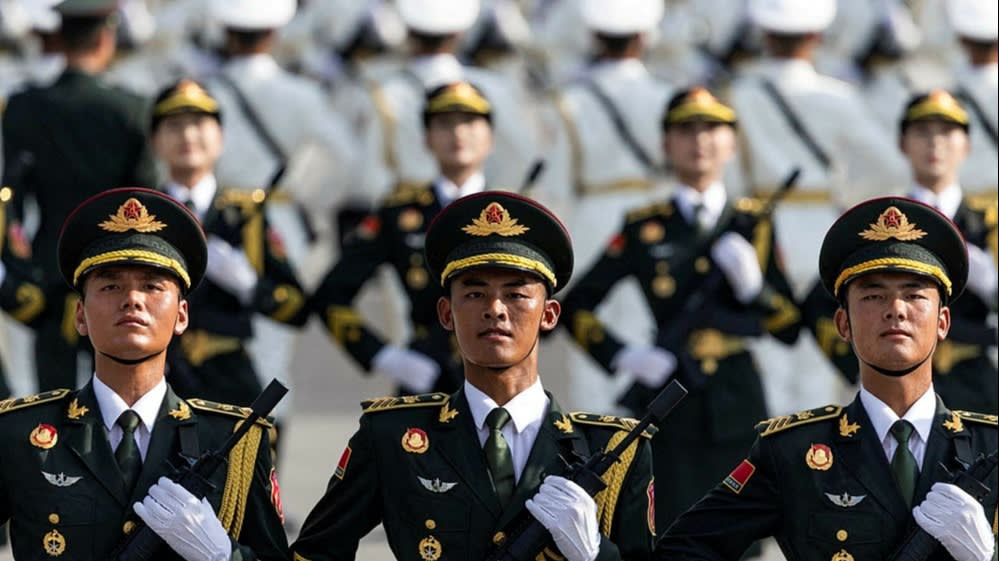
The internal political landscape of the People’s Republic of China is currently undergoing one of its most profound transformations in decades, as President Xi Jinping extends a sweeping anti-corruption campaign into the final vestiges of the military’s traditional power structure. Recent reports indicating that the last two senior military leaders to have survived previous waves of purges are now under investigation signal a definitive end to the era of collective leadership within the People’s Liberation Army (PLA). This escalation is not merely a localized disciplinary action but a seismic shift with profound implications for China’s defense procurement, its "military-civil fusion" strategy, and the broader stability of the world’s second-largest economy.
For over a decade, the Central Military Commission (CMC), the highest decision-making body for China’s armed forces, has been the epicenter of a rigorous "rectification" process. Since Xi assumed power in 2012, his administration has systematically dismantled the patronage networks established by his predecessors. The latest targets represent the final links to an older guard, suggesting that the Chinese Communist Party (CCP) is moving toward a state of total ideological and operational synchronization. This move comes at a critical juncture as Beijing navigates a cooling domestic economy and heightening tensions with the West over technological supremacy and territorial claims in the Indo-Pacific.
The investigation into these high-ranking officials follows the dramatic disappearance and subsequent removal of former Defense Minister Li Shangfu and several top commanders of the PLA Rocket Force in 2023. The Rocket Force, which oversees China’s nuclear and conventional missile programs, has been at the heart of recent scandals involving procurement fraud and technical failures. Analysts suggest that the rot discovered within the missile programs—ranging from faulty silo lids to fuel contamination issues—has infuriated the central leadership, prompting a wider audit of the military-industrial complex.
From an economic perspective, the military purge is inextricably linked to China’s massive defense budget, which officially reached approximately 1.67 trillion yuan ($231 billion) in 2024, a 7.2% increase from the previous year. While the CCP frames these investigations as a crusade against graft, they also serve as a mechanism to regain control over a defense-industrial sector that has long been prone to opacity and inefficiency. In China, the boundary between state-owned defense enterprises and military leadership is often porous. Corruption in this sector does not just involve the theft of funds; it compromises the quality of hardware and the reliability of the nation’s strategic deterrent. For investors and global markets, the instability within the PLA leadership raises questions about the long-term viability of the "Military-Civil Fusion" policy, which seeks to integrate private-sector technological innovation with military requirements.
The "Military-Civil Fusion" (MCF) strategy is a cornerstone of Xi’s vision for a modernized China. By purging the old guard, the CCP aims to ensure that the billions of dollars flowing into research and development—particularly in semiconductors, artificial intelligence, and aerospace—are not siphoned off by corrupt intermediaries. However, the atmosphere of fear created by these investigations can also have a chilling effect on innovation. When military commanders and project managers are under constant threat of detention, the willingness to take risks or report technical failures decreases, potentially leading to a "culture of compliance" rather than a "culture of excellence."
The geopolitical ramifications of these purges are equally significant. International observers are closely monitoring whether these internal distractions will delay or accelerate Beijing’s timeline for achieving "national reunification" with Taiwan. Some military analysts argue that a purged and paralyzed leadership might be less likely to advocate for conflict in the short term, as the PLA focuses on internal reorganization. Conversely, a more ideologically purified and loyalist command structure could eventually become a more effective tool for the CCP’s regional ambitions. The removal of the "last survivors" suggests that Xi is no longer content with mere loyalty; he requires a military leadership that is entirely his own creation, free from the institutional memory of the pre-2012 era.
The role of the Central Commission for Discipline Inspection (CCDI), the party’s powerful anti-graft watchdog, has been instrumental in this process. The CCDI’s reach now extends into every corner of the military’s administrative and logistical chains. This has led to a significant slowdown in procurement cycles as officers become hesitant to sign off on major contracts for fear of future scrutiny. In the aerospace and defense sectors, listed companies such as Aviation Industry Corporation of China (AVIC) and China North Industries Group (Norinco) have seen their operational environments become increasingly complex as the government intensifies its oversight of supply chains.
The historical context of these purges draws parallels to other major powers, yet the Chinese model remains unique in its scale and duration. Unlike the Soviet-era purges under Stalin, which often relied on overt violence, the modern Chinese approach uses a sophisticated blend of administrative detention, public shaming, and "voluntary" confessions. This process is designed to maintain the appearance of the rule of law while achieving the political objective of total consolidation. For the global business community, this means that doing business with Chinese entities—especially those with military ties—now carries an even higher degree of political risk. The "political reliability" of a Chinese partner is now as important as their balance sheet.
Furthermore, the impact on the morale of the rank-and-file within the PLA cannot be overlooked. While the targeting of "tigers" (senior officials) is often popular among the "flies" (lower-level soldiers) who suffer from the consequences of corruption, the perpetual state of investigation can lead to institutional paralysis. The PLA is currently attempting to modernize its command-and-control structures to match the capabilities of the United States military. This requires decentralized decision-making and initiative from mid-level officers—traits that are often suppressed in a political environment where any deviation from the party line can be interpreted as disloyalty.
In the broader economic theater, the purge reflects a shift in China’s growth model. As the real estate sector continues to struggle and consumer demand remains tepid, the government is leaning more heavily on state-led investment in high-tech manufacturing and defense. Ensuring that this investment is not wasted on "ghost projects" or substandard equipment is a matter of national survival. The investigations into the remaining survivors of previous purges are a signal to the entire state apparatus that the era of easy money and lax oversight is over.
As China continues to project power through its "Belt and Road Initiative" and its expanding naval presence in the South China Sea, the reliability of its military leadership is a global concern. A military that is internally fractured or paralyzed by suspicion is a different strategic actor than one that is unified and confident. The coming months will likely see further announcements of "disciplinary violations" as the CCP completes its restructuring of the CMC. For the international community, the challenge will be to distinguish between a military that is becoming more disciplined and effective, and one that is simply becoming more opaque and unpredictable.
Ultimately, the investigation of the final two military leaders from the old era marks the completion of a decade-long project to remake the PLA in Xi Jinping’s image. It is a gamble of historic proportions: by prioritizing loyalty and ideological purity above all else, the CCP hopes to build a "world-class" fighting force capable of rivaling any on earth. However, the economic and institutional costs of this perpetual purge are mounting, and the true test of this new military structure will only come when it is faced with a crisis that cannot be solved by a disciplinary investigation. For now, the message from Beijing is clear: the transition is over, the old guard is gone, and the new era of absolute control has begun.