
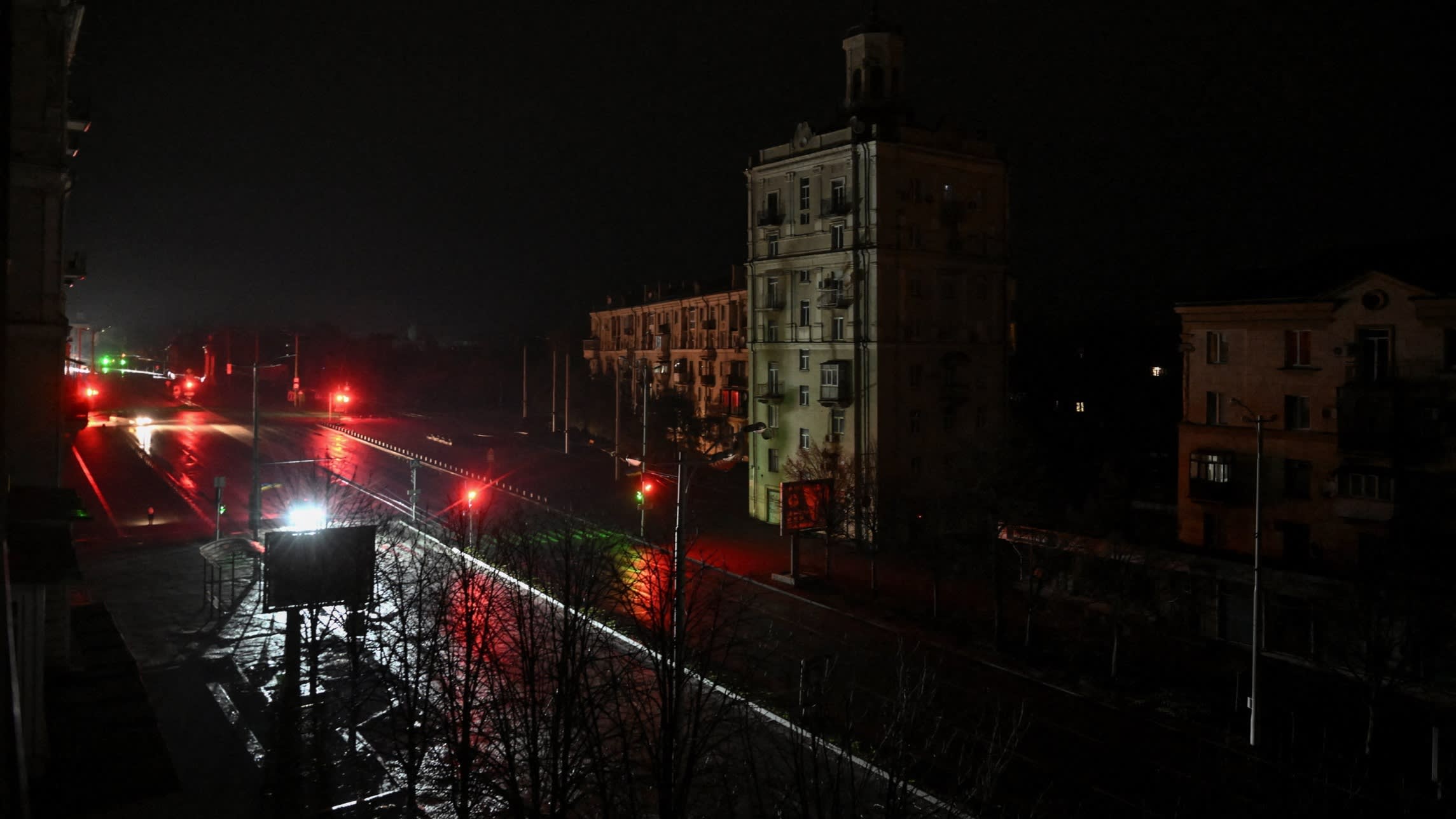
The onset of sub-zero temperatures across Eastern Europe has collided with a renewed crisis in Ukraine’s energy sector, as a series of systemic failures and targeted infrastructure damage left more than one million citizens without electricity this week. As mercury levels plummeted well below freezing, the outage underscored the persistent fragility of a national power grid that has become a primary theater of conflict. This latest disruption is not merely a humanitarian emergency; it represents a profound economic challenge for a nation attempting to maintain industrial output and fiscal stability under the most duress-filled conditions of the modern era. The blackout, affecting residential hubs and industrial zones alike, highlights the escalating "war of attrition" being fought over the country’s high-voltage substations, thermal power plants, and distribution networks.
For the Ukrainian economy, which has shown a remarkable, albeit fragile, resilience over the last fiscal year, these outages threaten to derail a nascent recovery. When the lights go out for a million people, the ripple effects extend far beyond darkened living rooms. Small businesses are forced to rely on expensive diesel generators, which significantly increases operational costs and fuels inflationary pressures. Large-scale manufacturing, particularly in the energy-intensive metallurgical and chemical sectors, faces sudden halts that can cause permanent damage to equipment and lead to missed export deadlines. Analysts suggest that every day of widespread power disruption can shave basis points off the quarterly GDP, complicating the government’s efforts to fund its defensive operations and social safety nets.
The technical nature of the current crisis reveals a complex interplay between aging Soviet-era architecture and the modern requirements of a synchronized European energy market. Since the full-scale invasion began, Ukraine’s national energy operator, Ukrenergo, has been forced into a perpetual cycle of "repair and defend." The current blackout is symptomatic of a grid that has lost significant redundancy. In a standard Western European power system, the loss of a major substation is mitigated by rerouting power through secondary and tertiary lines. However, in Ukraine, many of these secondary pathways have already been compromised by previous waves of kinetic strikes, leaving the system with little margin for error during periods of peak winter demand.
The humanitarian toll of a million people without heat or light in freezing weather cannot be overstated. In cities like Kharkiv, Kyiv, and Odesa, the loss of electricity often triggers a secondary crisis: the failure of centralized heating and water pumping systems. Most urban heating in Ukraine relies on "teplokomunenergo" systems—centralized plants that pump hot water through massive underground pipes. When the pumps lose power, the water stops moving, and in extreme cold, these pipes risk freezing and bursting. Such an event would cause catastrophic damage that could take months, rather than days, to repair. To combat this, local municipalities have established "Points of Invincibility"—fortified shelters where citizens can warm up, charge devices, and access the internet—but these are temporary salves for a structural wound.
From a global energy perspective, the instability of the Ukrainian grid has broader implications for the European Union. In 2022, Ukraine successfully synchronized its grid with the Continental European Network (ENTSO-E). This was a landmark geopolitical and technical achievement, allowing Ukraine to export surplus energy to the EU during periods of stability and, crucially, to import emergency power when its domestic production falls short. During this latest blackout, emergency imports from Poland, Romania, and Slovakia have been vital in preventing a total systemic collapse. However, the capacity for these imports is limited by the very same cross-border substations that have been frequent targets of disruption.
The economic cost of restoring the Ukrainian energy sector is staggering. The World Bank and the United Nations have previously estimated that the damage to Ukraine’s energy infrastructure exceeds $10 billion, a figure that continues to climb with every new wave of disruption. International donors, led by the G7+ group, have committed billions in aid specifically for the energy sector. This includes the provision of high-voltage transformers, many of which are custom-built and have lead times of up to a year. The "scavenger hunt" for compatible parts has seen engineers scouring the globe for legacy equipment from former Eastern Bloc countries that still use similar 750kV and 330kV hardware.
Market data indicates that the reliance on decentralized energy solutions is reshaping the Ukrainian consumer economy. There has been a massive surge in the importation of lithium-ion battery systems, portable power stations, and solar panels. While this increases the "micro-resilience" of individual households and businesses, it creates a bifurcated society where those with the financial means can purchase energy independence, while the most vulnerable remain at the mercy of a failing central grid. For the industrial sector, the transition is even more difficult. Large factories cannot run on portable batteries; they require the massive, steady load that only a centralized grid or large-scale on-site gas turbines can provide.
Expert insights suggest that the long-term solution for Ukraine lies in a radical decentralization of its energy generation. The traditional model of several massive nuclear and thermal plants feeding power across long distances is inherently vulnerable to disruption. A more resilient model would involve a "mosaic" of smaller, distributed power sources, including wind farms, solar arrays, and small modular reactors (SMRs), coupled with advanced energy storage. This transition, however, requires massive capital investment and a secure environment that is currently absent. In the interim, the focus remains on "passive protection"—building physical barriers around key transformers and moving critical components underground.
The geopolitical dimension of the blackout is also significant. Energy has been used as a tool of strategic leverage throughout history, but the scale of the campaign against the Ukrainian grid is unprecedented in modern warfare. By targeting the means of survival for the civilian population during the harshest months of the year, the objective is clearly to break the national will and force a domestic political crisis. Yet, the social response in Ukraine has largely been one of adaptation rather than capitulation. The "generator economy" has become a way of life, with the ubiquitous hum of small engines providing a constant soundtrack to urban existence.
Looking ahead, the remainder of the winter season poses a significant risk to the regional economy. If Ukraine is unable to stabilize its grid, the resulting migration of "energy refugees" into neighboring European countries could increase, placing further strain on the social services of host nations. Furthermore, the volatility in Ukraine’s energy sector keeps regional power prices higher than they otherwise would be, as neighboring countries must maintain higher reserves to account for emergency exports.
The current situation is a stark reminder that infrastructure is not just a matter of engineering, but a foundation of national security and economic sovereignty. As engineers work around the clock in freezing conditions to reconnect the million people currently in the dark, the international community is faced with the reality that the reconstruction of Ukraine must begin with the grid. Without a stable supply of electricity, the path to economic recovery is effectively blocked. The "energy front" remains one of the most critical sectors of the ongoing conflict, where the stakes are measured in kilowatts, degrees Celsius, and the continued functioning of a modern European state. The coming weeks will test the limits of both Ukrainian ingenuity and international support as the country fights to keep the lights on in the face of an unforgiving winter.